Today I am FINALLY starting my planning for all of the fall chores. The cooler weather will be here before we know it, and so often I wait a bit too long. September is the perfect time to get organized and make sure the homestead is ready for the changing season. From the garden to the chickens, ducks, bees, and greenhouse, here’s my September homestead checklist for Zone 7b (Virginia).
Garden and Greenhouse Prep
Fall planting is one of my favorite parts of gardening. Over the weekend, I went through my seed books (I keep them in binders like trading cards) to pull out the crops that I want to grow in the greenhouse this fall and winter. We’re balancing between crops to supplement the animals’ feed, as well as what we want to get us through the months ahead. September is the month to get those cool-weather crops in the ground:
- Direct sow: lettuce, radishes, arugula, turnips, and Asian greens. Early September is also the last chance for beets and carrots.
- Transplant: broccoli, cabbage, cauliflower, kale, and Swiss chard thrive when planted early this month.
- Greenhouse reset: clean out beds, sanitize trays, check fans, and stage row cover. This is also a great time to start fall lettuce, spinach, and herbs in raised beds inside. We’re also churning the soil in the beds, reviewing the soil pH balance, and supplementing it as necessary.
- Cover crops: crimson clover, oats, and peas add nutrients back into empty beds and help protect the soil over winter.
- Garlic prep: amend the soil and pick a dedicated bed for garlic and shallots—planting time is right around the corner in October or November.

Orchard and Perennials
The orchard deserves some love in September too:
- Do light pruning (water sprouts and crossing branches) but save heavy cuts for late winter.
- Mulch around the base of fruit trees to retain moisture and insulate roots.
- Check tree guards and irrigation before rut season begins.
Beekeeping in September
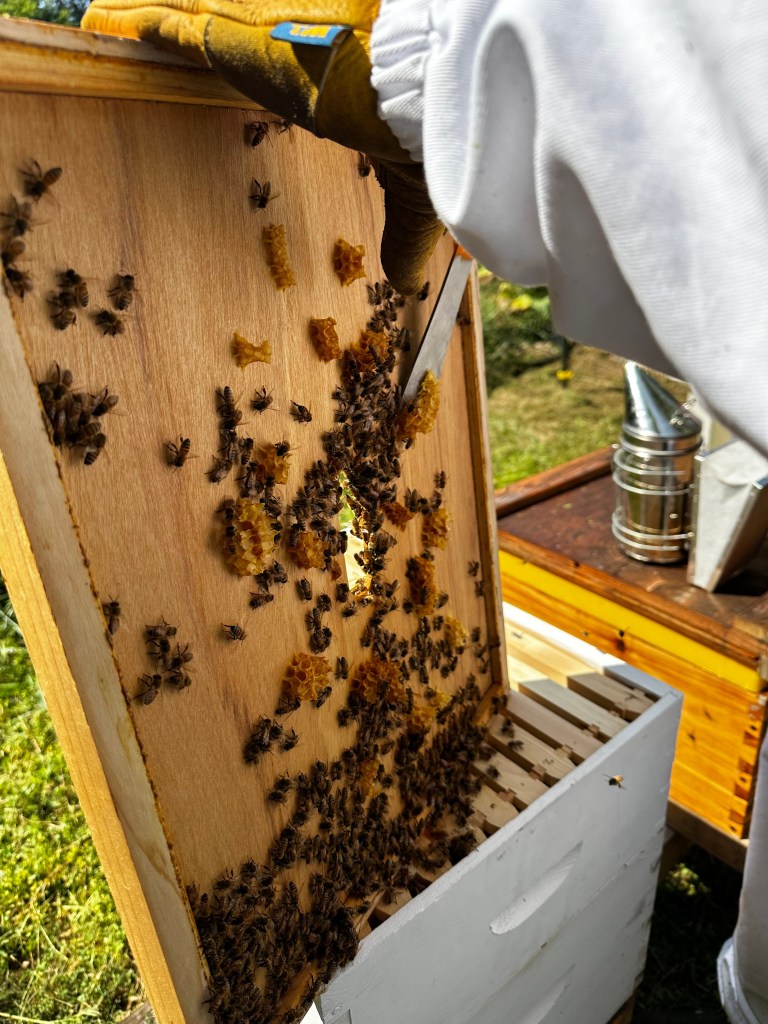
If you keep honeybees, this month is crucial for setting them up for winter success.
- Varroa check: perform an alcohol wash or sugar roll and treat if needed.
- Feeding: ensure colonies have 60–80 pounds of stored honey. If they’re light, feed 2:1 sugar syrup. I’m starting the 2:1 sugar syrup this week!
- Hardware: install entrance reducers and mouse guards late in the month.
Chickens and Ducks
Fall is molting season, which means your flock needs extra care.
- Molting support: boost protein with 18–20% feed, sunflower seeds, and mealworms. Our ducks have finally completed their molting, and they look amazing!
- Coop deep clean: refresh bedding, repair wire, and make sure ventilation is solid but draft-free.
- Winter prep: test heated waterers and start the deep litter method if you use it. I recommend using the pine pellets as teh bottom layer as a start. As we get into October, i will be incorporating those into the bedding.
- Parasite check: look for mites and lice, and refresh dust baths with sand or wood ash.
- Ducks in particular need some mud control—adding gravel or pallets can save a lot of mess before fall rains.

Infrastructure and Tools
- Flush irrigation lines and roll up spare hoses.
- Clean gutters and prep rain barrels for fall storms.
- Service lawnmowers, chainsaws, and the generator—add fuel stabilizer if needed.
- Walk your fences to check for predator gaps.
- Stack firewood and spread mulch or wood chips on pathways for a mud-free winter.
Compost and Soil
September is prime composting time:
- Turn your pile and add browns (leaves, shredded paper, straw) to balance summer’s greens.
- Start a leaf mold pile for rich garden mulch next year.
- Take soil samples from any underperforming beds and send them in for testing.
Pantry and Harvest
Don’t let your summer harvest go to waste!
- Keep up with tomatoes, peppers, and beans—freeze, can, or dehydrate.
- Cut and dry herbs like basil, oregano, and mint for winter teas and seasoning.
- Do a pantry and freezer inventory now so you know what’s left and what needs preserving.
Simple September Week-by-Week Plan
- Week 1: Transplant brassicas, sow last carrots and beets, greenhouse deep clean, varroa check.
- Week 2: Sow lettuce, Asian greens, and radishes; start cover crops; coop deep clean.
- Week 3: Sow spinach and succession lettuce; add mouse guards to hives; pantry inventory.
- Week 4: Install hoops and frost cloth, test irrigation, finalize garlic plan, service tools.
Final Thoughts
Homesteading in September is all about preparing for fall and winter while still enjoying the last of summer’s harvest. By taking time now to get ahead of chores, you’ll set yourself up for a smoother, more productive season.
What are your favorite September homestead traditions? Do you focus on the garden, the chickens, or the pantry first? Share your fall prep tips in the comments below!

Leave a Reply