We’re coming to the end of the summer harvest and working on preserving food from the garden. Potatoes are one of the best crops to grow for long-term storage, but keeping them fresh through the winter requires a crucial step: curing. Curing potatoes helps toughen their skins, heal small cuts or bruises, and extend their shelf life so you can enjoy homegrown potatoes well into the colder months.
In this blog, I’ll walk you through the process of curing potatoes, share storage tips, and give you resources to help your harvest last as long as possible.

Why Cure Potatoes?
Potatoes fresh out of the ground are tender and more prone to rot or sprouting. Curing allows the skins to thicken and heal, which provides a protective barrier against moisture loss and disease. This is especially important if you plan to store your potatoes for months in a root cellar, basement, or cold storage area.
For more details on the science behind curing, check out this University of Idaho Extension guide on potato storage.
Step 1: Harvest Carefully
When digging up your potatoes, use a garden fork or shovel to loosen the soil gently. Be careful not to cut or bruise the potatoes, as damaged ones won’t store well. Only select mature potatoes for curing and storage; use small or damaged ones right away.
👉 Tip: Choose a dry day to harvest. Wet soil increases the risk of rot.
Step 2: Cure in the Right Environment
To cure potatoes properly:
- Temperature: Keep them at 50–60°F (10–15°C).
- Humidity: Aim for 85–95% humidity.
- Light: Store them in complete darkness to avoid greening and the production of solanine (a toxin).
Spread potatoes in a single layer in a dark, well-ventilated space—such as a garage, basement, or shed—for about 1–2 weeks. Cover them loosely with burlap or cardboard to block out light while still allowing airflow.
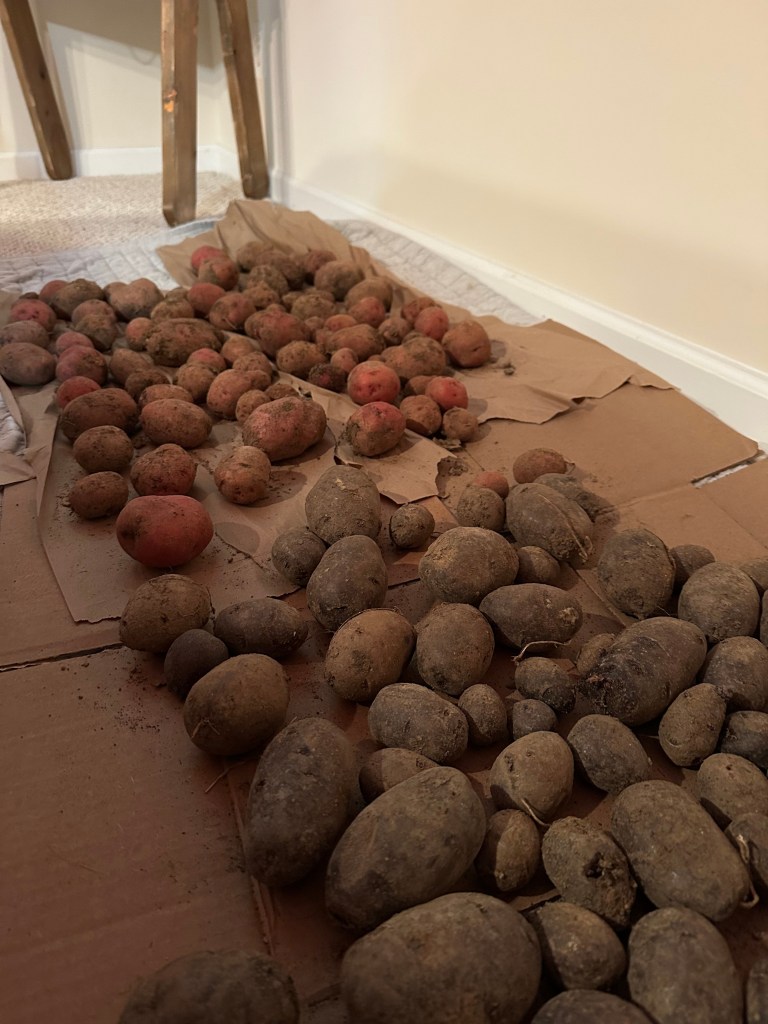
You can find more detailed recommendations from University of Maine Cooperative Extension.
Step 3: Sort and Store
After curing:
- Discard any potatoes that are soft, sprouting, or damaged.
- Store only the healthiest ones.
- Place cured potatoes in paper bags, baskets, or ventilated boxes.
The ideal long-term storage conditions are:
- 35–40°F (1–4°C)
- Darkness
- High humidity
A cool basement or root cellar works best. Avoid storing potatoes near onions, as gases released by onions can cause sprouting.
For practical root cellar tips, see Mother Earth News’ storage guide.
Bonus Tips for Longer Storage
- Check potatoes regularly – Remove any that show signs of spoilage.
- Don’t wash before storage – Dirt helps protect the skin. Wash only before cooking.
- Use varieties that store well – Russets and Yukon Golds tend to last longer than early-season potatoes.
Final Thoughts
Curing potatoes may feel like an extra step, but it’s the key to enjoying your harvest through the winter. With the right curing and storage techniques, your homegrown potatoes can stay fresh, nutritious, and delicious for months.
If you’re working on preserving other vegetables for the season, check out my blog on fall garden chores for more homestead inspiration!


Leave a Reply