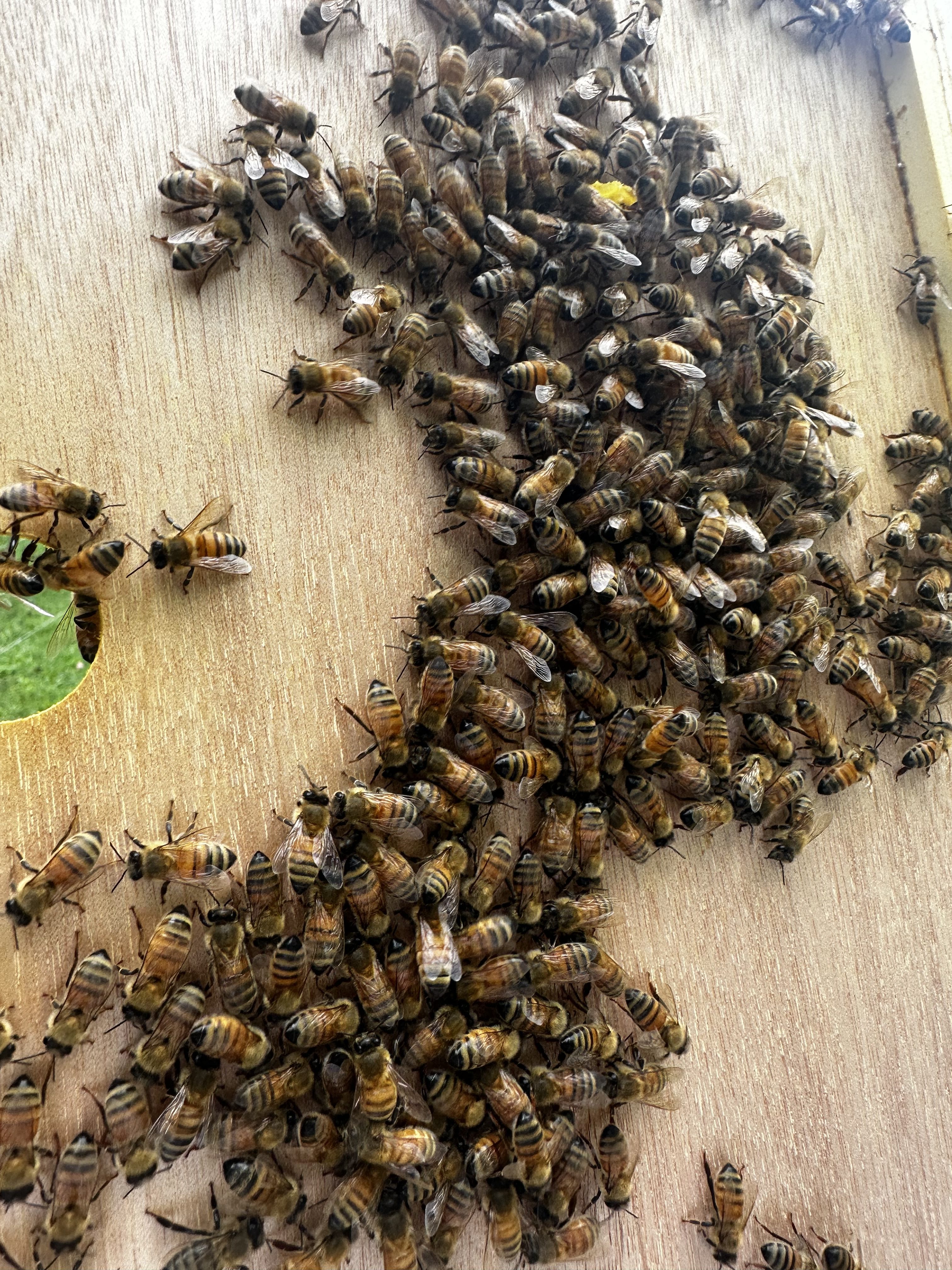
The Heart of a Healthy Homestead
There are many animals that make a homestead feel alive, but few contribute as much as the tiny, hardworking honey bee. They’re small in size but enormous in impact. Whether they’re pollinating your garden, producing golden honey, or simply buzzing peacefully through the clover, honey bees bring beauty, abundance, and balance to a homestead in a way no other creature can.
At J & J Homestead, our honey bees are more than just part of the ecosystem—they’re a cornerstone of everything we do.
Honey Bees Are Unmatched Pollinators
If you garden, grow fruit trees, or keep vegetables of any kind, honey bees are your best friends. They dramatically increase pollination rates, which leads to:
- Bigger harvests
- More consistent fruiting
- Higher yields
- Better biodiversity
- Healthier crops overall
According to the USDA, one-third of all food eaten by humans depends on pollinators, and honey bees do a large portion of that work.
➡️ https://www.usda.gov/peoples-garden/pollinators
Your garden will absolutely thrive when honey bees are nearby.
They Give Us the Gift of Pure, Local Honey
Nothing compares to honey collected from your own backyard. It’s raw, unfiltered, rich in enzymes, and full of the floral flavor profile of your land. Every jar tastes like the blossoms your bees visited that season—spring clover, summer wildflowers, fall goldenrod.
Raw local honey is known for:
- Supporting seasonal allergies
- Offering antibacterial and antiviral benefits
- Acting as a natural energy source
- Easing sore throats
- Providing antioxidants
And unlike store-bought honey (often blended or pasteurized), your own honey is pure, traceable, and harvested with care.
A quick resource on the benefits of raw honey:
➡️ Cleveland Clinic – Health Benefits of Honey
https://health.clevelandclinic.org/benefits-of-honey
Honey Bees Improve the Entire Ecosystem
Bees don’t just pollinate gardens—they support forests, wildflowers, and native plants too. With every trip from hive to flower and back again, they help strengthen the natural world around your home.
Their presence increases:
- Plant diversity
- Soil health
- Wildlife forage
- Food sources for birds and insects
- Overall ecological resilience
A homestead with bees is a homestead that’s contributing positively to the environment.
Honey Bees Teach Patience, Respect, and Curiosity
Beekeeping encourages you to slow down, observe, and work with nature—not against it. When you open the hive, everything else falls away. You’re present. Focused. Calm.
Bees are incredible teachers. They show us:
- The beauty of cooperation
- The importance of rhythm and routine
- The value of hard work and purpose
- The miracle of tiny actions leading to big results
Every hive inspection feels like reading a living, breathing story of the season.
They Are Low-Maintenance Compared to Other Animals
Bees require care and attention, but they are far less labor-intensive than many other homestead animals. Once established, a healthy colony:
- Self-regulates its temperature
- Maintains its brood
- Forages independently
- Protects itself
- Cleans its own hive
Most beekeeping work comes in the form of seasonal checks, swarm prevention, mite treatments, and honey harvesting.
For beginners, this is a perfect first step into animal care.
➡️ Beginner beekeeping guide from Bee Informed Partnership:
https://beeinformed.org/
Thinking About Getting Honey Bees Next Year? Start Planning NOW
Late fall and early winter are the best times to start preparing if you want bees next year. Many new beekeepers don’t realize how far in advance you need to plan—and by spring, most bee suppliers are already sold out.
Here’s What You Should Start Doing Now:
1. Research and Learn
Read beginner beekeeping books, take online classes, or visit local clubs.
Great place to begin:
➡️ University of Minnesota Bee Lab – Beekeeping Basics
https://beelab.umn.edu/
2. Pick a Hive Location
Choose a sunny, sheltered spot on your property with easy access and good drainage.
3. Order Your Equipment Early
Hives, frames, suits, tools, and feeders sell out fast in spring.
Buy them now to avoid delays.
4. Reserve Bees for Spring Delivery
Bees are typically ordered in December–February for April–May pickup.
You can choose:
- Nucleus colonies (nucs)
- Package bees
- Local splits (preferred for beginner success)
5. Connect With Local Beekeepers
They are your best resource for regional advice, swarm prevention, hive styles, and seasonal timing.
Final Thoughts
Honey bees are truly the best—beautiful, essential, and endlessly fascinating. They enrich the homestead in every way: through pollination, honey production, ecosystem support, and the joy they bring with every gentle hum.
And if you’ve ever dreamed of becoming a beekeeper, now is the perfect time to start planning for next year’s hive. A little preparation today leads to a thriving colony, stronger gardens, and jars of golden honey waiting for you in the seasons to come.
At J & J Homestead, beekeeping has become one of the most rewarding parts of our life—and we can’t wait to see others start their own journey.

Leave a Reply