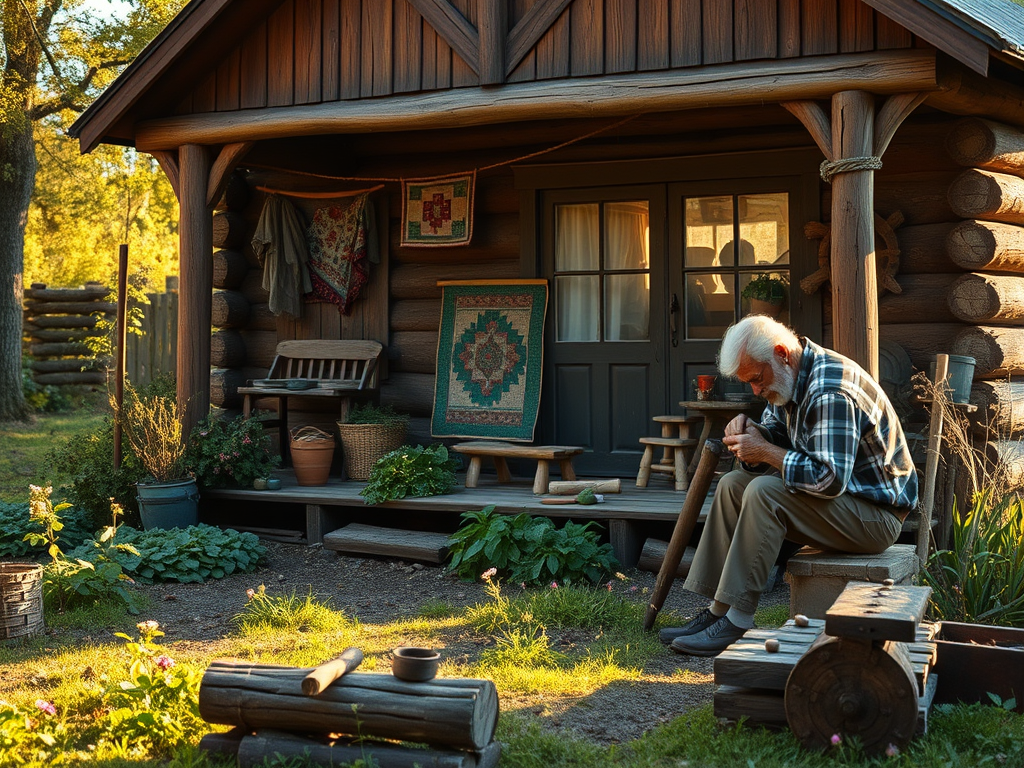
What Exactly Are the Foxfire Books?
Before diving into how much these books have influenced my homesteading journey, it’s worth explaining what the Foxfire series actually is — because they’re unlike anything else in the homesteading world.
The Foxfire books began in the late 1960s as an English class project at Rabun Gap-Nacoochee School in Appalachian Georgia. Under the guidance of teacher Eliot Wigginton, students interviewed elderly community members to document the traditional skills, folklore, crafts, recipes, and everyday wisdom that were at risk of disappearing as modern life spread into rural areas.

The project grew into a full magazine and then into a wildly successful book series. Today, the Foxfire books are beloved for their authentic look at Appalachian culture, featuring real voices telling real stories about:
- blacksmithing,
- gardening,
- moonshining,
- herb medicine,
- quilting,
- animal husbandry,
- food preservation,
- woodworking,
- and the practical skills that defined mountain life for generations.
These books aren’t written like modern how-to guides — they’re oral history, captured word for word, preserving a way of life deeply rooted in self-sufficiency.
If you’ve never explored them, you can learn more from the Foxfire Museum & Heritage Center or browse the series in the Foxfire online shop.
And now… here’s how these books changed the way I homestead.
The Foxfire Books Taught Me That Homesteading Isn’t New — It’s Remembered
One of the first lessons the Foxfire series taught me is that homesteading isn’t a new trend or a quirky hobby. It’s a memory — a return to something many generations before us practiced naturally.
People in Appalachia didn’t “homestead” because it was charming or sustainable or Instagram-worthy. They did it to survive. To support family and community. To live fully from the land because the land was all they had.
Reading interviews with elders transported me into a world where:
- building a cabin was a family event,
- soap was made in the yard,
- animals were raised with intention,
- food was preserved with care,
- and everything — absolutely everything — had value.
These weren’t skills people learned for fun. They were life skills. And seeing them through the voices of the Foxfire interviewees reminded me that today’s homesteading movement is really a reconnection with something timeless.
Simplicity Is Not Only Enough — It’s Often Better
In a world where modern homesteaders are bombarded with gadgets, high-tech tools, and “must-have” gear, the Foxfire books are a refreshing reminder that simple solutions are often the best ones.
These Appalachian families built their lives on methods that were:
- inexpensive,
- reliable,
- sustainable,
- and rooted in common sense.
Whether it was predicting weather by sky color, building fences from nearby timber, or planting by the signs, their strategies were straightforward — and incredibly effective.
That simplicity has shifted the way I run our own homestead. Instead of overthinking every problem, I find myself asking:
“How would they have done this in the mountains 100 years ago?”
And you’d be surprised how often the old way is the right way.
Resourcefulness: The Heart of Homesteading
If there’s one trait that shines in every Foxfire interview, it’s resourcefulness. Appalachian families mastered the art of using what they had.
A fallen tree might become:
shingles, chairs, spoons, fence posts, and winter heat.
A tattered shirt might become a quilt square.
A burned-out pan might become a scoop or tool.
They wasted nothing — a skill modern homesteading desperately needs.
That mindset has transformed how I look at our own resources here at J & J Homestead. Instead of tossing things out, I ask:
“What can this become next?”
The Foxfire method isn’t just thrifty — it’s creative, sustainable, and deeply satisfying.
The Importance of Community and Shared Knowledge
Another thing the Foxfire books highlight beautifully is how much Appalachian life depended on community. Homesteaders today often feel isolated, but the old ways were built on togetherness.
Neighbors helped with:
- barn raisings,
- hog butchering,
- food preservation,
- harvesting,
- and passing down stories and recipes.
These books reminded me that homesteading isn’t meant to be a solo journey. It’s meant to be shared — through mentorship, through generosity, and through storytelling.
This belief is part of why I share our own homesteading experiences online, through this blog, Instagram, and soon the podcast. Knowledge is meant to move, not sit still.
Why the Old Traditions Are Still the Best
The Foxfire books show us clearly:
Old traditions survive because they work.
They’re practical.
They’re sustainable.
They’re rooted in generations of lived experience.
And they connect us to something bigger than ourselves.
Whether it’s gardening, raising animals, cooking, crafting, or simply living with intention, the wisdom in these books is just as valuable today as it was a century ago.
Even as we embrace modern tools and conveniences, the heart of homesteading will always belong to the people who came before us — and the lessons they left behind.
Final Thoughts
The Foxfire books have shaped the way I homestead and the way I see the world around me. They’ve taught me to slow down, observe, repair, reuse, and appreciate the beauty of simple things.
Most importantly, they remind me that homesteading isn’t a skill set — it’s a heritage. And by learning these old traditions, we keep them alive for the next generation.
If you haven’t explored the series yet, I can’t recommend it enough. These books are full of wisdom, humor, grit, and heart — the very things that make homesteading such a meaningful way of life.


Leave a Reply