One of the things that is rarely discussed on social media is the tough part about having chickens—how difficult it can be to figure out what is wrong when one of them isn’t acting right, and how challenging it can be to diagnose the issue and get them back to healthy. Most of the time, it’s a combination of trial and error, observation, and hoping that you’re moving in the right direction.
A couple of days ago, I noticed that one of our White Crested Polish hens wasn’t chickening right. If you keep chickens, you know exactly what I mean.
She wasn’t her usual energetic, curious self. She seemed a little out of it. She was keeping to herself—not fluffed up or huddled, but definitely separate from the rest of the flock. She wasn’t eating much. At this point, she hadn’t lost weight, and her wattle color was still a healthy, bright red. Nothing screamed emergency, but something just didn’t feel right.
And when it comes to chickens, that instinct matters.
Trusting Your Gut When Something Feels “Off”
Wanting to keep an eye on her—and also warm her up during the cold snap—I brought her inside and set her up in a dog crate in the corner of the house. She had food, water, warmth, and most importantly, peace and quiet. Sometimes that alone can make all the difference.
The next day, she seemed a bit better, so I put her back outside. I checked on her several times over the next few hours, and while she wasn’t worse, she wasn’t quite herself either. A few hours later, I brought her back in.
Something just wasn’t right.
If there’s one thing I’ve learned on the homestead, it’s this: trust your instincts when an animal doesn’t look right. Chickens are masters at hiding illness, and waiting too long can cost you valuable time.
When Observation Isn’t Enough
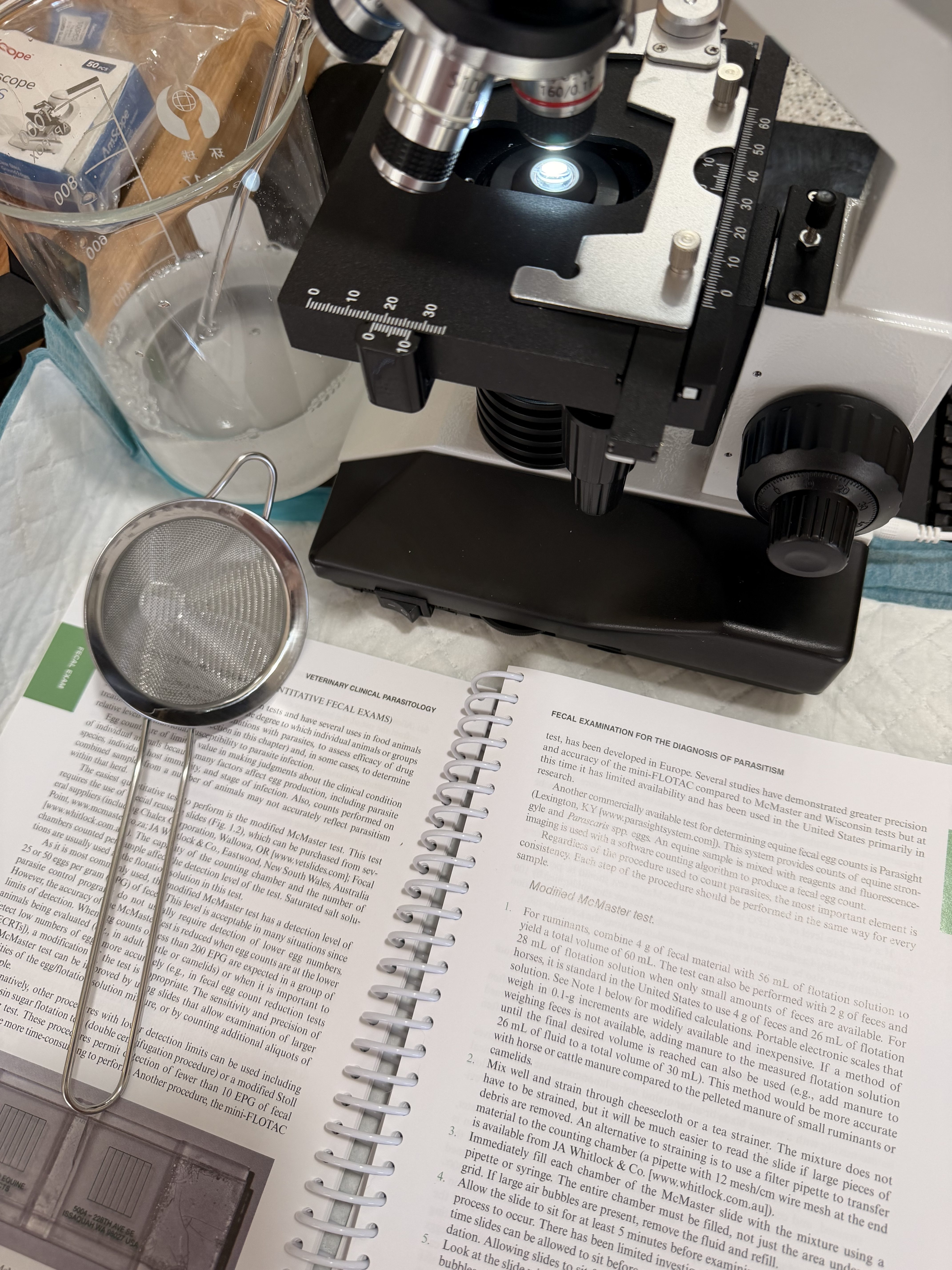
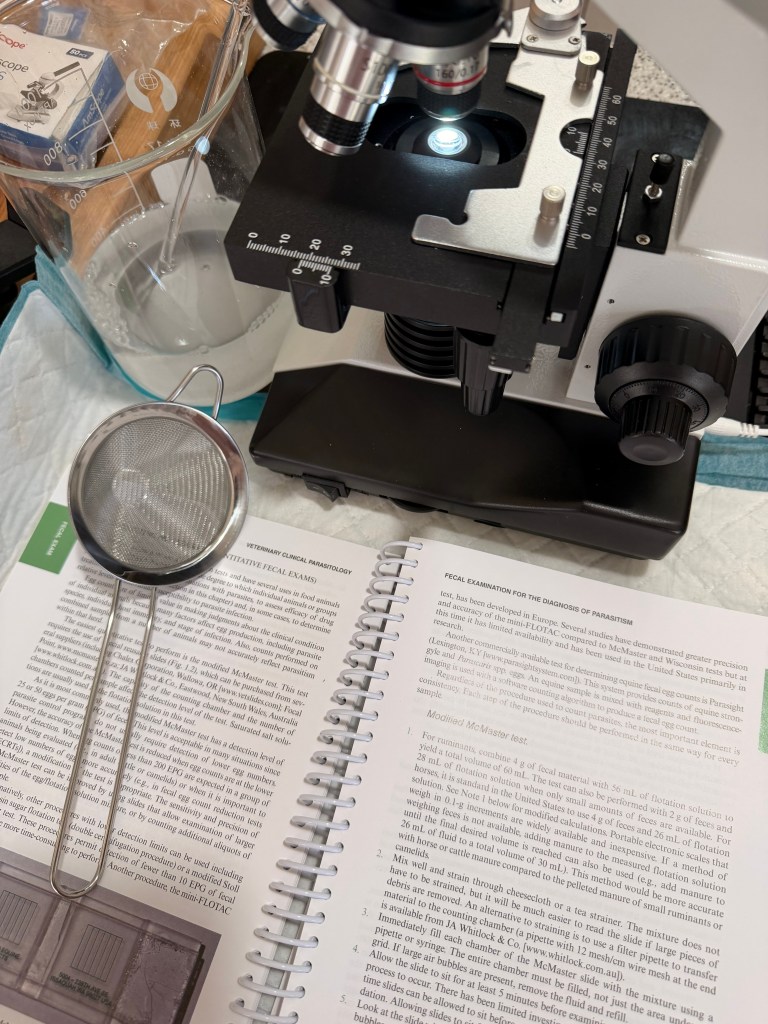
After she’d been back in her crate for a few hours, she finally gave me enough “product” to work with. That’s when I decided to run a fecal float test.
Last year, after feeling like I was constantly stumbling around in the dark trying to diagnose issues like coccidiosis and internal parasites, I decided to educate myself. I invested in a decent microscope, a small centrifuge, and the 9th Edition of Veterinary Clinical Parasitology. My goal wasn’t to replace a veterinarian—it was to stop guessing.
I don’t want to blindly treat for coccidiosis with Corid if that five-day treatment delays other much-needed care or unintentionally creates a situation where coccidiosis becomes treatment resistant. I want to treat in the right direction, not just a direction.
What the Fecal Float Revealed
The fecal float showed a small load of non-coccidiosis parasites. That information alone changed my entire approach.
Instead of immediately jumping to coccidiosis treatment “just in case,” I could tailor my next steps appropriately. This is exactly why learning basic diagnostic skills can be so valuable for backyard chicken keepers—especially during stressful times like winter, molting, or seasonal transitions.
The Homesteading Reality No One Talks About
It’s important to say this clearly: none of this replaces expert veterinary care. Veterinarians are invaluable, and whenever they are accessible and feasible, they should absolutely be part of the equation.
But it was the holidays. Yesterday was New Year’s Day. A veterinarian simply wasn’t an option.
And even beyond that, the reality is that it’s not always financially or logistically feasible to take a sick chicken to the vet—especially when you have dozens or even hundreds of birds. That’s not negligence. That’s homesteading reality.
What is required is being a caring and responsible chicken owner. That means observing closely, educating yourself, using the tools you have available, and doing what you can to solve the mystery illness and get your bird healthy enough to return to the flock.
Why I Believe in Learning These Skills
Learning how to do a fecal float didn’t turn me into a veterinarian—but it gave me clarity, confidence, and direction. It allowed me to stop guessing and start making informed decisions.
Sometimes, caring for chickens isn’t about dramatic interventions. It’s about patience, observation, and being willing to learn the unglamorous parts of animal care that don’t always make it onto Instagram.
And sometimes, it’s about listening to that quiet voice that says, “Something isn’t right—bring her inside and take a closer look.”
Now we wait and see how she recovers. Fingers crossed!

Leave a Reply