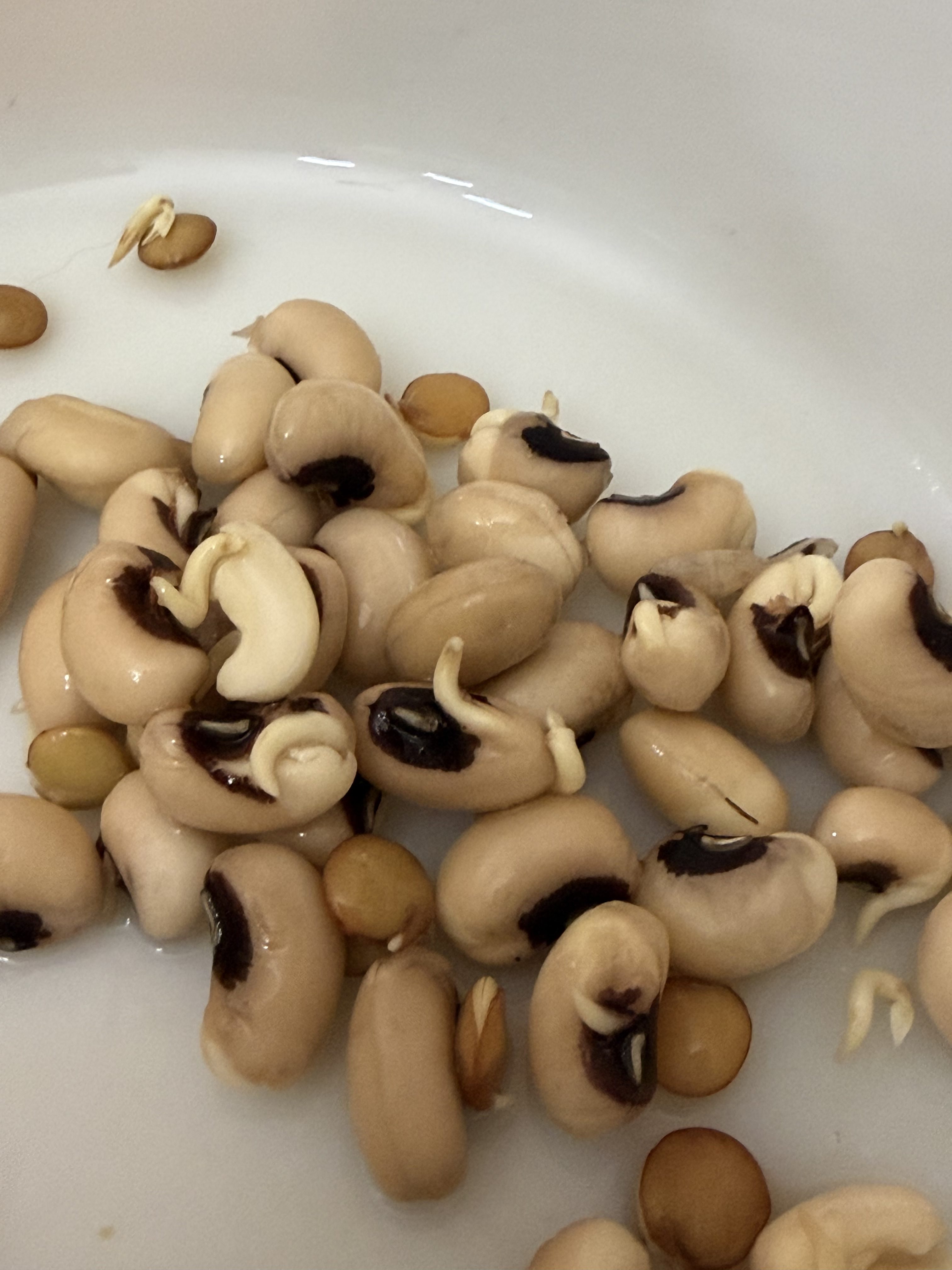
While cleaning out the pantry a few days ago, I stumbled across some very old bags of dried lentils and black-eyed peas that had clearly been sitting on the shelf for years. Instead of tossing them, I decided to try something a little homestead-creative—sprouting them for the chickens as a nutritious winter treat.
Are Lentils and Black-Eyed Peas Safe for Chickens?

Yes—but only once they’re sprouted. In their dry or raw form, legumes contain natural compounds that can interfere with digestion and nutrient absorption in chickens. Sprouting changes the chemistry of the seed, reducing those compounds and increasing the availability of vitamins, enzymes, and protein. The result is a safer, more digestible feed that’s especially helpful during cold winter months when fresh greens are scarce.
The Reality of Using Old Pantry Staples
Because these lentils and peas were so old, the sprouting success rate was… not great. This morning found me sorting bean by bean, separating what had actually sprouted (future chicken treats ) from what still needs soaking and will likely end up as soup this weekend 🍲.
Is it extra work? Absolutely.
Is it very “on brand” for homestead life? Also yes.
Sometimes homesteading means making things harder than they need to be—but it also means learning, experimenting, and finding small ways to make use of what you already have. And honestly, the chickens won’t complain.

Leave a Reply