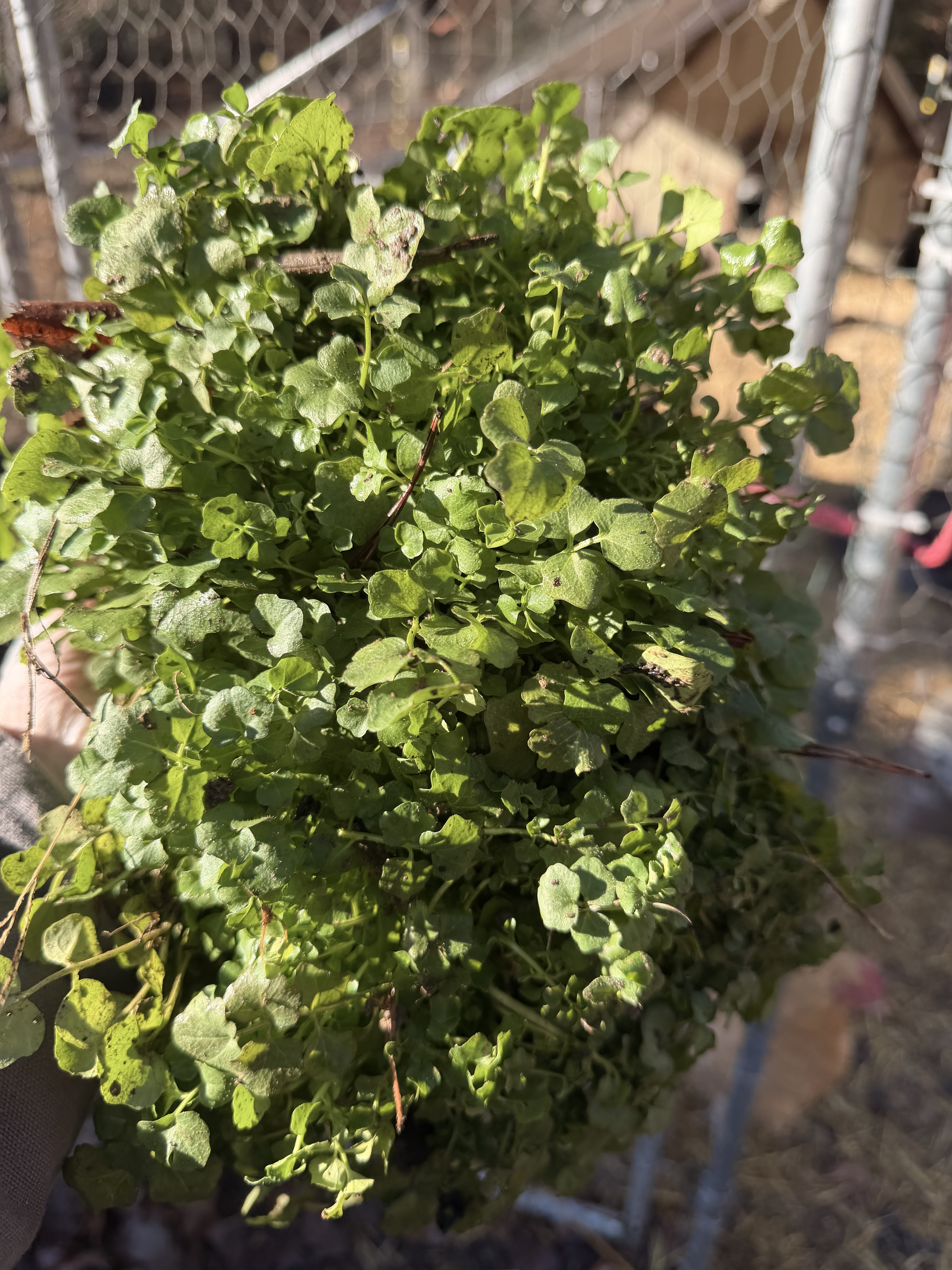
How Hairy Bittercress, Henbit Deadnettle, and Carolina Cranesbill Benefit Your Flock
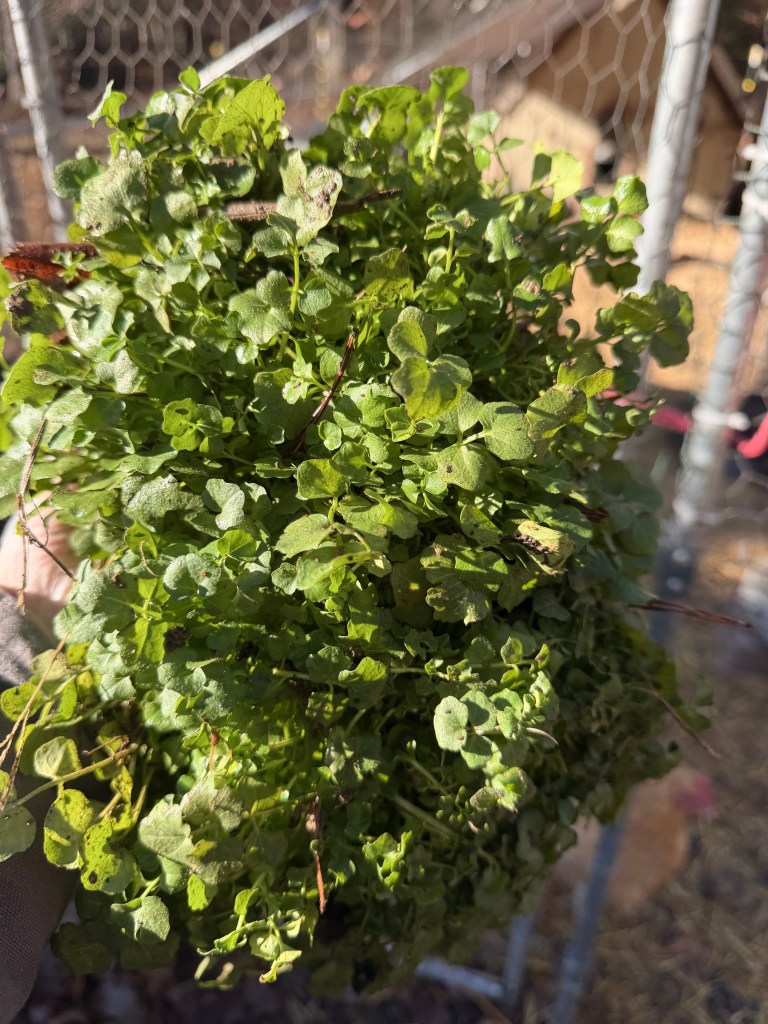
One of the most satisfying things about homesteading is learning that what looks like a chore can actually become a benefit somewhere else on the homestead. Today’s task was pulling winter weeds from the garden—but instead of tossing them onto the compost pile, we gave them straight to the chickens and ducks. The result? Very happy, very busy birds.
Winter weeds aren’t just harmless greenery. Many of them are packed with nutrients and provide incredible enrichment opportunities for poultry when offered safely and intentionally.
Why Winter Weeds Are Valuable for Chickens and Ducks
During the colder months, fresh forage can be limited. Offering safe garden weeds helps:
- Supplement nutrition naturally
- Encourage natural foraging behavior
- Reduce boredom during winter confinement
- Turn garden cleanup into free flock feed
As long as weeds are chemical-free and correctly identified, many are excellent additions to a chicken or duck’s diet.
The Winter Weeds We Fed Our Flock
Hairy Bittercress (Cardamine hirsuta)
Hairy Bittercress is often one of the first weeds to appear in late winter and early spring—and it’s a nutritional powerhouse.
Benefits for chickens and ducks:
- High in vitamin A for eye health and immune support
- Contains vitamin C, which helps with stress and overall wellness
- Provides calcium and potassium for strong bones and egg production
Chickens love pecking at the tender leaves and seed pods, making it both nutritious and engaging.
Henbit Deadnettle (Lamium amplexicaule)
Henbit Deadnettle is easily recognizable by its soft leaves and small purple flowers. Despite the name, it is not a true nettle and is completely safe for poultry.
Benefits for chickens and ducks:
- Contains antioxidants that support immune health
- Provides trace minerals that contribute to overall vitality
- Gentle on the digestive system
Its soft texture makes it easy for ducks to nibble and for chickens to tear apart while scratching.
Carolina Cranesbill (Geranium carolinianum)
Carolina Cranesbill often shows up in garden beds during cooler months and is another safe option when fed in moderation.
Benefits for chickens and ducks:
- Adds fiber, supporting digestive health
- Provides micronutrients that complement a balanced diet
- Encourages prolonged foraging and exploration
This weed is especially good for enrichment because it takes longer for birds to break apart, keeping them occupied.
Enrichment Matters Just as Much as Nutrition
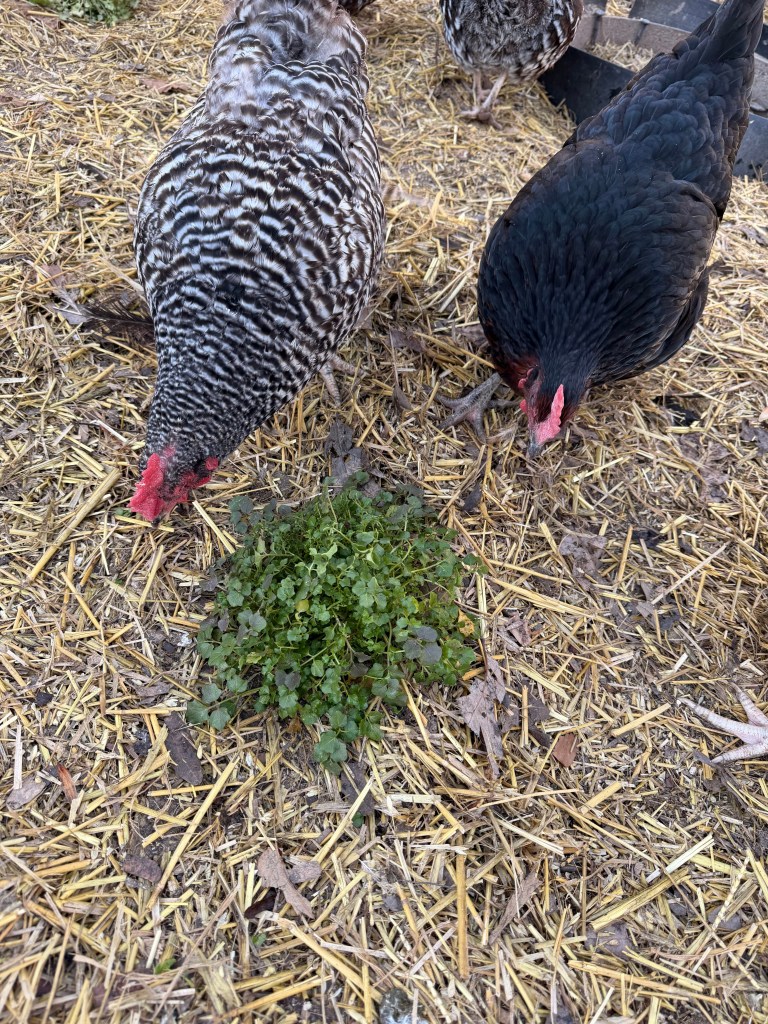
Beyond vitamins and minerals, feeding weeds is about behavioral enrichment. Tossing fresh weeds into the run encourages:
- Scratching
- Pecking
- Social interaction
- Natural curiosity
Enrichment helps reduce stress, boredom, and undesirable behaviors—especially during winter when birds may spend more time confined.
Safe Feeding Tips for Garden Weeds
Before offering weeds to your flock, keep these guidelines in mind:
- ✔️ Only feed positively identified, poultry-safe plants
- ✔️ Never feed weeds treated with herbicides or pesticides
- ✔️ Offer weeds as a supplement, not a replacement for balanced feed
- ✔️ Introduce new plants gradually and observe your flock
When in doubt, research first or skip the plant altogether.
A Win for the Garden and the Flock
Winter weeding doesn’t have to feel like wasted effort. With a little knowledge, those pulled plants can become free nutrition and enrichment for your chickens and ducks. It’s one more way the homestead works together—garden, animals, and all.
Sometimes the simplest moments—like watching chickens tear into a pile of “weeds”—are the best reminders of why we do this in the first place.

Leave a Reply