
What bores you?
If you’re wondering whether homesteading ever slows down, settles into a predictable rhythm, or becomes—dare I say—boring, I’m here to gently and lovingly tell you the truth: it does not.
Homesteading never gets boring. It evolves, it surprises, it occasionally humbles you in public, and it absolutely keeps you on your toes. And if I look back over the past year here at J & J Homestead, I can confidently say that boredom is the one thing we have not experienced.
Between chicks in the brooder, bees in the backyard, seeds on the heat mats, and a farmstand menu that somehow always needs “just one more test batch,” homesteading is less of a hobby and more of a lifestyle that refuses to sit still.
The Chickens: A Daily Lesson in Humility
Let’s start with the chickens.
We’ve written about ordering chicks, setting up brooders correctly, using radiant heating plates instead of heat lamps, and making sure everything is ready before those tiny peeping fluff balls come home. Preparation matters. The first few hours are critical. You can do everything right.
And then you’ll still walk outside one morning and find that someone has knocked over the feeder. Again.
There was also “The Great Chicken Swap,” when we moved eight hens between runs at sunrise to balance genetics and prevent overcrowding. Because nothing says peaceful farm life like chasing chickens before coffee. Early mornings are ideal for coop changes, but ideal does not mean calm. It means efficient chaos.

Chickens teach you about infrastructure, biosecurity, feed management, predator awareness, and how surprisingly fast a small mess can turn into a big problem. They also teach you that no matter how well you clean the run, they will redecorate.
Boring? Not even close.
Seed Starting Season: Where Optimism Meets Reality
Every February and March, social media explodes with seed-starting trays and hopeful gardeners. Here in Virginia, we’ve had snow, ice, and temperatures that made us question our optimism.
This year we felt late starting seeds. The weather threw curveballs. But once we finally mixed our seed-starting blend—three parts coco coir, two parts compost, one part perlite—the magic began again. Heat mats warmed the trays. Humidity domes went on. Tiny green shoots appeared like little acts of defiance against winter.
Seed starting is both science and faith. You measure soil structure for drainage and aeration. You monitor light exposure. You adjust watering schedules. And then you stare at trays like they’re going to grow faster if you cheer them on.
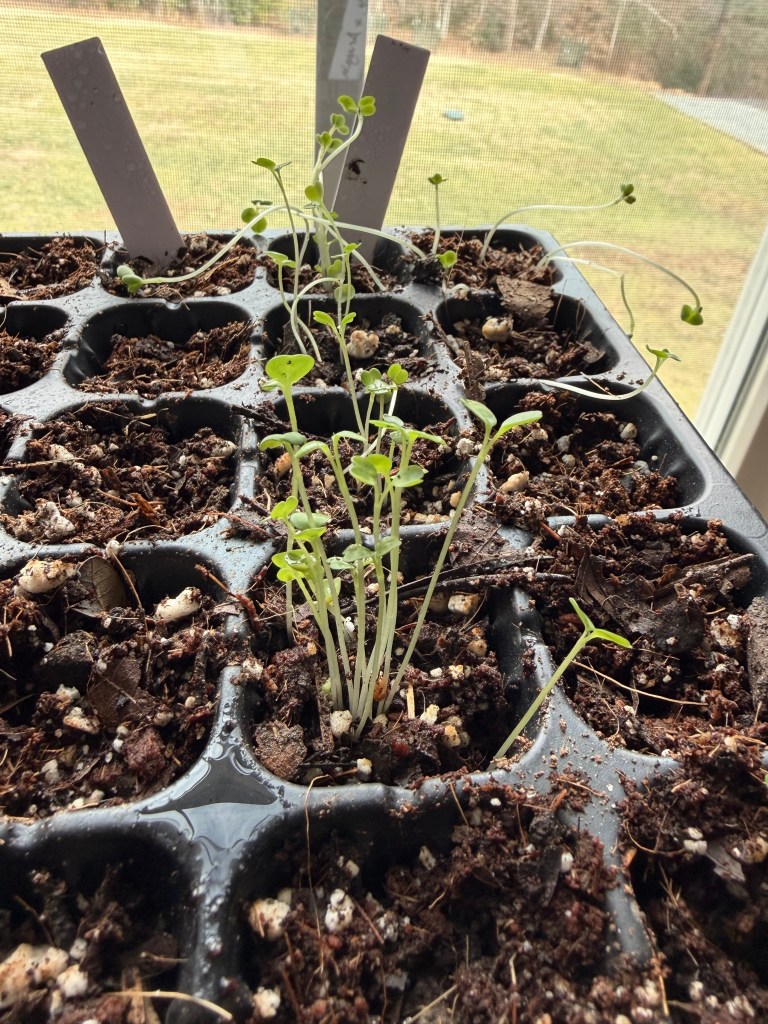
Some seeds thrive. Some sulk. Some surprise you. Sometimes you realize that you planted too many in the same area (see above picture, haha). And by the time tomatoes and peppers join the party, you’re already planning companion planting layouts and mentally redesigning the garden beds.
If that sounds repetitive, you’ve never tried to outsmart Virginia weather in Zone 7b.
The Greenhouse: A Four-Season Experiment
Before buying a greenhouse, we talked about placement: maximum solar gain, south-facing orientation, access to water, wind protection, and structural stability. All of that matters. It truly does.
What no one tells you is that a greenhouse is a year-round science experiment.
In winter, you’re calculating thermal retention and managing heaters. In summer, you’re venting, shading, and trying to prevent your lettuce from staging a dramatic exit. In shoulder seasons, you’re walking a tightrope between too cold and too hot.
Every season brings a new variable. Every crop responds differently. You never fully “arrive” at greenhouse mastery. You just get better at responding quickly.
And that constant learning curve? That’s the opposite of boring.
Bees: The Ultimate Exercise in Controlled Nerves
A few years ago, while Jason was hiking the Appalachian Trail, I decided honey bees sounded like a reasonable addition to the homestead. After classes, books, and local club meetings, I brought home two nucs.
Nothing prepares you for driving home with two humming colonies in the back of your vehicle.
Since then, we’ve learned about winter hive cleaning on warm days, feeding pollen substitute during early buildup, monitoring brood patterns, and paying attention to nectar flows that change the flavor notes of our honey.
Bees are fascinating, complex, and occasionally intimidating. They demand respect, attentiveness, and humility. The reward is honey that reflects your land—your garden, your trees, your seasons.
But every inspection still carries that tiny flicker of adrenaline. You open the hive not knowing exactly what you’ll find.
Predictable? No.
Boring? Absolutely not.
Ducks: A Lesson in Honest Self-Reflection
If I had to do it over again, I might not add ducks without a pond.
They are hilarious. They lay beautiful eggs. They also require constant water management if you don’t have a natural water source. Wading pools freeze. Water gets dirty. Winter laughs at your plans.
And so, in the spirit of honesty, we’ve admitted that sometimes homesteading includes learning what doesn’t quite fit your system.
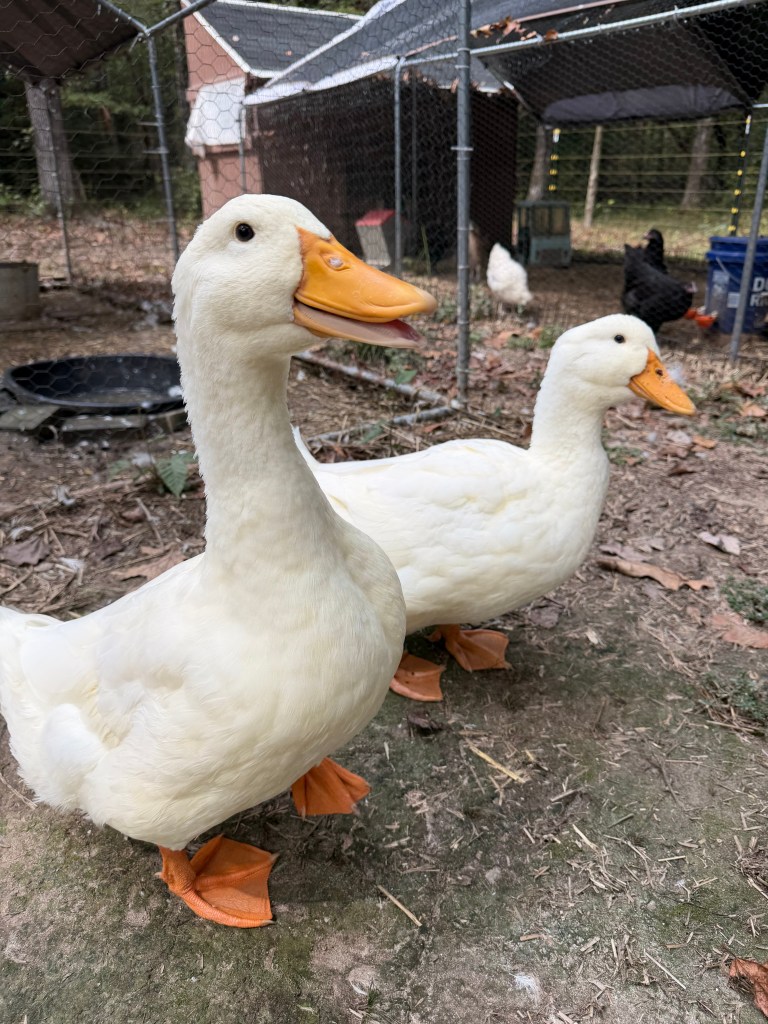
That learning process—figuring out what works on your land, for your climate, for your time constraints—is part of the rhythm. Homesteading isn’t about perfection. It’s about adjustment.
And adjusting is never dull.
The Farmstand: Where Entrepreneurship Meets Flour
When weather canceled outdoor chores, we pivoted and tested chocolate chip cookie recipes. Because if you can’t clean out the chicken run in 20-degree wind gusts, you might as well perfect your farmstand lineup.
Blueberry crumble muffins. Cinnamon rolls. Chocolate chip cookies. Cottage food laws in Virginia have opened doors for us to incorporate baked goods legally and thoughtfully.
Running a small farmstand blends agriculture, branding, budgeting, and customer service. You’re thinking about pricing strategy one moment and egg collection logistics the next. You’re designing vintage-style labels and calculating margins on flour.
It’s business planning wrapped in flour dust.
And when customers come back asking for “those muffins from last weekend,” it’s proof that the hard work is worth it.
Homesteading Is a Philosophy, Not a Checklist
One of the biggest misconceptions about homesteading is that it’s a destination. That once you have the coop built, the garden planted, and the systems in place, you’ll settle into something static.
That’s not how it works.
Homesteading is scalable. It can be container gardening on a patio or managing multiple animal species and a greenhouse. It’s about intentional living, self-sufficiency, and building skills that compound over time.
It’s also about embracing unpredictability.
Weather changes. Feed prices fluctuate. Seeds germinate unevenly. Chickens molt. Bees swarm. Equipment breaks. Plans shift.
But within all of that, you build resilience. You develop systems. You refine your approach. You grow—not just plants and livestock—but competence and confidence.
Why Homesteading Never Gets Boring
Homesteading never gets boring because it sits at the intersection of nature, business, learning, and daily life.
It’s physical work and strategic planning.
It’s science and instinct.
It’s early mornings and late-night seed catalogs.
It’s spreadsheets and muddy boots.
It asks you to pay attention.
And maybe that’s the real secret. In a world designed to distract us, homesteading demands engagement. You can’t autopilot your way through a beehive inspection. You can’t ignore a brooder. You can’t forget to vent a greenhouse.
The land responds to care—or neglect—quickly.
So no, homesteading never gets boring.
It challenges you. It surprises you. It occasionally exhausts you. But it also gives you stories, skills, and a deep satisfaction that can’t be bought at a store.
And tomorrow morning, when I step outside with coffee in hand, I can promise you one thing:
Something unexpected will be waiting.
That’s not chaos.
That’s homesteading.


Leave a Reply