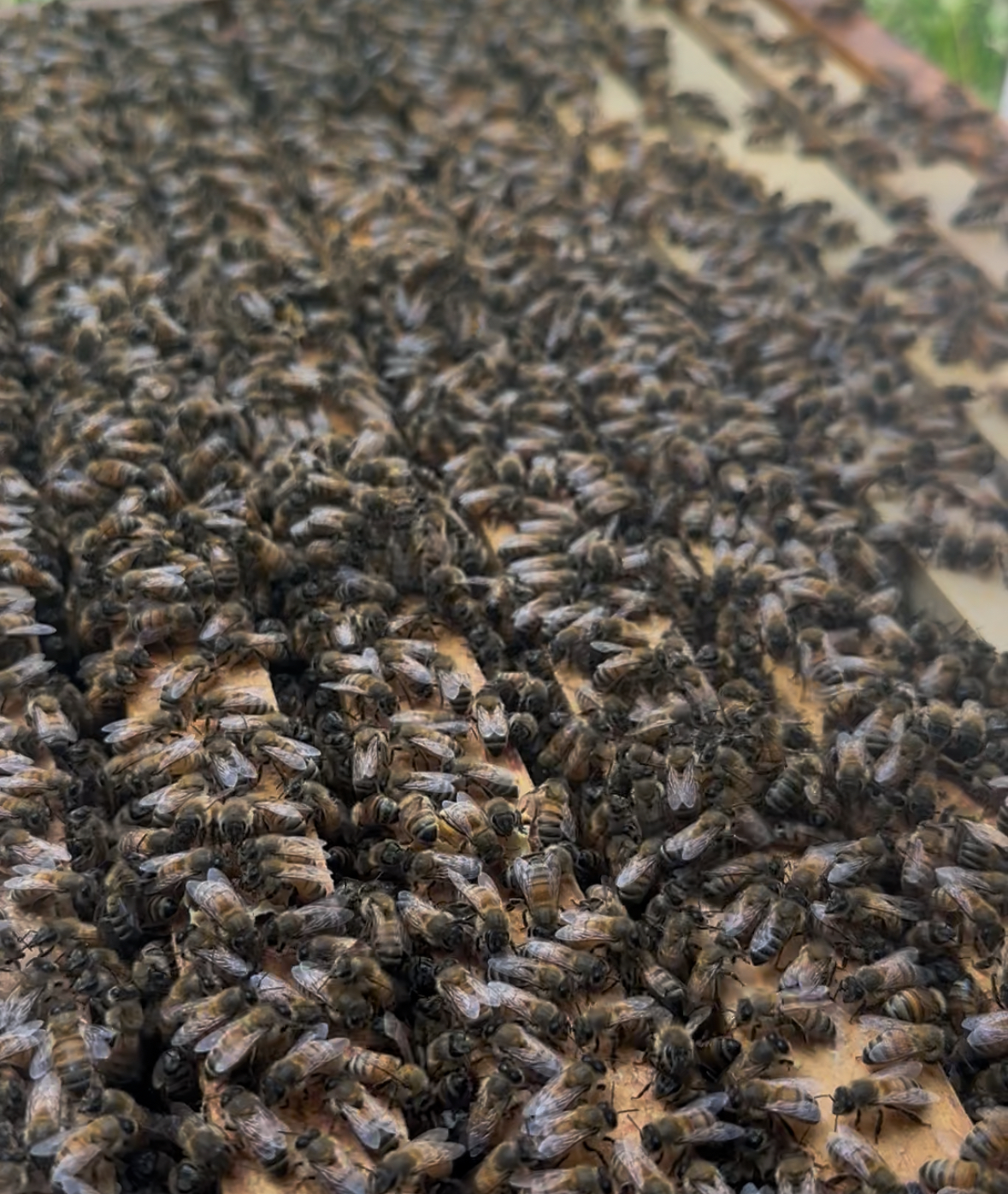
Yesterday we had one of those unexpected warm winter days here in Virginia that makes you believe spring is just around the corner. The sun was shining, temperatures climbed, and within hours the honey bees were out in full force. Watching them take cleansing flights and reorient themselves after a stretch of cold weather is one of the quiet rewards of winter beekeeping.
But something else caught my attention. A handful of bees were investigating the chicken feed.
If you’ve kept bees for any length of time, you know they are incredibly resourceful. When natural forage is scarce, they will search for alternative sources of nutrition. Late winter and very early spring can be a nutritional bottleneck for colonies. Even when bees still have honey stores for energy, they may lack adequate protein sources to support brood rearing. That is where dry bee feed—specifically a pollen substitute—can play an important role.
What Is Dry Bee Feed (Pollen Substitute)?
Dry bee feed in this context is not granulated sugar. It is a pollen substitute designed to provide protein and essential nutrients when natural pollen is unavailable. One example is the dry pollen substitute offered by Harvest Lane Honey, which is formulated to mimic the nutritional profile of natural pollen.
While honey and sugar syrup provide carbohydrates (energy), pollen provides protein, fats, vitamins, and minerals that are essential for:
- Brood production
- Development of nurse bees
- Gland development for royal jelly production
- Overall colony strength heading into spring
According to Penn State Extension, protein is critical for brood rearing and colony buildup, especially in early spring when colonies are preparing for nectar flows but natural pollen may not yet be abundant. Similarly, University of Minnesota Extension explains that supplemental feeding can support colonies during times of dearth or limited forage.
In short, carbohydrates fuel the bees. Protein builds the bees.
Why Supplement in Late Winter?
In our case, the colonies still have honey stores from last year’s harvest. Energy is not the primary concern. The issue is protein availability.
When we experience warm winter days, queens may begin laying more consistently. The colony senses the seasonal shift before we do. Increased brood production means an increased demand for pollen. If natural pollen sources are not yet blooming—or if cold snaps follow warm days—the colony can experience stress.
The USDA Agricultural Research Service has published research showing that adequate nutrition directly affects immune function and overall colony resilience. Strong nutrition going into spring can mean the difference between a colony that limps into the nectar flow and one that explodes with population at exactly the right time.
Setting out a dry pollen substitute on warm days provides accessible protein without introducing excess moisture into the hive, which is especially important in cool weather. Moisture management during winter and early spring is critical, as damp conditions can chill brood more quickly than cold air alone.
How to Offer Dry Pollen Substitute
Dry pollen substitute can be:
- Placed in a feeder inside the hive
- Offered in a sheltered external feeder on warm days
- Mixed into patties and placed directly on the top bars
On our warm day, I placed the dry pollen substitute outside to allow the bees to forage naturally. It took them a little while to discover it. Once they did, the behavior changed almost immediately. Purposeful landings. Quick sampling. Direct flights back to the hive.
Word spreads quickly in a honey bee colony.
Balancing Support with Natural Instinct
Beekeeping is always a balance. The goal is not to replace nature but to bridge gaps when weather patterns create stress points. A warm winter day does not mean nectar and pollen are flowing. It simply means the bees are active.
Supplemental feeding—when done thoughtfully—can help ensure colonies enter spring strong, healthy, and ready to take advantage of the first real bloom.
As homesteaders and beekeepers, our responsibility is stewardship. Sometimes that means harvesting honey. Sometimes it means recognizing when the bees need a little help to carry them through to the next season.
And on a warm winter day, watching them finally discover that dry pollen substitute and carry it home with purpose feels like a small but meaningful win.

Leave a Reply