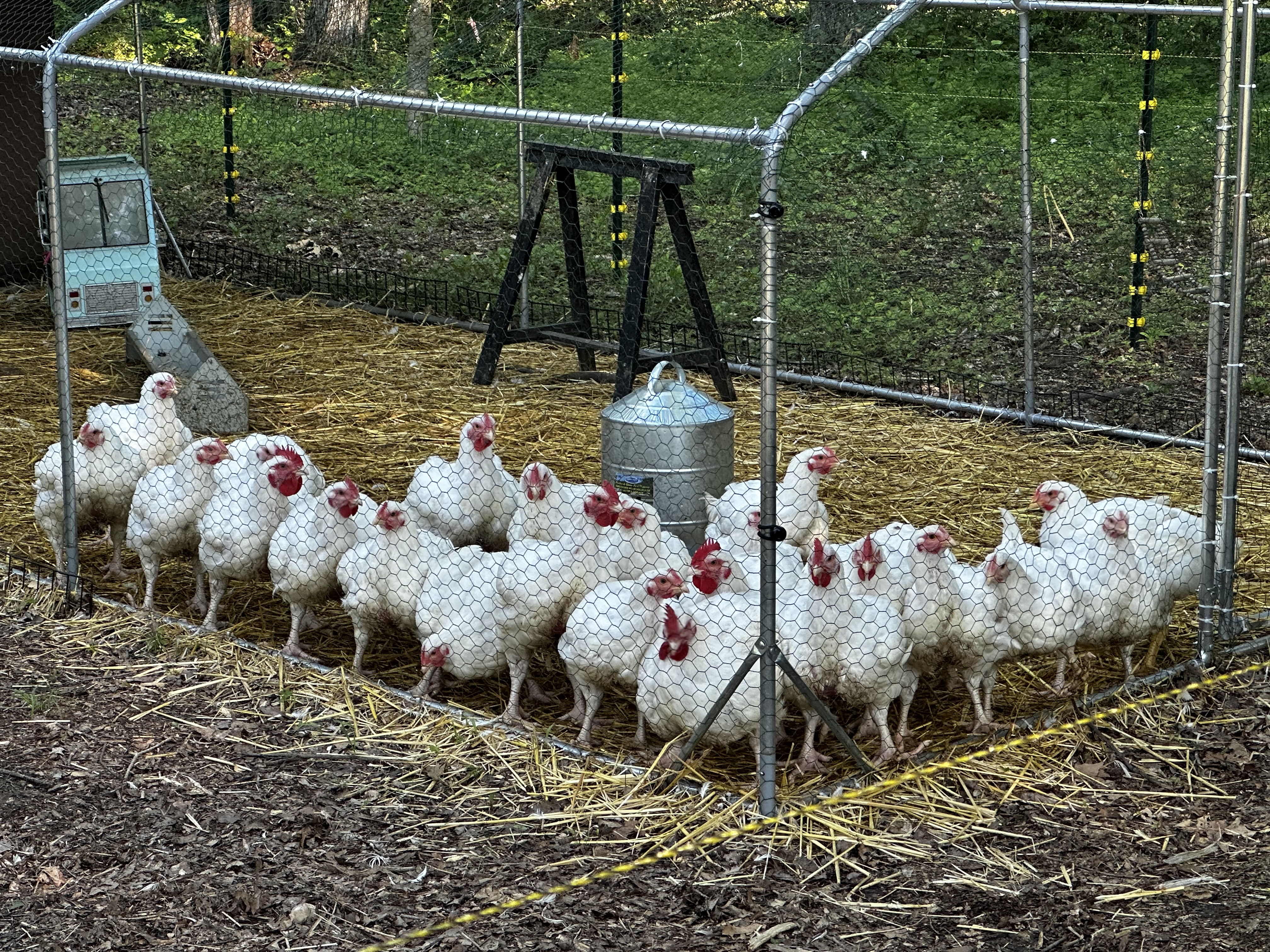
If you raise backyard chickens long enough, you will eventually ask the question: How do I keep snakes away from my chicken coop?
Here in Virginia, especially as temperatures rise in spring and summer (next weekend it will be in the 70s!), snakes become more active. Unfortunately, we have the venomous copperhead snake in our area, but most snakes are harmless and even beneficial. However, when you collect eggs daily and manage a flock you care deeply about, the idea of a snake in the coop is unsettling.
Many homesteaders search for snake-repelling plants as a natural way to protect their flocks. But before planting an entire perimeter of “miracle plants,” it’s important to understand what the research actually says.
This post will walk you through the best plants to grow around your chicken coop, what science supports, and what strategies truly deter snakes long term.
First: Do Plants Really Repel Snakes?
There is limited scientific evidence proving that any plant alone will reliably repel snakes. Most extension services emphasize habitat management as the primary strategy for snake prevention.
For example, the Virginia Cooperative Extension recommends removing hiding places, securing feed, and reducing rodent populations rather than relying on plants alone.
Similarly, the University of Florida IFAS Extension notes that habitat modification is far more effective than repellents.
That said, certain plants may contribute to snake deterrence indirectly by:
Reducing rodent activity Creating strong scents some reptiles avoid Eliminating dense, cool hiding spaces
Think of plants as one part of a larger integrated pest management approach.
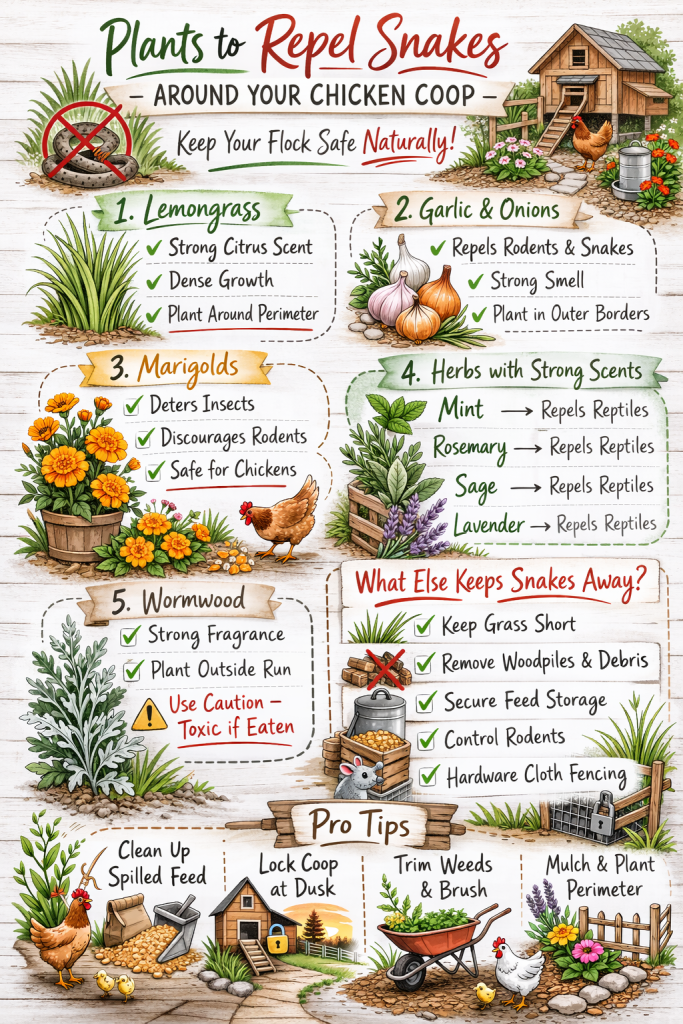
1. Lemongrass (Cymbopogon citratus)
Lemongrass is often cited as a natural snake deterrent due to its strong citrus scent. It contains citronella oil, which is widely used as an insect repellent.
While research doesn’t confirm it as a proven snake repellent, many gardeners use it as part of perimeter planting. Its dense growth habit may also reduce open hiding areas near structures.
Lemongrass thrives in warm climates and does best in full sun with well-draining soil.
For growing information, see resources from the Clemson Cooperative Extension.
2. Garlic and Onions (Allium family)
Plants in the allium family produce sulfur compounds that create strong odors. Some anecdotal reports suggest snakes dislike these smells.
More importantly, garlic and onions can help deter rodents when planted around the coop perimeter. Since snakes are attracted to chicken coops primarily for rodents and eggs, reducing prey is one of the most effective snake-control strategies.
The University of Minnesota Extension explains how habitat management and rodent control are key components of snake prevention.
If you already grow onions or garlic in your garden, consider extending plantings around the coop as part of your strategy.
3. Marigolds
Marigolds are commonly recommended for pest control due to their strong scent and ability to deter certain insects.
While there is no solid research proving they repel snakes, they can help reduce insect populations that attract rodents, which in turn attract snakes.
They are also hardy, easy to grow, and safe around chickens. In fact, chickens often enjoy nibbling the flowers, making them a dual-purpose plant.
4. Wormwood (Artemisia absinthium)
Wormwood has a strong fragrance and is sometimes listed among traditional snake-repelling plants.
However, caution is important here. Wormwood can be toxic in large quantities and should not be planted where chickens can heavily graze on it.
If used, plant it outside the run perimeter rather than inside accessible areas.
5. Pink Agapanthus (in warmer regions)
Some gardeners claim that agapanthus may deter snakes due to its dense root systems and strong foliage structure.
Evidence is anecdotal, but in southern climates it is sometimes used in landscaping near foundations.
As always, structural habitat control remains more effective than plant-based methods alone.
What Actually Keeps Snakes Away from Chicken Coops
If your goal is serious snake prevention around your coop, focus on these proven strategies:
Eliminate Rodents
Snakes follow food. If you eliminate mice and rats, you reduce snake attraction.
Store feed in metal containers with tight-fitting lids. Clean up spilled grain immediately. Avoid leaving cracked eggs in nesting boxes.
The USDA Natural Resources Conservation Service emphasizes integrated pest management strategies that prioritize food-source control.
Remove Hiding Spots
Snakes prefer:
Tall grass Woodpiles Rock piles Dense shrubs
Keep grass trimmed short around the coop. Avoid stacking lumber or debris nearby.
Install Hardware Cloth
Small snakes can slip through surprisingly tiny gaps.
Use:
– 1/4-inch hardware cloth
– Buried perimeter fencing
– Secure latches
Unlike chicken wire, hardware cloth prevents entry rather than just containing birds.
Elevate Nesting Boxes
Snakes are often attracted to easy-access eggs. Elevating nesting boxes and ensuring the coop is tightly sealed at night reduces opportunity.
An automated chicken door, like those discussed in our previous post, also ensures the coop is secured consistently at dusk when snakes are active.
Creating a Snake-Resistant Coop Landscape
If you’d like to incorporate plants as part of your overall plan, here’s a balanced approach:
Plant:
Lemongrass in sunny perimeter beds Garlic and onions in outer borders Marigolds near entry points
Maintain:
Short grass Clean feed storage Secure fencing
Avoid:
Dense shrubbery directly against coop walls Mulch piled high near foundations Cluttered landscaping
In other words, design your coop area for visibility and airflow. Snakes prefer dark, cool, undisturbed areas.
A Realistic Homesteader’s Perspective
As much as we all love natural solutions, there is no magic plant that guarantees a snake-free chicken coop.
The most effective snake deterrent strategy for backyard chickens combines:
– Clean feed management
– Rodent control
– Secure fencing
– Habitat reduction
– Consistent coop closure
Plants can complement this system—but they are not a replacement for structural prevention.
And honestly? Most snakes you’ll encounter are non-venomous and beneficial to the ecosystem. They control rodent populations naturally. The goal is not eradication. It’s keeping them out of your coop.
Final Thoughts: Build Layers of Protection
If you’re wondering what to plant around your chicken coop to deter snakes, start with herbs and strong-scented plants—but prioritize habitat management first.
Your chickens depend on thoughtful design more than folklore.
And like most things in homesteading, success comes from layered systems, not single solutions.

Leave a Reply