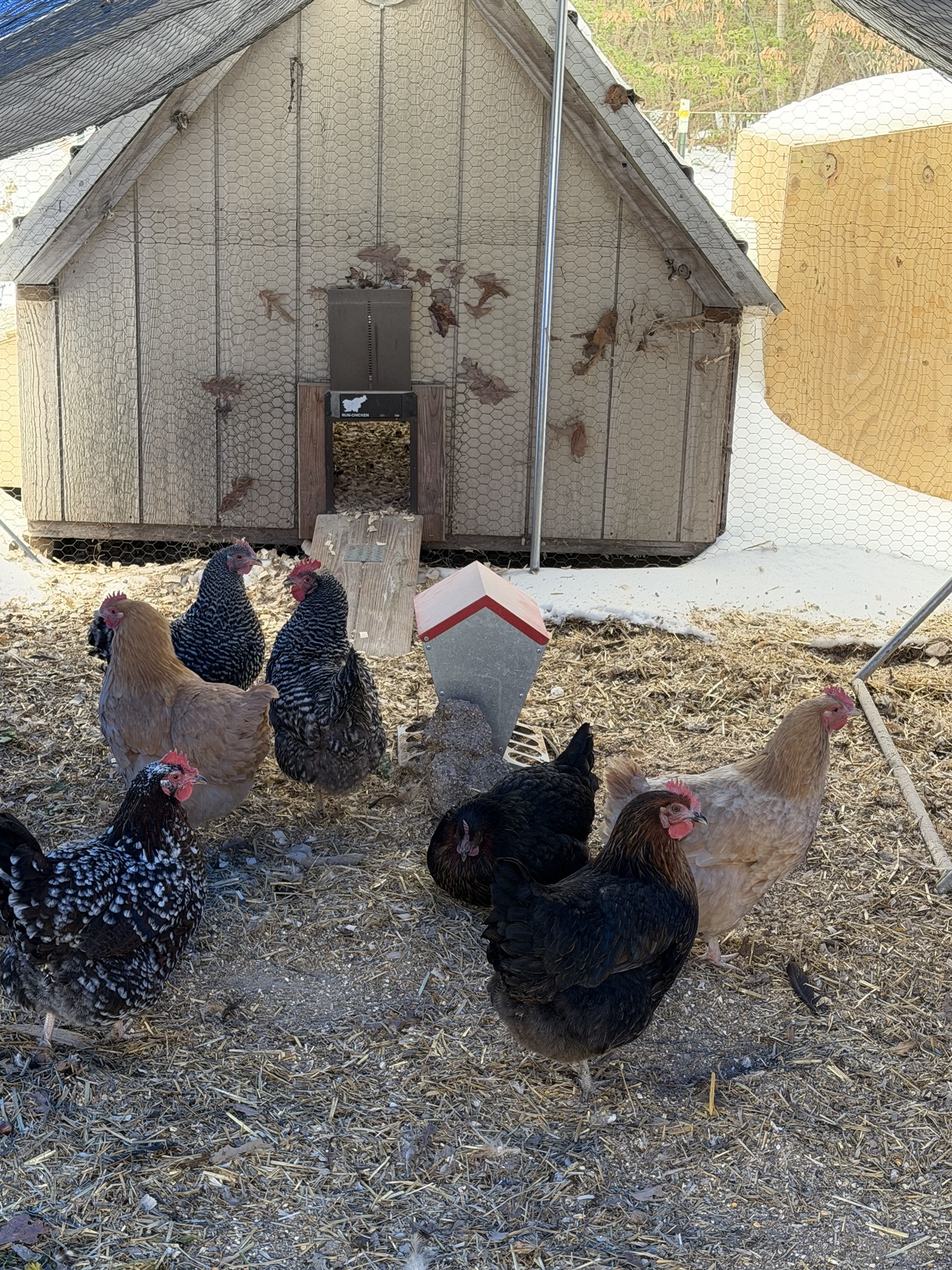
One of the biggest fears new homesteaders have is this: What happens if I need to leave for a few days?
Whether it’s a long-planned vacation, a family emergency, or even a quick weekend trip, stepping away from your homestead can feel overwhelming—especially when you have animals depending on you. As someone managing chickens, ducks, bees, and a garden here in Virginia, I understand how quickly “just a few days away” can turn into a logistical puzzle.
The good news? With the right systems in place, leaving your homestead for a short period is absolutely possible. You just need a plan.
If you’re wondering how to leave chickens for a few days safely, this guide will walk you through practical, real-world tips that protect your flock and give you peace of mind.
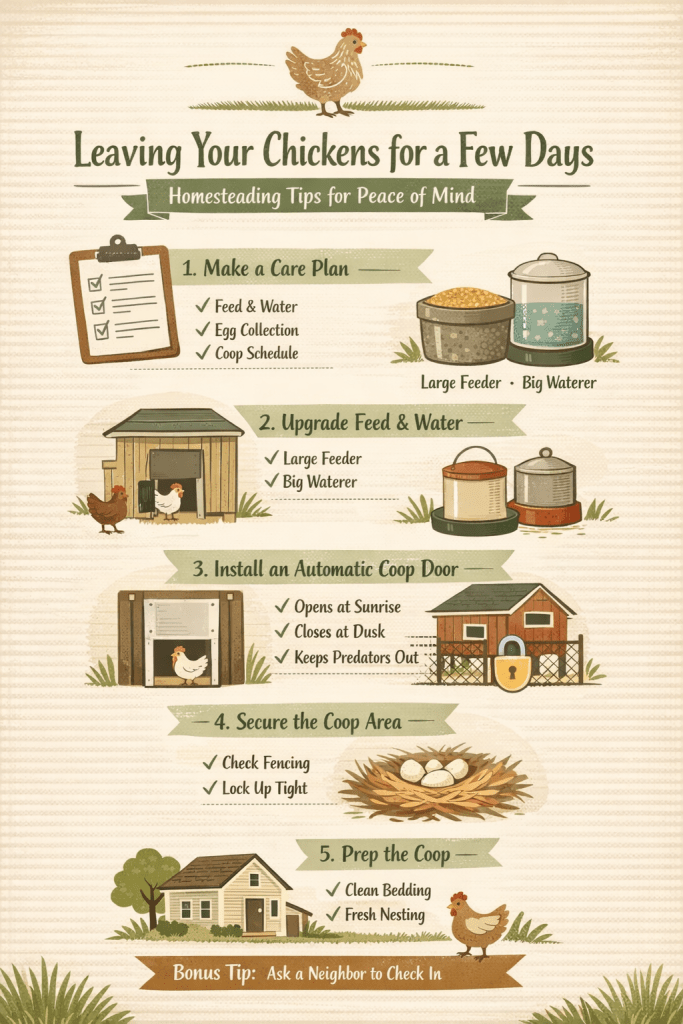
Start With a Simple, Written Plan
Before anything else, write down your normal daily routine.
List:
– Feed type and amount
– Water refresh schedule
– Egg collection routine
– Coop opening and closing times
– Any special needs (broody hens, injured birds, integration groups, etc.)
Even if you believe it’s “common sense,” put it on paper. If someone else is stepping in to help—even a neighbor or family member—clear instructions reduce stress and prevent mistakes.
If no one is available to stop by daily, your systems need to carry the load for several days without intervention.
Upgrade Your Feeders and Waterers
If you’re planning to leave chickens unattended for a few days, capacity matters.
Larger Feeders
Make sure your feeder:
– Holds enough feed for at least double the time you’ll be gone
– Is protected from rain
– Is rodent-resistant
In our coops, we always test systems before relying on them. Fill the feeder fully and monitor how long it lasts under normal conditions. Don’t guess—measure.
High-Capacity Water Systems
Water is the real vulnerability. Chickens can miss a feeding and recover. They cannot go long without water.
Consider:
– Large gravity-fed waterers
– Nipple waterer bucket systems
– Covered systems to prevent debris contamination
If you’re in a hot climate—or it’s summer in Virginia—add extra capacity. Heat increases water consumption dramatically.
As a rule, I always provide at least two separate water sources. Redundancy prevents disaster if one system fails.
Why an Automated Chicken Door Is a Game Changer
If there’s one investment that dramatically improves peace of mind, it’s an automated chicken door.
An automatic coop door:
– Opens at sunrise
– Closes at dusk
– Protects chickens from nighttime predators
– Eliminates the need for someone to manually open and close the coop
For homesteaders who need to step away, this is not just a convenience—it’s security.
Predators are most active at dawn and dusk. Forgetting to close the coop one evening can undo years of careful flock management. An automated chicken door removes human error from the equation.
When selecting one, look for:
– Light-sensor or timer options
– Battery backup
– Weather resistance
– Strong, predator-proof construction
Install it well before you need to travel. Let it run for at least a week to confirm reliability.
For many small homesteads, this one upgrade makes short trips realistic.
Secure the Perimeter
When you’re away, you want fewer variables—not more.
Before leaving:
– Inspect fencing for gaps
– Reinforce any weak points
– Confirm latches are secure
– Check for signs of digging predators
If you use chicken tractors or movable runs, place them on level, secure ground before departing.
I always walk the perimeter the day before leaving. It takes five minutes and prevents sleepless nights later.
Keep the Coop Clean and Dry
Clean bedding before you go.
Fresh, dry bedding reduces:
– Odor buildup
– Moisture accumulation
– Ammonia levels
– Risk of respiratory stress
If you use deep litter, fluff it and top it off. If you use pine shavings or hemp bedding, add a fresh layer.
Your goal is to create stable conditions that won’t deteriorate while you’re gone.
Consider a Trusted Check-In Person
Even with automation, having someone stop by once during a longer absence adds an extra layer of safety.
Choose someone who:
– Is comfortable around animals
– Can recognize obvious issues
– Knows how to contact you
Keep instructions simple. Overcomplicating routines increases mistakes.
If you also keep ducks, bees, or garden seedlings, outline only the essentials. For example, bees generally do not need daily care, but it helps if someone notices if a hive is knocked over after a storm.
Test Everything Before You Leave
Never test new systems the day you depart.
If you install:
– A new feeder
– A new waterer
– An automatic door
– Run it under observation first.
Homesteading teaches us that systems fail in creative ways. Chickens are experts at clogging water lines and scattering feed. A short “trial run” ensures everything works as intended.
Plan Around the Weather
Weather adds complexity.
In summer:
– Increase water capacity
– Ensure shade
– Confirm ventilation
In winter:
Prevent water freezing Ensure doors function in cold conditions Remove snow from access points
If a storm is forecast, delay departure if possible. Leaving during extreme weather introduces unnecessary risk.
Peace of Mind Comes From Preparation
Homesteading is about responsibility—but it’s also about building a life you love. That includes rest, travel, and being present for family when emergencies arise.
With proper preparation, it is absolutely possible to leave chickens for a few days safely.
Automated systems, thoughtful planning, and redundancy turn anxiety into confidence.
You don’t have to choose between your flock and your freedom. You simply need systems that support both.
And honestly? If stepping away for a few days reveals weaknesses in your setup, that’s valuable information. Each trip helps you refine your homestead infrastructure for the long term.
Because sustainability isn’t just about gardens and eggs. It’s about creating systems that work—even when you’re not there.

Leave a Reply