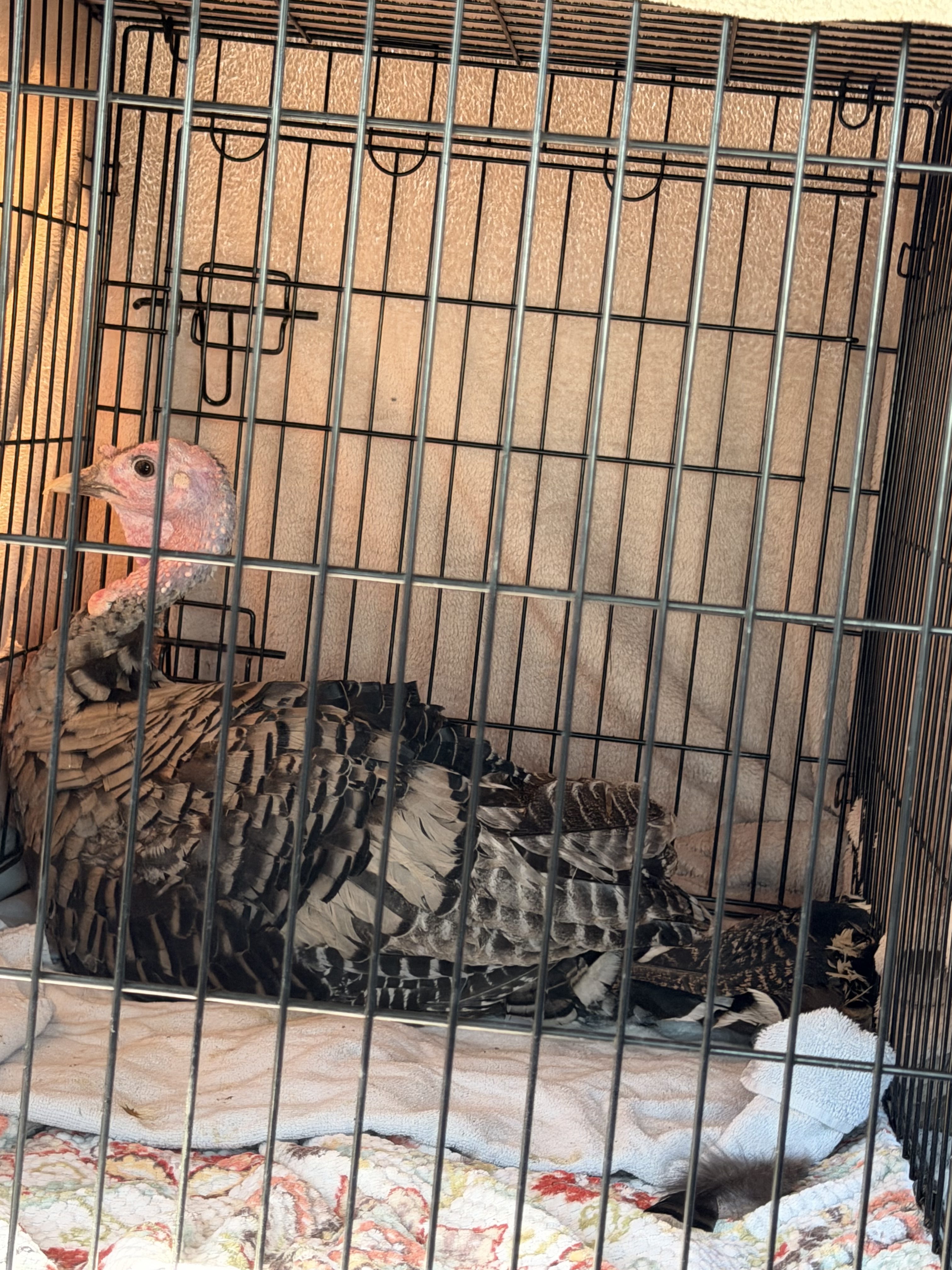
There’s something exciting about adding a new animal to the homestead—especially when it’s one that brings a whole new dynamic to your flock. This week, we welcomed a young tom turkey (quickly named Tommy) to our group of four turkey hens.
As with most things in homesteading, though, reality doesn’t always match the picture in your head. The introduction hasn’t been seamless—but it has been a valuable reminder that patience is one of the most important tools we have.

First Impressions: Not Exactly a Warm Welcome
When we brought Tommy home, we knew better than to simply place him directly into the flock and hope for the best. Turkeys, much like chickens, have a strong social hierarchy—and disrupting that structure can lead to stress and aggression.
So instead, we sectioned off a large portion of the turkey run. This allowed the hens and Tommy to see one another, hear one another, and begin adjusting to each other’s presence—without the risk of immediate physical confrontation.
Even with that buffer in place, it was clear right away:
the hens were not impressed.
Our alpha hen wasted no time making her feelings known. Puffing up, fanning out her feathers, and strutting with all the confidence of a tom, she made it clear that she was in charge—and not particularly interested in sharing that role.
Understanding Turkey Behavior During Introductions
What we’re seeing is completely normal. Turkeys are incredibly social birds, but they are also highly territorial and structured in their hierarchy.
When a new bird is introduced:
- The existing flock will often challenge the newcomer
- Dominant birds will display aggressively (puffing, strutting, vocalizing)
- The new bird may appear stressed, withdrawn, or overly cautious
It’s not personal—it’s instinct.
Tried-and-True Tips for Introducing Turkeys
If you’re considering adding a turkey to your flock, here are some of the most effective and commonly recommended strategies:
1. Start with a “See But Don’t Touch” Setup
This is exactly what we implemented with Tommy. Keeping a physical barrier in place allows:
- Safe observation
- Gradual familiarity
- Reduced risk of injury
This step alone can make or break a successful introduction.
2. Give It Time—More Than You Think
One of the hardest lessons in homesteading is that animals move at their own pace.
Introductions can take:
- Several days
- A couple of weeks
- Sometimes longer
Rushing the process almost always leads to setbacks.
3. Watch the Dominant Birds Closely
In our case, the alpha hen is the one to watch. Her behavior sets the tone for the rest of the flock.
Signs to monitor:
- Excessive aggression at the barrier
- Repeated charging or pecking attempts
- Prolonged stress in the new bird
4. Introduce on Neutral Ground (When Ready)
Once the birds seem calmer, a supervised introduction in a slightly altered or neutral space can help reduce territorial behavior.
5. Provide Plenty of Space
Crowding intensifies aggression. Ensuring your run has:
- Multiple feeding stations
- Open space to move away
- Visual barriers if possible
…can significantly ease the transition.
6. Expect Some Posturing
Even after full integration, some level of:
- Puffing
- Strutting
- Vocal disagreements
…is completely normal as the pecking order settles.
Where We Are Now
Right now, we’re still in the early stages. Tommy is safely separated, observing his new flock, while the hens continue to express their opinions—loudly and dramatically.
Our alpha hen is still putting on quite the show, puffed up like she owns the entire homestead. If you didn’t know better, you’d think she was the tom.
And maybe, in her mind, she is.
Looking Ahead
We’re hopeful that in the coming weeks, things will begin to settle. With consistency, space, and patience, most flocks do eventually find their balance.
This is one of those moments in homesteading that reminds us:
progress isn’t always fast—but it is always worth it.
Tommy may not be winning any popularity contests just yet, but he’s exactly where he needs to be—and we’re excited to watch his place in the flock unfold.
Final Thoughts
If you’re planning to introduce a new turkey to your flock, don’t be discouraged if things start off a little rocky. What matters most is creating a safe environment and allowing the birds time to adjust naturally.
Every flock is different, but patience and thoughtful management go a long way.

Leave a Reply