
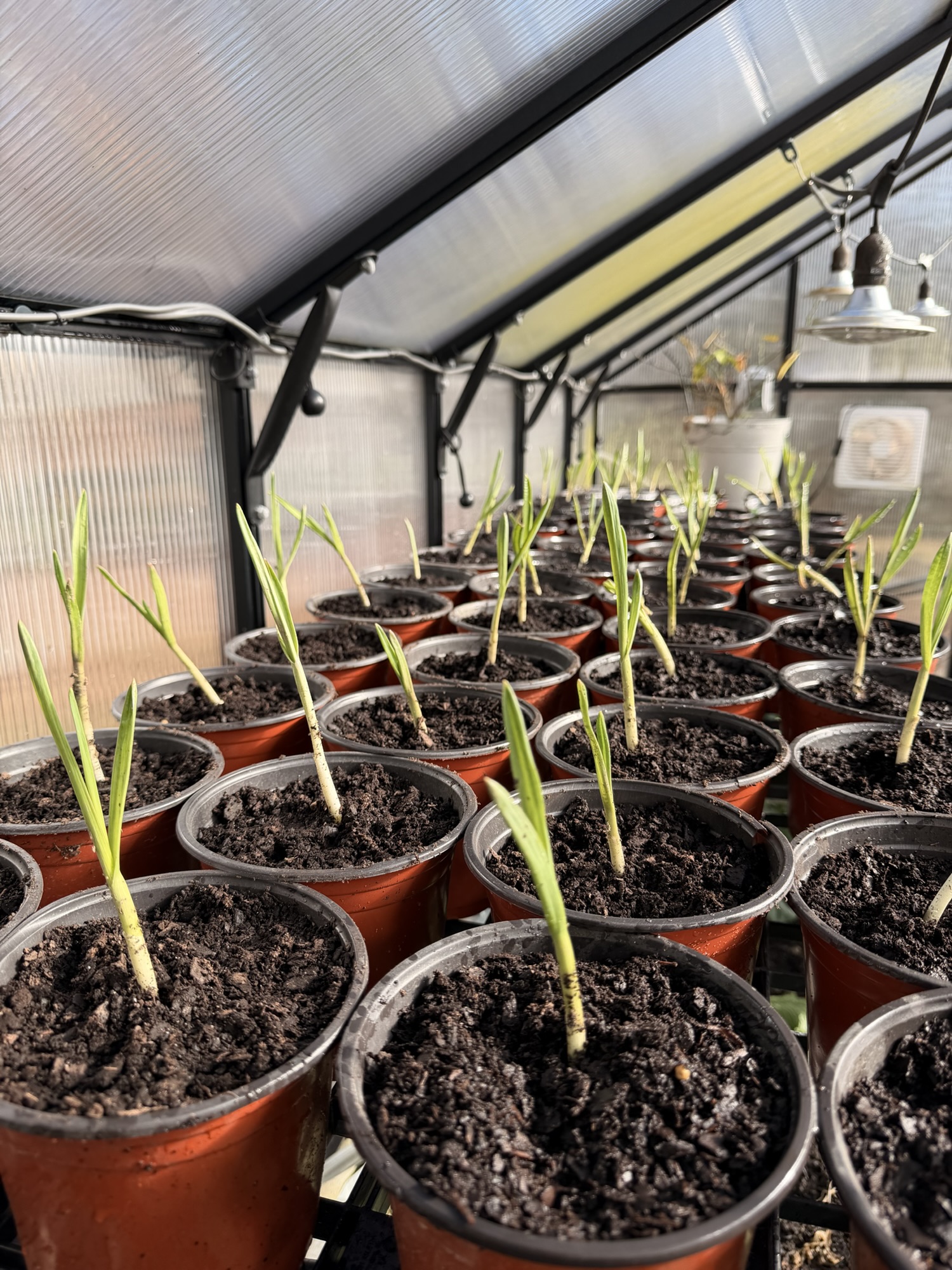
One of the beautiful things about homesteading is learning to adapt when plans change. Last month, we planted our garlic with every intention of letting it settle in for the winter. Then, this past Sunday, the garden had other plans for us.
As part of an expanded garden layout, a few crops needed to be relocated—including our garlic. That meant carefully digging it up, separating the cloves, and finding a new home for it. Fortunately, garlic is incredibly resilient, and this unexpected move turned into an opportunity. We now have loads of garlic cloves thriving in the greenhouse, right where they can continue growing through the winter months.
If you’ve ever wondered whether garlic can handle cold weather—or if winter planting is worth it—the answer is a resounding yes.
Why Garlic Thrives in Winter
Garlic is one of the most cold-hardy crops you can grow. In fact, garlic needs cold exposure (a process called vernalization) to properly develop bulbs. When garlic experiences cold temperatures, it triggers the biological signals that result in strong root development and larger, healthier bulbs in the spring.
Winter-planted garlic spends the colder months establishing roots below the soil surface while staying relatively low and quiet above ground. Once temperatures warm, it takes off quickly—often outperforming garlic planted later in the season.
Is It Okay to Dig Up and Replant Garlic?
Yes—especially when it’s done carefully.
When we dug up our garlic, we gently separated the cloves, making sure not to damage the basal plate (the flat end where roots form). Garlic is surprisingly forgiving, particularly during its early growth stages. As long as cloves are replanted promptly and kept in suitable conditions, they bounce back remarkably well.

Relocating garlic in late fall or early winter is far less stressful for the plant than doing so during active spring growth.
Growing Garlic Successfully in Winter: Key Tips
Whether you’re planting garlic for the first time or adjusting plans mid-season, these pointers will help set your crop up for success:
Choose the Right Location
Garlic prefers:
Well-draining soil Full sun (or bright greenhouse conditions) Protection from standing water
Growing garlic in a greenhouse during winter offers the added benefit of temperature moderation while still allowing the plant to experience enough chill.
Plant Individual Cloves
Always plant separate cloves, not whole bulbs. Each clove becomes a single garlic head. Place cloves:
Pointed end up About 2 inches deep 4–6 inches apart
Don’t Overwater
Garlic does not like soggy soil, especially in winter. Water lightly after planting and only as needed. Excess moisture during cold months can lead to rot.
Mulch or Insulate
For outdoor beds, a thick layer of mulch (straw, leaves, or shredded mulch) helps regulate soil temperature and protect cloves during hard freezes. In a greenhouse, consistent soil temperatures often make heavy mulching unnecessary.
Be Patient
Garlic is a long-game crop. Winter growth may seem slow, but below the surface, roots are developing and setting the stage for spring growth. Resist the urge to disturb it once planted.
Why Winter Garlic Is Worth the Effort
Winter-planted garlic often produces:
– Larger bulbs
– Stronger plants
– Earlier harvests
By the time spring arrives, garlic already has a well-established root system and can focus its energy on leaf growth and bulb formation. That early start makes a noticeable difference at harvest time.
A Happy Ending for Our Garlic
What started as an unexpected garden shuffle turned into a reminder of just how adaptable garlic really is. After separating and replanting the cloves, we now have a thriving patch of garlic tucked safely in the greenhouse, ready to grow through the winter and explode with growth in the spring.
If you’re on the fence about planting garlic in winter—or worried about a mid-season change—take it from us: garlic is tougher than it looks, and winter is exactly where it wants to be.


Leave a Reply