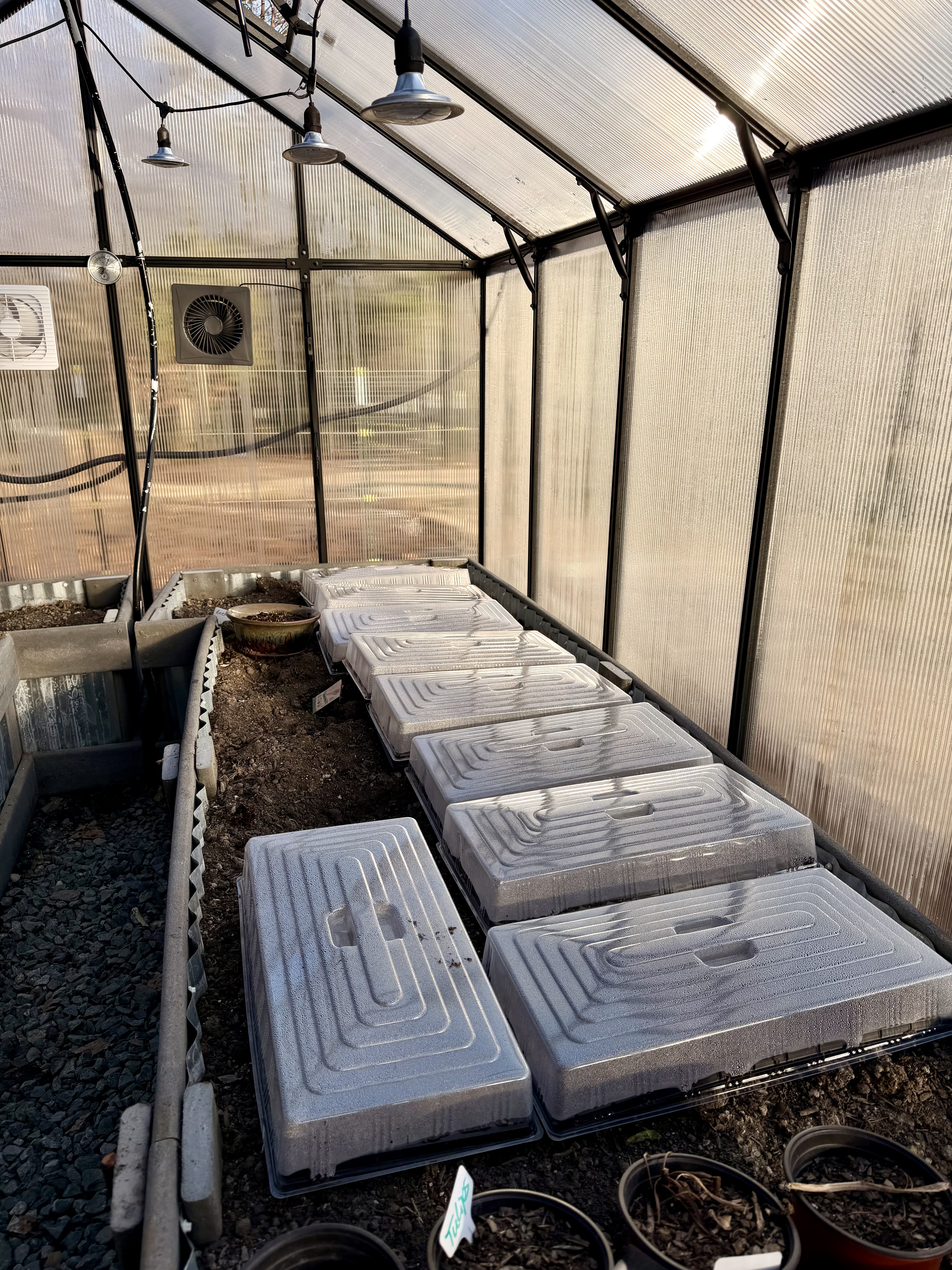
If you’ve been wondering whether you’re behind on seed starting this year, let me reassure you: you are not alone.
I finally got my first seeds of the year started yesterday. And yes, I had that familiar feeling creeping in — that nagging voice saying, “You’re late.” But if you live in Virginia, you know exactly what kind of curveballs this winter has thrown at us. Snow. Ice. Weeks of incredibly low temperatures. It has not exactly been a gentle slide into spring.

When Virginia Weather Delays Your Seed Starting Plans
Seed starting in Virginia can feel like a balancing act. We get teased with mild days that hint at early spring gardening, and then suddenly we’re back under ice and wind chills that make even walking to the chicken coop an expedition.
Between frozen ground, greenhouse temperature management, and simply waiting for consistent conditions, sometimes the smartest gardening decision is patience.
That’s what this season required.
While I normally aim to have trays filled earlier, the extended cold snap meant adjusting the schedule. And that’s one of the biggest lessons homesteading continues to teach me: work with the land, not against it.
What I Started First: Cool-Season Crops
Now that things are stabilizing a bit, I started:
- Lettuce
- Beets
- Basil
- Carrots
- Green cabbage
- Swiss chard
- Kale
- Arugula
- Dill
- Mint
Some of these might seem slightly non-traditional for very early seed starting, especially basil and mint. But part of homesteading and backyard gardening is experimenting and learning what thrives in your specific microclimate.
Cool-season crops like lettuce, kale, cabbage, and Swiss chard are especially well-suited for early starts. They tolerate cooler soil temperatures and can handle light frosts once transplanted. Starting them indoors or in a protected greenhouse space gives them a strong head start before the real spring rush begins.
Tomatoes and Peppers Are Coming Next
In the next couple of weeks, I’ll begin starting tomato seeds and pepper seeds — the warm-season favorites that truly signal the shift into full garden mode.
Those crops need consistent warmth, both in soil temperature and air temperature. After the kind of winter Virginia has delivered this year, I’m in no hurry to rush them into unpredictable conditions.
Gardening isn’t about sticking rigidly to a date on the calendar. It’s about timing, observation, and adjusting to the season you’re actually living in.
Feeling “Behind” in Gardening? Read This.
If you’re staring at seed packets thinking you should have started already, take a breath.
Gardening timelines are not one-size-fits-all. They depend on:
- Your local climate
- Your last frost date
- Whether you use a greenhouse or grow lights
- Soil temperature
- And sometimes… what kind of winter you just survived
A heavy snow and ice season in Virginia will naturally shift your starting window. That doesn’t mean you’re late. It means you’re adapting.
And adaptation is at the heart of homesteading.
The First Trays Always Feel Like Hope
There’s something deeply grounding about filling those first seed trays. After weeks of ice and snow, seeing soil in trays instead of frozen ground feels like progress. It feels like forward motion.
Even if the garden beds outside are still quiet, life has officially begun again.
If this winter has slowed you down, you’re in good company. The seeds are started. The season is turning. And spring — real spring — is on its way.

Leave a Reply