
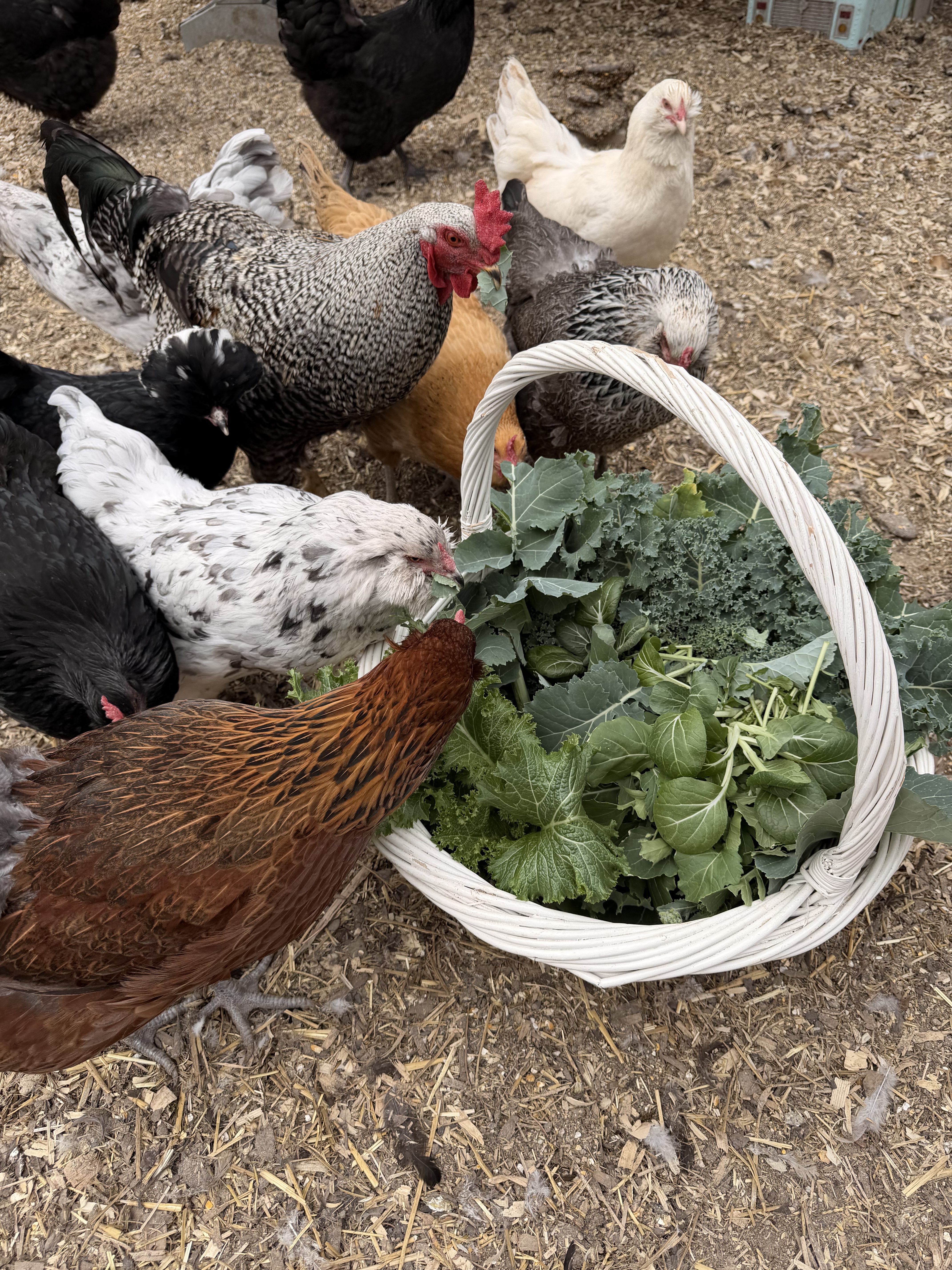
At J & J Homestead, one of the most rewarding upgrades we have made to our setup is incorporating plants directly into and around the chicken run. What started as a simple idea—giving the chickens something fresh to peck at—quickly turned into a system that supports nutrition, reduces feed costs, improves soil health, and keeps the flock engaged.
If you are looking to create a more natural and productive environment for your chickens, planting your run is one of the best places to start.
This guide walks through the best plants to grow in a chicken run, why they work, and how to make them successful on your homestead.
Why Grow Plants in a Chicken Run?
Chickens are natural foragers. When given access to plants, they instinctively scratch, peck, and explore, which leads to healthier and more active birds.
Adding plants to your chicken run can:
- Provide fresh, nutrient-dense food
- Reduce boredom and destructive behaviors
- Offer shade and protection from the elements
- Improve soil quality and reduce mud
- Lower your overall feed costs
For us, it also adds another layer of intentionality—every plant serves a purpose.
Hardy Greens for Daily Foraging
Leafy greens are one of the best categories of plants to grow in a chicken run because they grow quickly and can often recover after being eaten.
Some of the most reliable options include:
- Kale
- Swiss chard
- Mustard greens
- Arugula
- Collard greens
These greens are packed with nutrients and are especially useful during the cooler months in Virginia, when they tend to thrive.
Homestead Tip: Plant these in clusters or sections so that one area can recover while another is being grazed.
Herbs for Health and Pest Control
Herbs are one of the most overlooked additions to a chicken run, but they offer powerful benefits.
They can support immune health, improve respiratory function, and even help deter pests.
Consider planting:
- Mint
- Oregano
- Thyme
- Lavender
- Sage
Mint and oregano are particularly useful because they are hardy and spread easily, making them great for ground coverage. Lavender and sage can help create a calmer, more balanced environment.
Homestead Tip: Plant herbs along the edges of the run or in slightly protected areas so they have time to establish before heavy pecking begins.
Shade and Structure Plants
Chickens need protection from heat, wind, and predators. Taller plants can provide natural shade and structure while also offering food.
Some excellent choices include:
- Sunflowers
- Comfrey
- Corn
- Amaranth
Sunflowers and corn create vertical interest and shade during the summer months, while comfrey acts as a nutrient-rich, cut-and-come-again feed source.
Homestead Tip: Allow these plants to become well established before giving chickens full access, or protect them with temporary fencing early on.
Fruits and Treat Plants
Adding fruiting plants introduces variety into your chickens’ diet and gives them something to look forward to.
Good options include:
- Strawberries
- Blueberries
- Raspberries
- Watermelon
Chickens are particularly drawn to berries and will quickly strip a plant if given full access.
Homestead Tip: Plant these just outside the chicken run fencing so birds can snack without destroying the plant entirely.

Grasses and Ground Cover
Bare soil in a chicken run quickly turns into mud, especially during wet seasons. Ground cover plants help stabilize the soil and provide continuous forage.
Some of the best options are:
- Clover
- Alfalfa
- Rye grass
- Buckwheat
Clover is especially valuable because it fixes nitrogen in the soil while providing a steady food source.
Homestead Tip: If possible, rotate sections of your run to allow grasses and cover crops to regrow.
Plants to Avoid in a Chicken Run
Not all plants are safe for chickens. Some common garden plants can be toxic and should be kept out of the run entirely.
Avoid planting:
- Tomato, potato, and eggplant leaves (nightshade family)
- Foxglove
- Rhubarb leaves
- Azaleas
- Buttercup
Even if your chickens tend to avoid some toxic plants, it is not worth the risk.
How to Successfully Grow Plants with Chickens
One of the biggest challenges is not what to plant—but how to keep it growing with chickens present.
Here are a few strategies that have worked well on our homestead:
- Start plants outside the run and transplant once they are established
- Use wire cages or temporary fencing to protect young plants
- Rotate chickens through different areas if space allows
- Combine perennials and annuals for long-term success
- Think in layers: ground cover, mid-height greens, and taller shade plants
This layered approach creates a more resilient and productive system.
Creating a Sustainable Chicken Run
Planting your chicken run transforms it from a simple enclosure into a living system. Instead of constantly maintaining bare ground, you are creating an environment that works with your chickens rather than against them.
At J & J Homestead, our chicken garden has become one of the most efficient and enjoyable parts of our setup. It feeds the flock, supports the soil, and brings a sense of balance to the entire homestead.
If you are just getting started, begin with a few hardy greens and herbs. From there, you can expand into shade plants, fruits, and ground cover as your system grows.





Leave a Reply