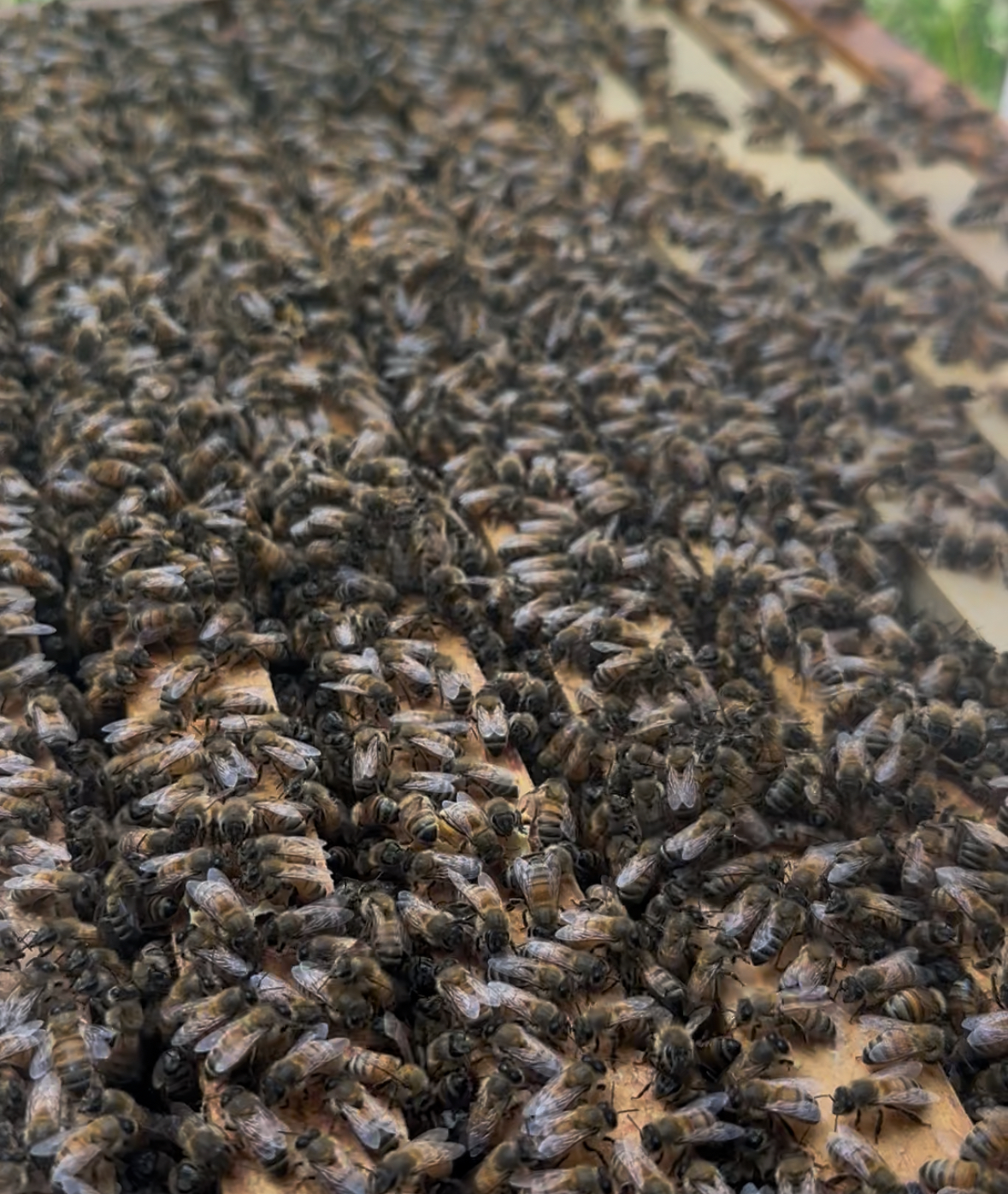

There are moments on the homestead when everything seems to happen at once. The chickens need tending, the garden is calling, the farmstand needs to be stocked—and then you check your hives and realize your bees could use a little extra support.That’s exactly where open feeding bees comes in.It’s not the method most beekeepers rely on every day, but when you need something quick, simple, and effective, it can make all the difference.
A Real-Life Homestead Moment
Picture this: it’s early spring in Virginia. The days are warming up, but the blooms haven’t quite caught up yet. Your bees are flying, searching, working—but the nectar just isn’t there in abundance.Or maybe it’s the middle of a summer heatwave, and everything feels dry and still. The usual forage has slowed, and your hives are starting to feel it.You could set up internal feeders—but maybe you don’t have enough on hand, or you simply don’t have the time that day.So instead, you mix up a batch of sugar water, carry it out to a spot away from the hives, and set it down.Within minutes, the air starts to hum.That’s open feeding.
What Is Open Feeding (And Why It Works)
Open feeding is simply placing a shared food source—usually sugar syrup—out in the open for bees to find and feed from.Instead of opening each hive and feeding them individually, you’re letting the bees do what they do best: forage.And when natural nectar is scarce, they will absolutely find that sugar syrup.It works because it mimics a nectar source. To the bees, it’s just another stop on their daily route—one that happens to be easy and reliable.
When I Turn to Open Feeding
On a busy homestead, I think of open feeding as a “right now” solution.It’s especially helpful during:
Early Spring
When bees are building up their populations but flowers are still limited, a little extra feed can help stimulate brood production and keep the colony moving forward.
Summer Nectar Dearths
Those stretches of hot, dry weather can hit hard. Even when everything looks green, nectar can disappear quickly.
Unexpected Shortages
Sometimes you open a hive and realize stores are lower than expected. When you need to act fast, open feeding can buy you time.
The Upside: Why It’s So Appealing
There’s something refreshingly simple about open feeding.You don’t have to open your hives.You don’t need special equipment.You don’t even need much time.You’re simply meeting your bees where they are and giving them what they need.And when you’re managing multiple hives, it can feel like a practical, efficient solution—one feeding station, many bees helped.
The Trade-Offs (Because There Always Are Some)
Like most things in homesteading, there’s a balance.Open feeding works—but it isn’t perfect.You may notice more activity than usual around the feeding area. Bees from all over may show up, not just yours. Wasps and other insects can join in too.There’s also the risk of encouraging robbing behavior, especially when resources are scarce. Stronger colonies can dominate the food source, while weaker ones hang back.And because everyone is sharing the same feeder, there’s always a small risk of spreading disease between colonies.None of these are reasons to avoid open feeding entirely—but they are reasons to use it thoughtfully.
How to Open Feed the Right Way
Over time, I’ve found that a few simple practices make open feeding much more successful—and a lot less stressful.
Keep It Simple with Sugar Syrup
A basic mix works beautifully:
- 1:1 sugar to water in spring and summer2:1 in the fall if you’re helping build stores Give Bees a Safe Place to Land
Floating sticks, corks, or even a handful of pine needles can prevent drowning and make feeding easier for them.
Move It Away from the Hives
Setting the feeder 50–100 feet away helps reduce congestion and keeps things calmer around your hive entrances.
Use Wide, Shallow Containers
The more space bees have to land and feed, the smoother things tend to go.
Pay Attention to Timing
Putting feed out early in the morning or later in the evening can help reduce competition and chaos.
A Tool—Not a Long-Term Strategy
If there’s one way to think about open feeding, it’s this:It’s a tool, not a routine.It’s there for those moments when you need to act quickly, when your bees need support, and when life on the homestead doesn’t leave room for anything complicated.Once things settle down, it’s always a good idea to return to more controlled feeding methods—especially if you’re keeping a close eye on individual hive health.
Final Thoughts from the Bee Yard
There’s something special about standing near an open feeder and hearing that steady hum of bees at work. It’s a reminder of just how resourceful and resilient they are—and how a small act of support can go a long way.Open feeding may not be perfect, but on a busy, working homestead, it can be exactly what you need in the moment.
And sometimes, that’s more than enough.
Leave a Reply