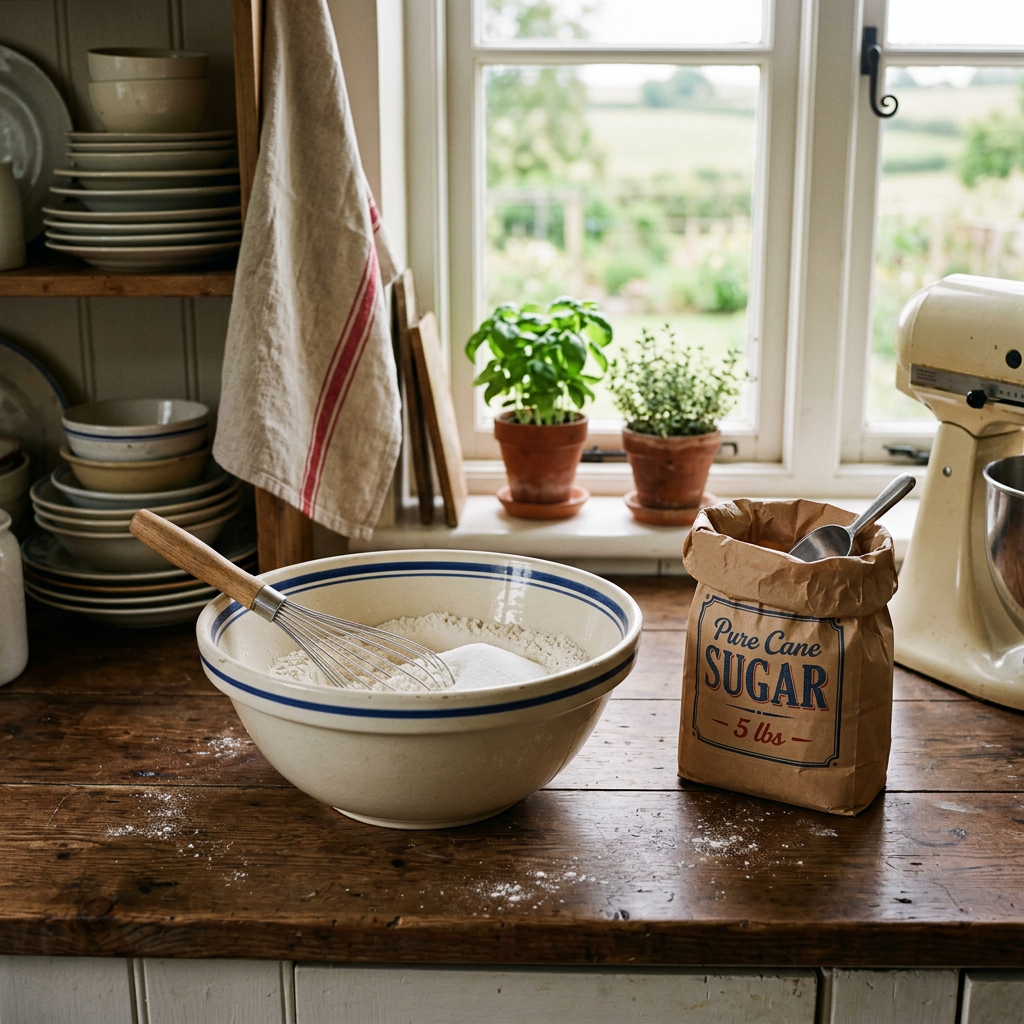
When I first started baking for our farmstand, sugar felt like the least complicated ingredient in the bowl. It was the “easy” one—the one that made things sweet and didn’t require much thought.
But baking has a way of teaching you otherwise.
It started with a batch of cookies that spread so much they melted into one giant pan-sized sheet. Then there was a cake that looked beautiful on the outside but turned out dry and crumbly the moment I sliced into it. Same recipes I had followed before. Same ingredients. But something was off.
That’s when I started paying attention to sugar—not just how much I was using, but what it was actually doing.
And it turns out, sugar is quietly doing a lot more than we give it credit for.
Why Sugar Is More Than Just Sweetness
Over time (and plenty of early morning baking sessions before the farmstand opened), I realized that sugar is one of the most important structural ingredients in baking. It doesn’t just add flavor—it influences moisture, texture, and even how long something stays fresh on the shelf.
According to the King Arthur Baking Company, sugar plays a critical role in tenderizing baked goods, controlling moisture, and helping create that golden finish we all love.
Once I understood that, I stopped thinking of sugar as optional or flexible—and started treating it as essential.
The Role of Sugar in Moisture and Texture
One of the first things I noticed in my own baking was how much sugar affected texture.
Baked goods with the right amount of sugar stayed soft longer. Muffins held their moisture through the day at the farmstand. Cookies stayed chewy instead of turning dry by the afternoon.
That’s because sugar is a humectant—it pulls in and holds onto moisture. It’s constantly working behind the scenes to keep your baked goods from drying out.
When sugar levels are just right, everything feels balanced. But when it’s off, you notice quickly. Too little, and things become dry and crumbly. Too much, and textures can become overly soft or unstable.
It’s a quiet balance—but it makes all the difference.
Sweetness Is Only Part of the Story
Of course, sugar adds sweetness—but even that role is more nuanced than it seems.
In baking, sweetness isn’t just about making something taste good. It’s about balance. It smooths out sharp flavors like lemon, softens the bitterness of cocoa, and ties everything together in a way that feels complete.
The USDA highlights how sugar impacts overall flavor perception—not just sweetness itself. And once you notice it, you can’t unsee it.
That perfect chocolate muffin or lemon brownie isn’t just sweet—it’s balanced. And sugar is what helps create that harmony.
How Sugar Builds Structure in Baking
This was probably the biggest surprise for me.
I used to think structure came from flour or eggs—and while they absolutely play a role, sugar is right there with them, helping shape the final product.
When you cream butter and sugar together, you’re not just mixing ingredients. You’re creating tiny air pockets. Those pockets expand in the oven, helping your baked goods rise and giving them that light, tender texture.
Sugar also influences how things spread. It can determine whether your cookies hold their shape or flatten out, whether your cake stays tall or sinks in the center.
It’s subtle, but it’s powerful.
Different Sugars, Different Results
As I baked more for the farmstand, I started experimenting with different types of sugar—and that’s when things got really interesting.
Granulated sugar gave me clean, consistent results in cakes and cookies. Brown sugar added moisture and that soft, chewy texture customers kept coming back for. Honey brought a richness and depth that felt right at home in a homestead kitchen.
Each type of sugar behaves differently, and each one changes the final product in its own way.
If you’re curious to explore this further, The Kitchn offers a helpful breakdown of how different sugars impact baking.
When Things Go Wrong
If you’ve ever had a baking recipe fail and couldn’t quite figure out why, sugar might have been part of the story.
Too much can cause cookies to spread too far or cakes to collapse. Too little can leave baked goods dry, pale, and lacking flavor. And sometimes, it’s not about the amount—but the type of sugar used.
These are the moments that taught me baking really is a science. Small changes can create big differences.
The Magic of Browning
One of my favorite parts of baking—especially for the farmstand—is that golden, just-right finish on muffins and cookies.
That’s sugar at work again.
As it heats, sugar caramelizes, creating rich color and deeper flavor. It’s what makes baked goods look as good as they taste—and what draws people in when they walk up to the stand.
It’s one of those details you might not think about at first, but once you do, it becomes part of how you bake intentionally.
Baking with Purpose
Understanding sugar changed everything for me.
Now, when I bake, I’m not just thinking about sweetness. I’m thinking about how long something needs to stay fresh, what texture I’m trying to create, and how all the ingredients work together.
Because on the homestead—and especially at the farmstand—those details matter.
You’re not just baking for yourself. You’re baking for people who will come back for what you made.
Final Thoughts
Sugar may seem simple, but it’s one of the hardest-working ingredients in your kitchen.
It holds moisture, builds structure, enhances flavor, and creates that beautiful finish we all love. And once you understand what it’s doing, you start baking with a whole new level of confidence.
For me, that shift—from guessing to understanding—has made all the difference.
And it’s one more reminder that baking isn’t just about following a recipe.
It’s about learning the why behind it.

Leave a Reply