
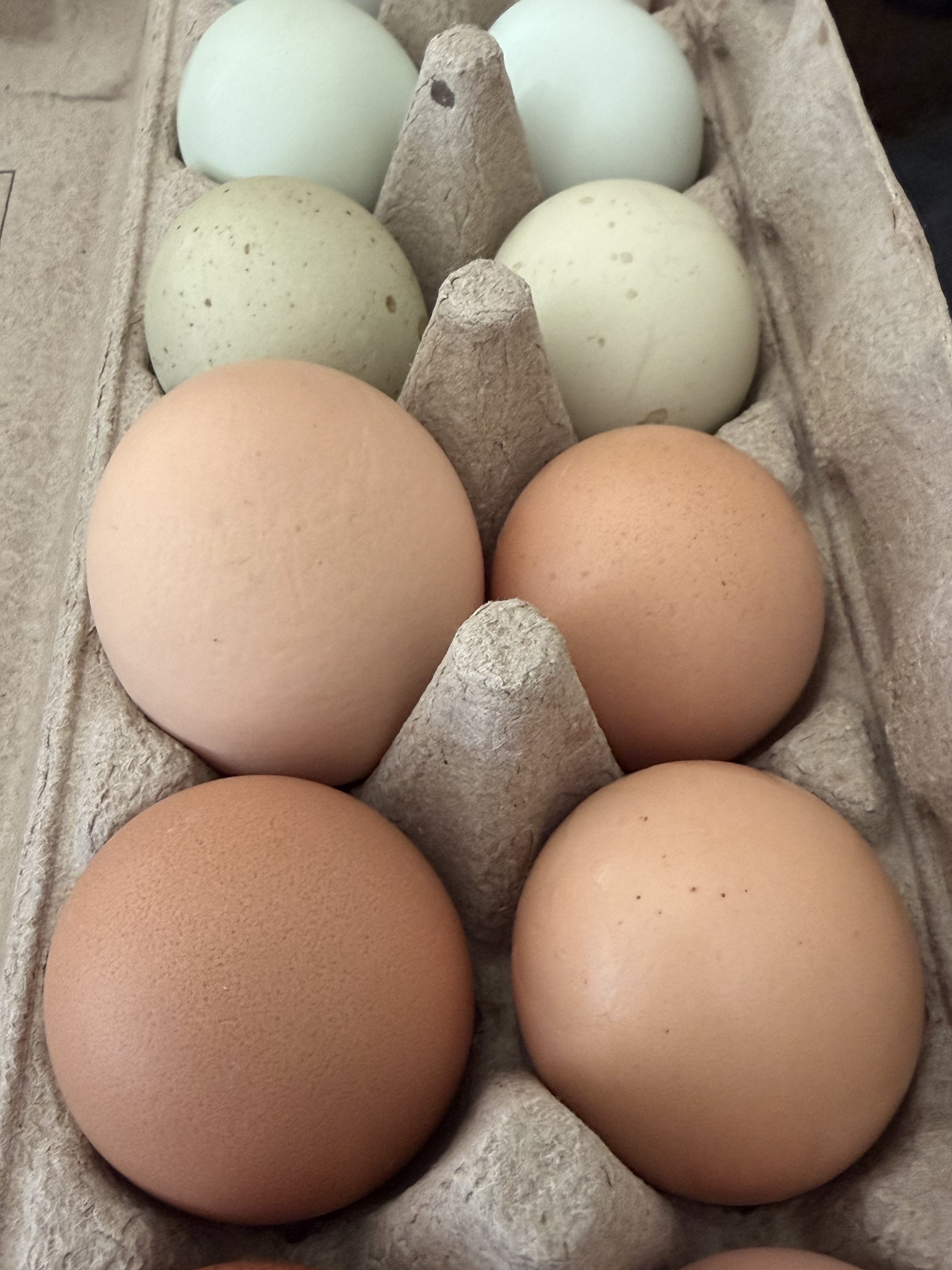
When I first started baking for our farmstand, eggs felt like the most familiar ingredient in the bowl. After all, we had plenty of them—fresh from the coop, gathered each morning.
I knew they were important. Every recipe seemed to call for them. But if I’m being honest, I didn’t fully understand why.
It wasn’t until I forgot to add eggs to a batch of muffins—yes, it happens—that I really saw their impact. The texture was off, the structure fell apart, and the whole batch just… lacked something.
That’s when I started paying closer attention.
Because eggs aren’t just an ingredient in baking—they’re doing multiple jobs at once. And once you understand what they’re actually doing, everything starts to make more sense.
Why Eggs Matter More Than You Think
Eggs are one of the most versatile ingredients in baking. They contribute to structure, moisture, binding, richness, and even color.
According to the American Egg Board, eggs play a critical role in stabilizing batters, emulsifying ingredients, and helping baked goods hold their shape.
In other words, they’re the quiet multitasker behind some of your best bakes.
Binding: Holding Everything Together
One of the most important roles eggs play is binding.
When you mix a batter, you’re combining ingredients that don’t always want to stay together—flour, fats, liquids, and sugars. Eggs help unify those elements into a cohesive mixture.
As eggs cook, their proteins coagulate (or firm up), creating structure that holds everything in place.
That’s why:
- Cakes slice cleanly
- Muffins don’t crumble apart
- Cookies hold their shape
Without eggs, baked goods can feel fragile, crumbly, or disconnected.
Structure: Building Strength from the Inside Out
If flour provides the framework of your baked goods, eggs help reinforce it.
When exposed to heat, egg proteins set and firm up, giving stability to the final product. This is especially important in things like cakes and quick breads, where you want a soft but stable crumb.
Eggs also work alongside leavening agents (like baking powder or baking soda) to support rise. As air expands in the oven, the egg structure helps trap and hold those air pockets in place.
The result?
A light, airy texture that doesn’t collapse the moment it cools.
For a deeper look at how eggs contribute to structure, the King Arthur Baking Company offers a helpful breakdown.
Moisture: Keeping Baked Goods Soft and Tender
Eggs also bring moisture to your baking.
The whites contain a significant amount of water, which contributes to hydration in your batter. Meanwhile, the yolks add richness and fat, which helps create that soft, tender texture we all love.
This balance is what makes a cake feel moist instead of dry, or a muffin feel rich instead of dense.
When eggs are missing—or reduced too much—you’ll often notice baked goods turning out dry or lacking that satisfying texture.
The Difference Between Egg Whites and Yolks
One of the most interesting things I’ve learned is that not all parts of the egg do the same job.
Egg Whites
- Mostly water and protein
- Provide structure and stability
- Help create lightness and lift
Egg Yolks
- Contain fat and emulsifiers
- Add richness and flavor
- Contribute to tenderness
When you adjust the ratio of whites to yolks, you’re changing the final texture.
More whites can make something lighter and more structured. More yolks can make it richer and softer.
It’s a small detail—but one that can completely change your results.
Farm Fresh Eggs vs. Store-Bought Eggs
This is where things get especially fun for us as homesteaders.
If you’ve baked with farm fresh eggs, you’ve probably noticed the difference right away:
- Deeper yolk color
- Richer flavor
- Slightly thicker whites
Those differences can subtly impact your baking, often leading to:
- Better color in cakes and breads
- Slightly richer texture
- More vibrant overall results
While both types work just fine, there’s something special about using eggs you collected yourself that morning.
It adds a level of connection to your baking that’s hard to describe—but easy to appreciate.
What Happens When Eggs Are Off Balance?
Like everything in baking, balance matters.
Too many eggs can make baked goods:
- Dense
- Rubbery
- Overly rich
Too few eggs can lead to:
- Crumbly texture
- Weak structure
- Dry results
And if you’ve ever tried to substitute eggs without adjusting the rest of the recipe, you’ve probably seen just how important they really are.
Baking with Intention
Understanding what eggs do has changed the way I approach baking.
Now, when I crack eggs into a bowl, I’m not just following a recipe—I’m thinking about what they’re contributing:
- Structure
- Moisture
- Stability
- Richness
And when something doesn’t turn out quite right, I have a better idea of why.
That’s the difference between guessing and understanding.
Final Thoughts: A Small Ingredient with a Big Impact
Eggs may seem simple—but they’re one of the most powerful ingredients in your kitchen.
They hold everything together, support structure, add moisture, and bring richness to every bite.
And once you understand their role, baking becomes less about trial and error—and more about intention.
For me, that’s been one of the most rewarding parts of this journey.
Because every batch isn’t just something I made.
It’s something I understand.



Leave a Reply