
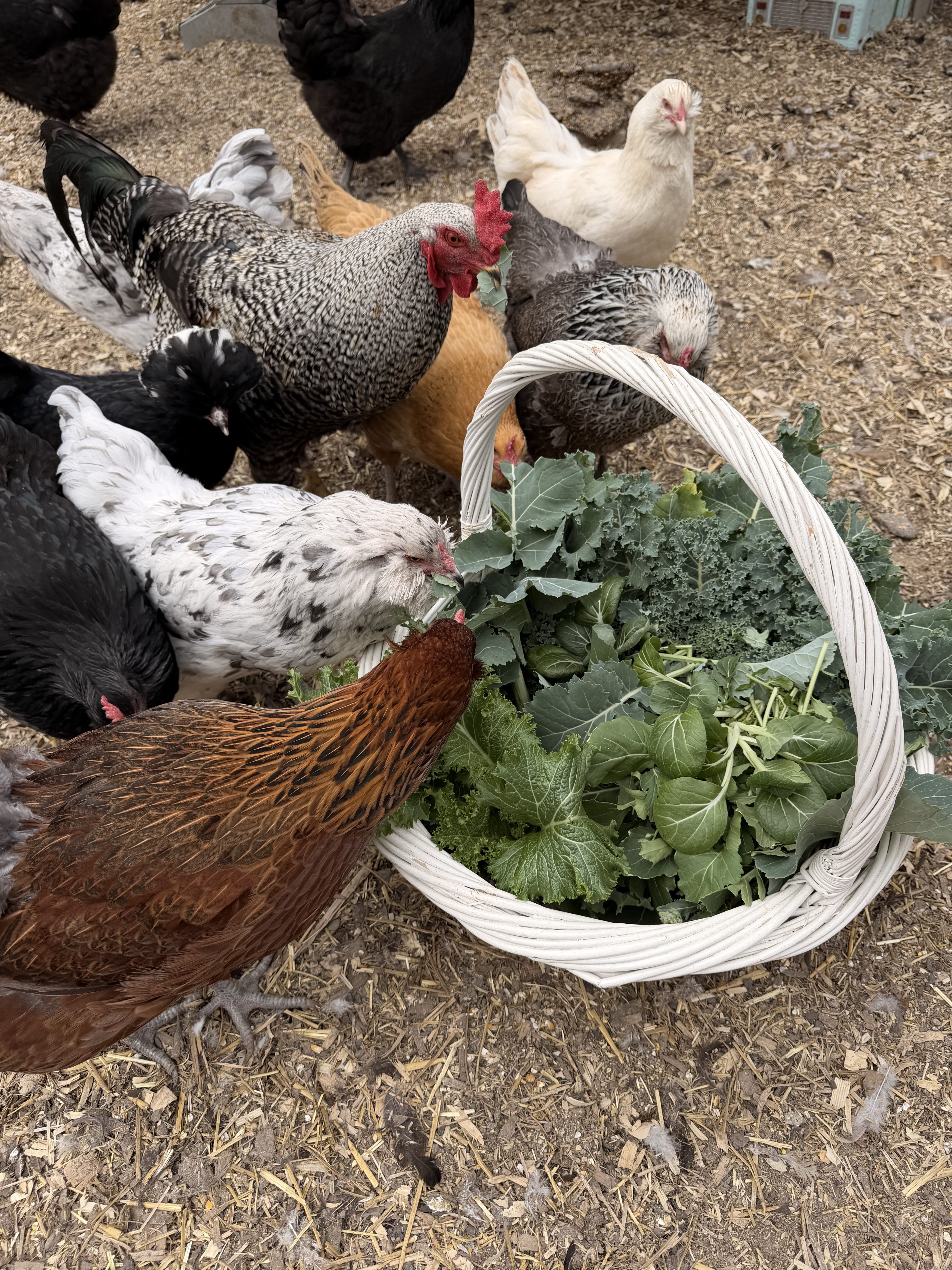

When we first started raising chickens on the homestead, I thought feeding them would be simple. Buy a bag of feed, fill the feeder, toss out a few scraps here and there, and call it a day. But the longer we’ve raised chickens, the more I’ve realized that chicken nutrition is actually one of the biggest factors in raising healthy, productive, happy birds.
And if you’ve ever stood in the poultry aisle at Tractor Supply Company staring at shelves filled with pellets, crumbles, scratch grains, oyster shells, supplements, and treats, you’ve probably had the same thought I did:
“How many different kinds of chicken food do they really need?”
As it turns out — quite a few, depending on their age, purpose, and living situation.
Chickens are natural foragers and opportunistic eaters. They love bugs, greens, seeds, kitchen scraps, weeds, berries, and just about anything they think might be edible. But while chickens can eat many things, not everything is healthy for them, and some foods can actually be dangerous.
Over time, we’ve learned how important it is to balance commercial feed with natural supplementation, especially because our chickens spend most of their time in secure runs instead of free ranging full-time. Predator pressure in Virginia is no joke, and while free ranging sounds idyllic, keeping chickens safe often means creating enrichment and nutritional variety in other ways.
If you’re new to backyard chickens, here’s a complete guide to what chickens eat, what they shouldn’t eat, and how to keep your flock healthy and thriving.
The Foundation of a Chicken’s Diet
No matter how many treats or garden snacks your chickens get, the foundation of their diet should always be a nutritionally balanced poultry feed.
Commercial feeds are designed to provide:
- Protein
- Vitamins
- Minerals
- Fat
- Calcium
- Amino acids
All of these nutrients impact:
- Egg production
- Feather quality
- Growth
- Immune systems
- Overall health
One thing I’ve learned quickly is that treats are fun — but they should never replace complete feed. Chickens are excellent at convincing you they are starving every time you walk outside, even if they just finished eating five minutes ago.
Understanding the Different Types of Chicken Feed
One of the first surprises for many new chicken owners is realizing that chickens eat different feeds at different stages of life.
Chick Starter Feed
Baby chicks need a high-protein starter feed to support rapid growth and feather development. Starter feed usually contains between 18–22% protein and comes in small crumbles that are easy for tiny chicks to eat.
Some feeds are medicated to help prevent coccidiosis, a common illness in young chicks.
When our chicks arrive from hatcheries like Murray McMurray Hatchery or Meyer Hatchery, starter feed is one of the first things waiting in the brooder.
Grower Feed
As chicks mature, they transition to grower feed. This feed contains slightly less protein and prepares them for adulthood without pushing excessive growth too quickly.
This stage usually lasts until hens approach laying age.
Layer Feed
Once hens begin laying eggs, they need additional calcium to support strong eggshell production. Layer feed is formulated specifically for laying hens and typically includes the nutrients necessary to support consistent egg production.
Layer feed comes in:
- Pellets
- Crumbles
- Mash
We personally prefer pellets because they tend to create less waste, though some flocks definitely have opinions about texture and shape.
And yes — chickens can absolutely be picky eaters.
All-Flock Feed
Many homesteaders with mixed flocks choose all-flock feed instead of traditional layer feed. This works especially well if you have:
- Roosters
- Ducks
- Turkeys
- Young pullets
- Non-laying birds
Because excess calcium can be harmful to birds that are not laying, all-flock feed provides a more balanced option for mixed groups.
If you use all-flock feed for laying hens, you simply provide oyster shell separately so hens can consume extra calcium as needed.
The Truth About Scratch Grains
If chickens had a favorite junk food, scratch grains would probably be it.
Scratch typically contains cracked corn, wheat, oats, and other grains, and chickens come running the second they hear the bag shake. We use scratch occasionally as enrichment and especially during colder months when extra calories help birds stay warm.
But nutritionally, scratch should be treated more like candy than a complete meal.
Too much scratch can:
- Reduce protein intake
- Contribute to obesity
- Lower egg production
- Dilute overall nutrition
It’s best used in moderation.
Chickens Love Treats — But Balance Matters
One of my favorite parts of raising chickens is watching them lose their minds over treats.
Watermelon in the summer?
Absolute chaos.
Mealworms?
Instant stampede.
Fresh lettuce from the garden?
Gone in minutes.
Treats are not only enjoyable for chickens, but they also provide enrichment and reduce boredom, especially for chickens kept in enclosed runs.
Healthy treats can include:
- Mealworms
- Black soldier fly larvae
- Cucumbers
- Pumpkin
- Watermelon
- Kale
- Lettuce
- Peas
- Corn
- Oats
- Berries
- Herbs
During molt season, when chickens are regrowing feathers, extra protein becomes especially important. Mealworms and black soldier fly larvae can be excellent supplements during this time.
Free Range Chickens vs Chickens in Runs
This is where chicken nutrition becomes really interesting.
Free range chickens naturally supplement their diet all day long. They forage constantly for:
- Bugs
- Worms
- Seeds
- Grass
- Weeds
- Small insects
This often results in:
- Darker egg yolks
- Greater variety in nutrients
- Reduced feed consumption
- More exercise
There are definitely nutritional benefits to free ranging.
But there are also downsides.
Free range birds are exposed to:
- Hawks
- Foxes
- Coyotes
- Dogs
- Parasites
- Toxic plants
For us, predator pressure made fully free ranging unrealistic. Between hawks, foxes, raccoons, and even bears in the area, keeping our flock secure became more important than allowing unrestricted roaming.
So instead, we focus heavily on supplementation and enrichment inside their runs.
How We Supplement Chickens Kept in Runs
Because chickens in runs don’t have unlimited access to natural forage, we try to bring forage to them.
We hang:
- Lettuce heads
- Cabbage
- Cucumbers
- Greens
We toss in weeds from the garden, extra vegetables, herbs, and occasionally allow supervised grazing time in protected areas.
One of the best things we ever did was create a small “chicken garden” near the coop filled with greens and herbs specifically grown for the flock.
Chickens in runs often need more enrichment because boredom can quickly lead to:
- Feather pecking
- Bullying
- Stress
- Egg eating
Keeping them busy matters just as much as keeping them fed.
What Chickens Can Eat from the Garden
Garden season is honestly one of the best times to own chickens because very little goes to waste.
Our chickens happily devour:
- Lettuce
- Kale
- Swiss chard
- Cucumbers
- Squash
- Zucchini
- Peas
- Corn
- Strawberries
- Watermelon
- Pumpkin
- Herbs like basil and oregano
When the garden overproduces — which it always seems to eventually do — the chickens become excellent cleanup crews.
And honestly, seeing chickens sprint across the run carrying an entire zucchini slice like they’ve won the lottery is one of the funniest parts of homestead life.
What Chickens Should NOT Eat from the Garden
Not everything growing in the garden is safe for chickens.
Avoid feeding:
- Green potatoes
- Raw potato peels
- Tomato leaves and stems
- Eggplant leaves
- Rhubarb leaves
- Moldy produce
- Excess onions
- Excess garlic
- Avocado skins and pits
Many plants in the nightshade family contain compounds that can be harmful in large quantities.
As a general rule, if something is moldy or questionable, it should stay out of the chicken run.
Table Scraps Chickens CAN Have
Chickens are fantastic at helping reduce food waste.
Safe table scraps include:
- Cooked rice
- Plain pasta
- Oatmeal
- Bread occasionally
- Cooked vegetables
- Fruit scraps
- Yogurt
- Scrambled eggs
- Plain popcorn
Ours especially love leftover oatmeal on cold mornings.
Table Scraps Chickens Should NEVER Have
Some foods are dangerous for chickens and should always be avoided.
Never feed:
- Chocolate
- Alcohol
- Caffeine
- Moldy food
- Raw dried beans
- Excessively salty foods
- Greasy processed foods
- Sugary junk food
- Avocado pits and skins
Mold is especially dangerous because it can contain toxins harmful to poultry.
Don’t Forget Grit and Calcium
One thing new chicken owners often overlook is grit.
Chickens don’t have teeth, so grit helps them grind food in their gizzard. Chickens that free range may find enough naturally, but chickens in runs usually need supplemental grit provided regularly.
Laying hens also need access to calcium.
We keep oyster shell available free-choice so hens can regulate their own intake depending on their laying needs.
Fresh Water Matters More Than People Realize
If there’s one thing chickens absolutely cannot go without, it’s clean water.
Especially during summer, chickens drink far more than most people expect. Even mild dehydration can impact:
- Egg production
- Egg quality
- Overall health
Fresh, cool water may honestly be more important than any treat you could ever provide.
Final Thoughts on Feeding Backyard Chickens
The longer we raise chickens, the more I realize that feeding them is about far more than just filling a feeder.
It’s enrichment.
It’s nutrition.
It’s health.
It’s observation.
You begin noticing which hens need extra protein during molt, which birds prefer greens over grains, and which chickens somehow always manage to steal treats from everyone else.
At the end of the day, a quality commercial feed should always be the backbone of your flock’s diet. But supplementing with safe treats, garden produce, and healthy scraps helps create happier, healthier chickens — especially for flocks kept in secure runs.
And if you ask me, few things are more entertaining than a flock of chickens chasing a watermelon rind across the yard like it’s the greatest treasure they’ve ever seen.





Leave a Reply