
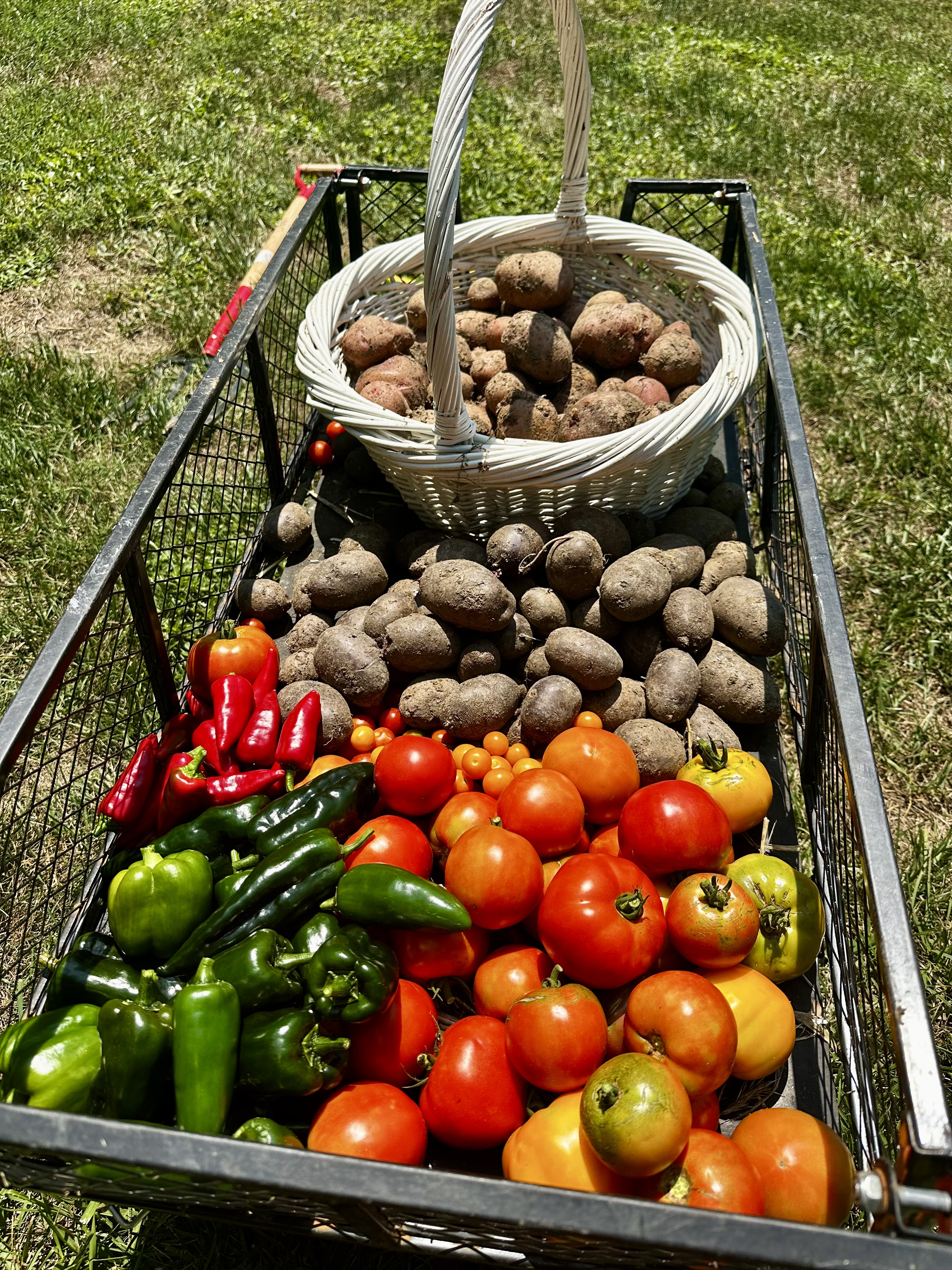
Getting ready for J & J Homestead’s big year
Now that it’s January, we’re planning the garden for next year. We are looking to double the garden so that we have more to offer at our farmstand. Winter is the perfect time to reflect on what sold well last season, what struggled, and what our customers consistently reached for week after week.
If you run a farmstand—or are dreaming of starting one—choosing the right vegetables to grow is one of the most important decisions you’ll make. The goal isn’t just to grow more food, but to grow the kinds of vegetables people already buy, know how to cook, and come back for regularly.
Below are the best vegetables to sell at a farmstand, along with why customers love them and how they can contribute to a successful, profitable growing season.
What Makes a Vegetable a Good Farmstand Seller?
Before finalizing a planting plan, it helps to understand what customers typically want when they stop at a farmstand:
– Familiar vegetables they already cook with
– Produce they buy on a weekly basis
– Items that store well at home
– Seasonal abundance at fair prices
– Freshness they can’t get from a grocery store
Vegetables that meet these criteria tend to sell quickly and consistently.
1. Tomatoes (The Farm Stand Superstar)

Tomatoes are almost always the top seller at a farmstand. Customers actively seek out fresh, vine-ripened tomatoes that taste better than anything shipped long distances.
Why they sell well:
Used in countless meals High demand all summer Strong visual appeal
Best varieties to sell:
Beefsteak, Roma, cherry, grape, and heirloom mixes
2. Peppers (Sweet and Hot)
Peppers add color, variety, and flexibility to your stand. Sweet peppers appeal to nearly everyone, while hot and specialty peppers attract repeat customers and adventurous cooks.
Why they sell well:
Long harvest window Easy to mix and bundle Popular for grilling, cooking, and preserving
Best varieties:
Bell peppers, jalapeños, banana peppers, poblano, shishito
3. Cucumbers
Cucumbers are a reliable, high-yield crop that performs especially well during hot summer months.
Why they sell well:
Refreshing and familiar Great for salads and pickling High productivity from limited space
Tip:
Offer both slicing and pickling cucumbers to appeal to different customers.
4. Zucchini and Summer Squash
Zucchini and summer squash are classic farmstand staples that provide steady harvests throughout the season.
Why they sell well:
Versatile and affordable Easy to grow in abundance Familiar to most home cooks
Selling tip:
Smaller squash tends to sell better than oversized fruit.
5. Green Beans
Fresh green beans are a customer favorite because of their flavor and texture compared to store-bought options.
Why they sell well:
Common family vegetable Easy to cook or freeze Strong repeat purchases
6. Lettuce and Salad Greens
Greens are fast-growing, high-turnover crops that attract health-conscious shoppers and customers looking for quick meals.
Why they sell well:
Repeat harvest potential Excellent early- and late-season crop Easy to bundle
Best options:
Leaf lettuce, romaine, spinach, mixed greens
7. Potatoes

Potatoes are a practical, high-value crop that customers love buying locally—especially fresh-dug new potatoes.
Why they sell well:
Long storage life Used in countless meals Strong bulk sales potential
Tip:
Label varieties for baking, frying, or mashing to help customers choose.
8. Onions and Garlic
Onions and garlic may not be flashy, but they are some of the most dependable sellers at any farmstand.
Why they sell well:
– Everyday kitchen staples
– Excellent storage life
– Easy add-on purchase
Bonus:
Bundling or braiding adds visual interest and value.
9. Herbs (High Value, Small Space)
Herbs offer one of the highest returns per square foot in the garden.
Why they sell well:
– High perceived value
– Popular impulse purchase
– Customers love fresh flavor
Top herbs:
Basil, parsley, cilantro, rosemary, thyme
10. Specialty and Seasonal Favorites
Once your stand is established, adding a few specialty items can help set you apart and encourage repeat customers.
Great options include:
Cherry tomatoes in mixed colors Kale and Swiss chard Edamame Baby carrots Specialty peppers
Pricing Strategy for a Successful Farm Stand (With Example Price Ranges)
Pricing should reflect your time, effort, and quality while remaining accessible to your local community. Customers expect to pay slightly more at a farm stand in exchange for freshness and supporting local growers.
Example Farm Stand Price Ranges
Tomatoes
Slicing tomatoes: $2–$4 per lb Cherry/grape tomatoes: $3–$5 per pint Heirloom tomatoes: $4–$6 per lb
Peppers
Bell peppers: $1–$2 each or $3–$5 per lb Hot peppers: $3–$5 per pint
Cucumbers
Slicing cucumbers: $1–$1.50 each Pickling cucumbers: $3–$5 per quart
Zucchini & Summer Squash
$1–$2 each $2–$3 per lb
Green Beans
$4–$6 per lb
Lettuce & Greens
Head lettuce: $2–$4 per head Bagged greens: $4–$6 per bag
Potatoes
New potatoes: $3–$5 per lb Storage potatoes: $2–$4 per lb Bulk bags: $8–$15 for 5 lbs
Garlic
$1–$2 per bulb Braids: $10–$20
Herbs
$3–$5 per bunch
Final Thoughts: Planning Now Sets You Up for Success
January garden planning is about more than seed catalogs—it’s about intention. By focusing on vegetables that customers already love and pricing them sustainably, you can grow a farmstand that supports both your homestead and your goals.
As we plan to expand our garden this year, our focus is simple: grow what sells, grow it well, and continue building trust with our community—one harvest at a time.



Leave a Reply