
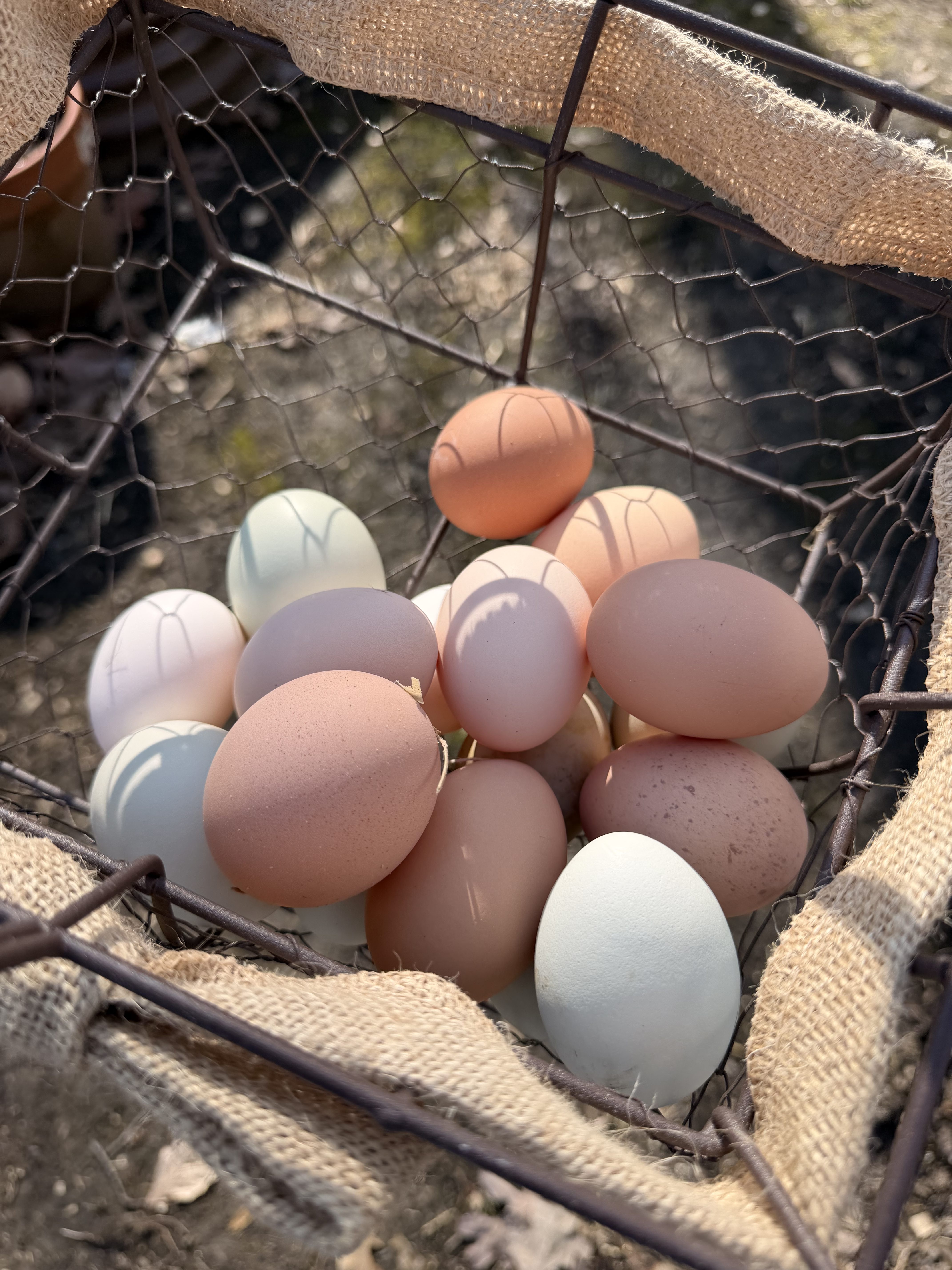
There are few things more rewarding on a homestead than collecting a basket of fresh eggs in the morning. At J & J Homestead, it’s one of those daily rhythms that never gets old—the soft cluck of hens, the warmth of freshly laid eggs, and the quiet satisfaction of producing your own food.
But once those eggs are in hand, a common question always follows:
Should you wash farm fresh eggs, or leave them just as they are?
The answer depends on your goals—whether you’re storing eggs for your family or preparing them for sale at your farmstand. Let’s walk through both sides so you can make the best decision for your homestead.

What Is the “Bloom” on Farm Fresh Eggs?
Fresh eggs come with a natural protective coating called the bloom, or cuticle. This invisible layer seals the pores of the eggshell and helps prevent bacteria from entering.
At J & J Homestead, we think of the bloom as nature’s built-in food safety system.
When eggs are left unwashed, the bloom stays intact—allowing eggs to be stored safely for a period of time without refrigeration. Once washed, however, that protection is removed.
The Pros of Washing Farm Fresh Eggs
There are several reasons why washing eggs may be the right choice, especially if you are running a farmstand like we do.
Clean and Professional Appearance
If you’re offering eggs to customers, presentation matters. Clean eggs reflect care, quality, and attention to detail.
Improved Food Safety for Dirty Eggs
Eggs that are heavily soiled with mud or manure should be cleaned before use or sale.
Required for Selling Eggs in Virginia
As a Virginia homestead, this is especially important.
According to the Virginia Cooperative Extension, eggs sold at a farmstand or farmers’ market must meet the following requirements:
- Eggs must be clean
- Eggs must be unbroken
- Eggs must be free of dirt and manure
- Eggs must be held at 45°F or lower at all times
Because of this, any eggs we sell at the J & J Homestead farmstand are carefully cleaned and refrigerated to meet these standards.
Meets Customer Expectations
Most people are used to grocery store eggs. Clean eggs feel familiar and help build trust—especially for first-time visitors to your farmstand.
The Cons of Washing Farm Fresh Eggs
While washing has clear benefits, it also comes with trade-offs that every homesteader should understand.
Removes the Natural Bloom
Once washed, the egg loses its natural protection and becomes more vulnerable to bacteria.
Requires Consistent Refrigeration
Washed eggs must be stored at 45°F or below—there’s no flexibility here, especially when selling.
Risk of Improper Washing
If eggs are washed in water that is too cold, bacteria can actually be pulled into the egg through its pores.
Shorter Shelf Life
Without the bloom, washed eggs will not last as long as unwashed eggs.
How We Handle Eggs at J & J Homestead
Like many homesteaders, we take a balanced approach:
- Clean eggs for our home: Often left unwashed if they are already clean
- Eggs for the farmstand: Washed properly and refrigerated immediately
- Heavily soiled eggs: Always washed and used quickly
We’ve also found that prevention is key. Keeping nesting boxes clean, using fresh bedding, and collecting eggs frequently dramatically reduces how often washing is needed.
Best Practices for Washing Fresh Eggs
If you choose to wash your eggs, especially for sale, here are a few simple guidelines we follow:
- Use warm water (warmer than the egg)
- Avoid soaking eggs
- Gently scrub off debris if needed
- Do not use regular dish soap unless it is approved for egg washing
- Dry eggs completely
- Refrigerate immediately at or below 45°F
These small steps make a big difference in maintaining egg quality and safety.
Important Labeling Note for Homesteaders
If you’re selling eggs, there’s one detail that’s easy to overlook but incredibly important:
Do not reuse egg cartons that still display the USDA grade shield unless your eggs have been officially graded.
Using cartons with a USDA grade label for ungraded eggs is considered fraudulent.
At J & J Homestead, we recommend:
- Using plain cartons or properly relabeled reused cartons
- Covering any USDA grading marks
- Adding your own farm label with your business name and information
It’s a simple step that protects your business and builds trust with your customers.
When You Should Skip Washing Eggs
Not every egg needs to be washed.
You can leave eggs unwashed if:
- They are clean or only lightly soiled
- You plan to use them at home
- You want to preserve shelf life
In these cases, a dry brush or cloth is often all that’s needed.
Final Thoughts from J & J Homestead
So, should you wash farm fresh eggs?
If your goal is long-term storage and self-sufficiency, leaving eggs unwashed is often the best choice.
If your goal is selling eggs and meeting Virginia regulations, washing and refrigeration are essential.
On our homestead, it ultimately comes down to being intentional—understanding both the natural process and the responsibility that comes with feeding others.
Every egg we collect represents more than just food. It reflects the care we put into our animals, our land, and the community we’re proud to serve.



Leave a Reply