
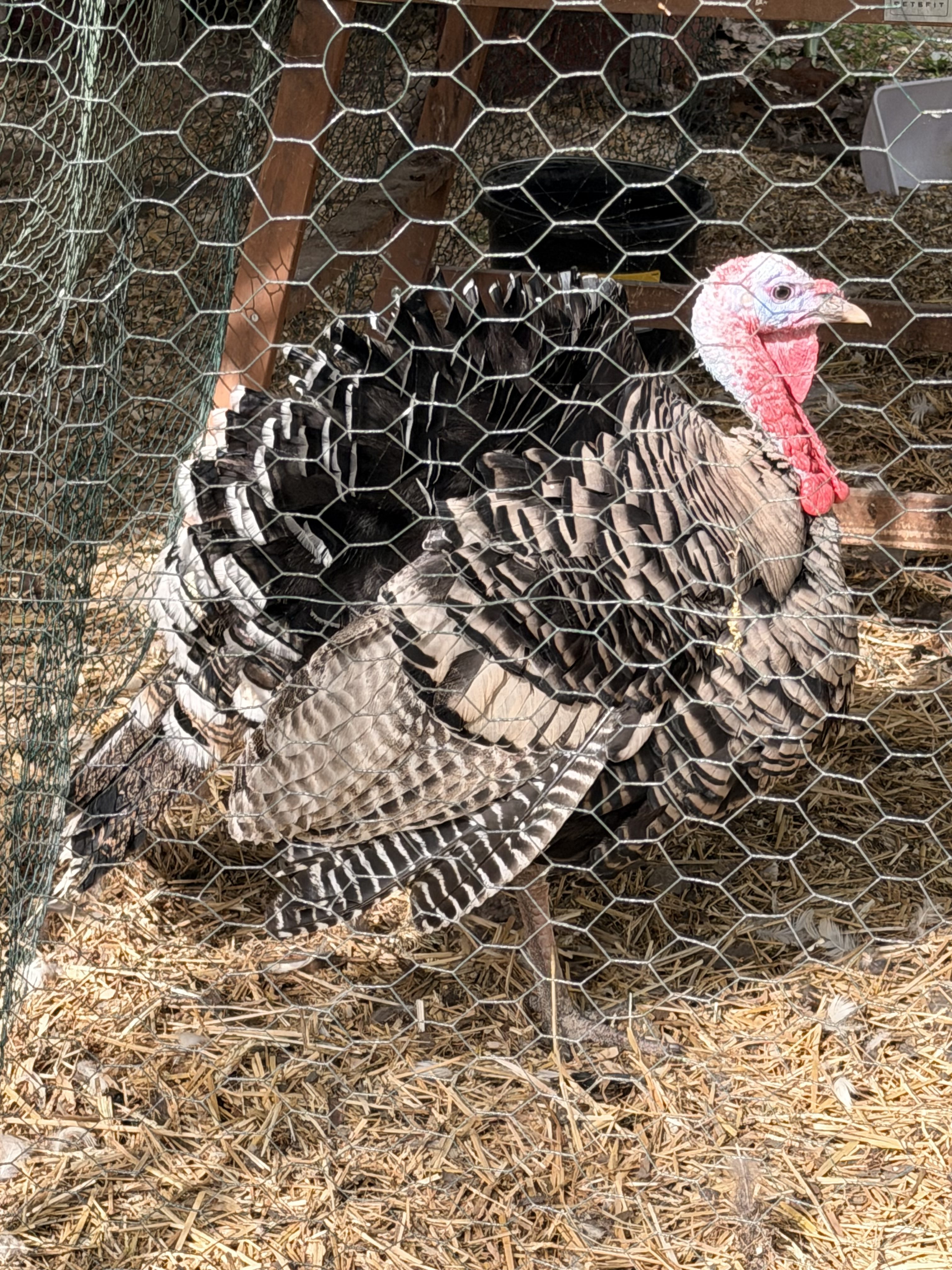
If you’re considering raising turkeys on your homestead, one of the first decisions you’ll need to make is whether to raise heritage turkeys or broad-breasted turkeys. While both have their place in poultry production, they are very different birds with different strengths, challenges, and purposes.
Over the years, we’ve learned that choosing livestock is rarely about finding the “best” option. Instead, it’s about finding the option that best fits your goals, your resources, and your homestead lifestyle.
Whether you’re interested in producing meat, preserving historic breeds, or simply enjoying a flock of fascinating birds, understanding the differences between heritage and broad-breasted turkeys will help you make an informed decision.
What Is a Heritage Turkey?
Heritage turkeys are traditional turkey breeds that have maintained the characteristics of their ancestors. According to the The Livestock Conservancy, heritage turkeys must meet specific criteria:
- They must be naturally mating.
- They must have a long productive lifespan.
- They must exhibit slow growth rates.

Popular heritage breeds include:
- Bourbon Red
- Narragansett
- Royal Palm
- Standard Bronze
- Black Slate
These birds closely resemble the turkeys raised by American farmers for centuries before modern industrial poultry production changed the industry.
One of the first things you’ll notice about heritage turkeys is how active they are. They enjoy foraging, flying short distances, roosting in trees, and exploring every corner of the property. They often develop distinct personalities and can become surprisingly interactive with their caretakers.
What Is a Broad-Breasted Turkey?
Broad-breasted turkeys were developed specifically for meat production. The two most common varieties are the Broad Breasted White Turkey and the Broad Breasted Bronze Turkey.
These birds have been selectively bred to convert feed into muscle as efficiently as possible, particularly breast meat. According to the poultry specialists at Penn State Extension, broad-breasted turkeys dominate commercial turkey production because of their exceptional growth rates and feed efficiency.
Most broad-breasted turkeys reach processing weight in approximately 16 to 20 weeks, depending on management and target market weight.
Unlike heritage birds, broad-breasted turkeys generally cannot reproduce naturally because their large breast size makes natural mating difficult. Commercial hatcheries produce new poults through artificial insemination.
Growth Rate: Fast vs. Slow
The most obvious difference between these two types of turkeys is growth rate.
Broad-breasted turkeys grow incredibly fast. This rapid growth allows homesteaders to produce a significant amount of meat in a relatively short period of time. If your primary goal is putting homegrown turkey on the table or supplying customers with meat birds, broad-breasted varieties offer a tremendous advantage.
Heritage turkeys grow much more slowly. Depending on breed and management, they may require six to eight months or longer to reach market weight.
At first glance, this may seem like a disadvantage. However, slower growth contributes to differences in flavor, texture, and overall bird health that many heritage turkey enthusiasts appreciate.
Meat Production and Carcass Yield
If your goal is maximizing meat production, broad-breasted turkeys are difficult to beat.
These birds produce:
- Larger carcasses
- More breast meat
- Better feed conversion
- Faster returns on feed investment
For homesteaders selling poultry under state exemptions or raising birds for family consumption, broad-breasted turkeys often make economic sense.
Heritage turkeys produce smaller carcasses with less breast meat but typically offer more balanced proportions between white and dark meat. Many chefs and food enthusiasts describe heritage turkey meat as richer and more flavorful than commercially raised birds.
The American Poultry Association notes that heritage breeds preserve valuable genetic diversity while offering unique culinary characteristics.
Behavior and Temperament
This is where heritage turkeys often steal the show.
Heritage birds tend to be highly active and inquisitive. They forage aggressively, patrol the property, chase insects, and frequently interact with other livestock.
Many homesteaders enjoy raising heritage turkeys simply because they are entertaining to watch. They often retain natural instincts that have been bred out of commercial production lines.
Broad-breasted turkeys are generally calmer and less active. Because they are carrying significantly more body weight, they tend to spend more time eating and resting.
Neither behavior pattern is inherently better—it simply depends on what you enjoy managing.
Breeding and Sustainability
For homesteaders interested in self-sufficiency, this category is important.
Heritage turkeys can reproduce naturally. A healthy tom and hen can produce poults year after year, allowing you to maintain your flock without purchasing birds annually.
This makes heritage breeds particularly attractive for homesteads focused on sustainability and genetic preservation.
Broad-breasted turkeys, on the other hand, require purchasing new poults from hatcheries each year. Most small-scale producers view them similarly to Cornish Cross chickens: highly efficient meat birds that are raised for a specific purpose and then harvested.
Feed Costs and Management
Because heritage turkeys grow more slowly, they remain on feed longer.
This means:
- More total feeding days
- Longer housing requirements
- Extended predator protection needs
However, heritage birds often excel at foraging and may offset some feed costs when given adequate pasture.
Broad-breasted birds consume large amounts of feed over a shorter period. While daily consumption may be high, the overall growing period is much shorter.
Many homesteaders find broad-breasted turkeys easier to budget for when producing meat because the timeline is predictable.
Which Turkey Is Right for Your Homestead?
The answer depends entirely on your goals.
If your primary objective is producing the maximum amount of meat in the shortest amount of time, broad-breasted turkeys are usually the better choice. Their rapid growth, efficient feed conversion, and large carcasses make them ideal for meat production.
If you’re interested in preserving historic breeds, maintaining a breeding flock, encouraging natural behaviors, or enjoying the unique personalities that turkeys bring to the homestead, heritage turkeys may be a better fit.
Many homesteaders eventually choose both.
Some raise broad-breasted turkeys each year for the freezer while maintaining a small heritage breeding flock for sustainability and enjoyment.
Final Thoughts
One of the things I love about raising poultry is that there is rarely a single right answer. Every homestead has different goals, available resources, and priorities.
Broad-breasted turkeys represent efficiency, productivity, and meat production at its finest. Heritage turkeys represent history, sustainability, and the preservation of remarkable genetics that have served farmers for generations.
The good news is that whichever path you choose, you’ll quickly discover that turkeys are some of the most entertaining and rewarding birds you’ll ever raise. Their curiosity, intelligence, and unique personalities have a way of winning people over.
Whether you’re filling the freezer, building a breeding program, or simply adding another chapter to your homesteading journey, turkeys are a worthy addition to almost any farm or homestead.






Leave a Reply