
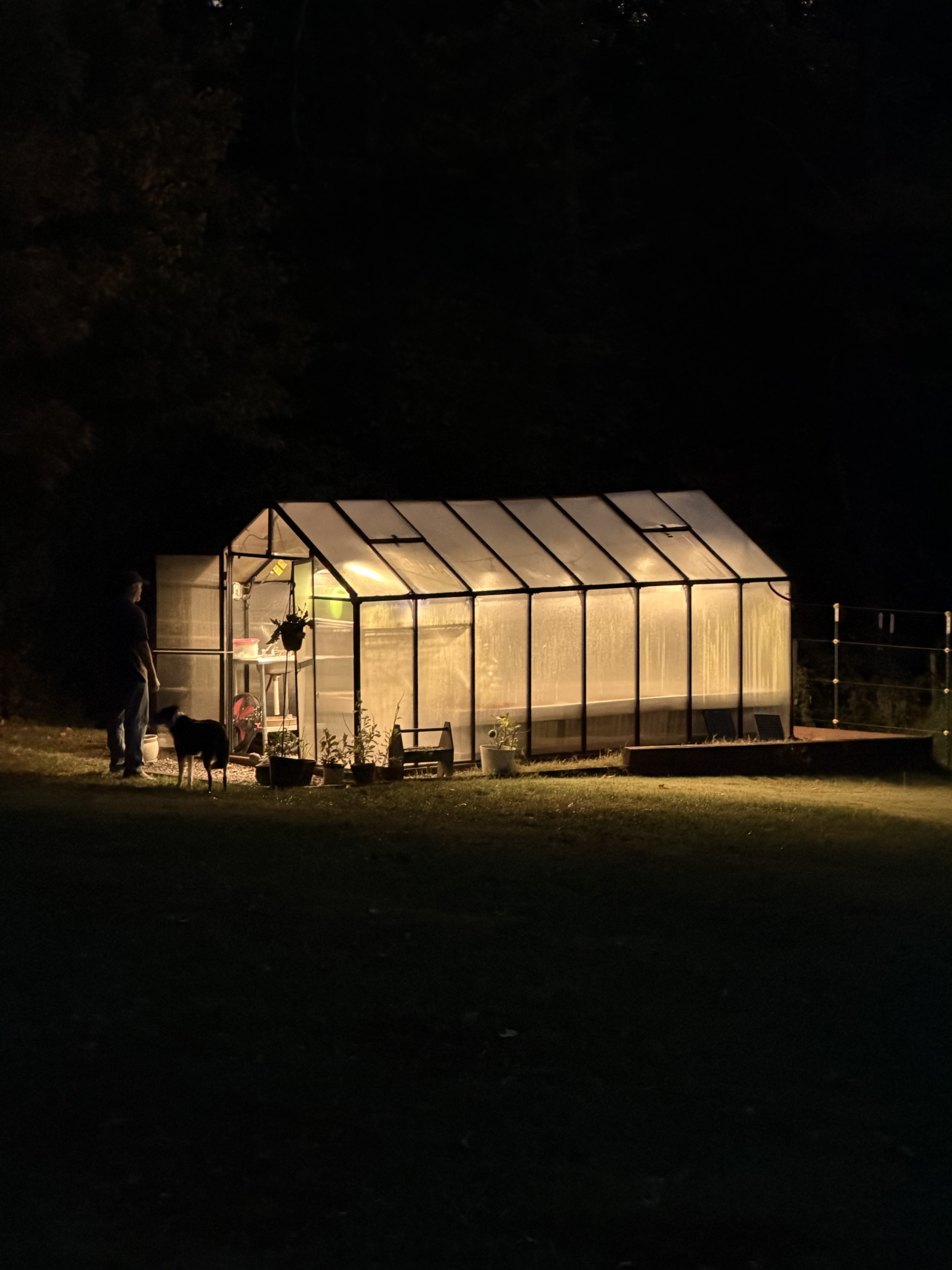
If you’re dreaming about seed trays lining the shelves, tomatoes climbing toward the roof, and honey bees buzzing nearby while you sip your coffee, it’s easy to get swept up in choosing the perfect greenhouse kit. But before you click “add to cart,” there’s one critical question every homesteader needs to answer:
Where are you going to put it?
Greenhouse placement can make the difference between thriving, productive plants and constant frustration with temperature swings, poor light, and accessibility issues. Strategic greenhouse placement isn’t just practical—it’s foundational to successful year-round gardening.
Let’s walk through why location matters so much and how to choose the best spot on your property.
Why Greenhouse Placement Is So Important
A greenhouse isn’t just a structure—it’s a controlled growing environment. Its success depends heavily on how well you work with your land’s natural sunlight, drainage, wind patterns, and daily traffic flow.
A poorly placed greenhouse can:
- Struggle with inadequate sunlight Overheat in summer or stay too cold in winter Be inconvenient to access (which leads to neglect) Develop structural issues from poor drainage or wind exposure
- On the other hand, a strategically placed greenhouse becomes the heart of your homestead—efficient, productive, and enjoyable to use year-round.
1. Maximum Solar Gain: Sunlight Is Everything
One of the most important factors in greenhouse placement is sun exposure.
Greenhouses thrive on sunlight. Without it, your plants stretch, weaken, and produce less. Ideally, you want the sunniest location in your yard, especially during winter months when daylight hours are limited.
South-Facing Orientation Matters
For most homesteads in the United States:
- A south-facing orientation provides the best solar exposure. Position the long side of the greenhouse facing south whenever possible. Avoid placing it directly under large deciduous or evergreen trees.
- During winter, the sun sits lower in the sky. A south-facing greenhouse captures more direct light throughout the day, helping maintain warmer internal temperatures naturally.
If your property has buildings, fences, or tree lines, observe how shadows move during the day before committing to a spot. What looks sunny in July might be shaded all winter long.

2. Temperature Regulation: Avoiding Cold Pockets and Heat Traps
Greenhouse temperature control starts with smart placement.
Avoid Excessive Shade
Constant shade keeps the greenhouse colder in winter and increases heating costs if you plan to use supplemental heat.
Watch for Overheating in Summer
While sunlight is critical, orientation also affects summer heat buildup. Strategic placement allows you to:
- Use natural airflow Add shade cloth where needed Take advantage of prevailing breezes
- Be Aware of Cold Air Drainage
- Cold air sinks. Low-lying areas of your yard can become frost pockets, which means your greenhouse may start colder than the rest of your property.
A slightly elevated position with good air movement helps regulate temperature more effectively year-round.
3. Convenience and Access: The Greenhouse You Use Is the One That Thrives
This is the factor many people underestimate.
If your greenhouse is too far from the house, too difficult to access in winter, or nowhere near water or electricity, it becomes harder to maintain consistently.
And consistency is everything in greenhouse gardening.
Consider These Questions:
- Can you easily run a hose to it?
- Do you have access to electricity for fans, lights, or heaters?
- Will you realistically walk out there during snow, ice, or heavy rain?
- Can you see it from the house to monitor issues quickly?
Placing your greenhouse closer to your home reduces the likelihood of neglected plants. When it’s convenient, you check it more often. When you check it more often, problems get solved quickly.
4. Structural Stability: Build on a Solid Foundation
A greenhouse is an investment. Protect it by choosing a location with:
- Level ground Good drainage Stable soil
- Drainage Is Critical
Standing water around your greenhouse can:
- Undermine the foundation
- Increase humidity issues
- Encourage mold and rot
Choose a well-drained site or plan for gravel, foundation blocks, or a base system.

Watch Snow and Wind Patterns
In colder climates:
- Avoid spots where heavy snowdrifts accumulate.
- Consider windbreaks if your property experiences strong prevailing winds.
Strategic greenhouse placement helps protect the structural integrity of your investment for years to come.
5. Environmental Control: Setting Yourself Up for Year-Round Growing
The entire purpose of a greenhouse is environmental control—managing light, temperature, humidity, and airflow.
Proper placement enhances your ability to:
- Grow earlier in spring
- Extend your fall harvest
- Start seeds successfully
- Maintain consistent humidity levels
- Grow greens and cold-hardy crops through winter
When positioned correctly, your greenhouse becomes a reliable, year-round growing space rather than a seasonal experiment.
Practical Steps Before You Buy
Before ordering your greenhouse:
- Observe your yard for a full day.
- Watch how sunlight moves.
- Check winter sun angles.
- What’s sunny in summer may not be in January. T
- est drainage after a heavy rain.
- Map water and electrical access.
- Consider wind direction and natural protection.
Taking the time to analyze your property now can save you frustration later.
Final Thoughts: Plan First, Purchase Second
It’s tempting to fall in love with a greenhouse model before considering placement. But the smartest move you can make as a homesteader is to plan the location first.
A strategically placed greenhouse:
- Maximizes solar gain
- Regulates temperature more efficiently
- Encourages consistent use
- Protects structural integrity
- Enhances environmental control
When you choose the right location, your greenhouse becomes more than a structure—it becomes one of the most productive spaces on your homestead.
And trust me, there is nothing more satisfying than stepping into a warm greenhouse on a cold February morning, knowing you planned it exactly right.





Leave a Reply