
Homesteading is often romanticized as a steady, peaceful rhythm of planting, harvesting, and tending animals. And while that rhythm certainly exists, what people don’t always talk about is how much a homestead changes over time. What works in the beginning may not make sense a few years later. Priorities shift, systems evolve, and sometimes difficult decisions have to be made in order to keep moving forward.
Recently, we experienced one of those moments here at J & J Homestead.
It was time to say goodbye to our ducks.
Ducks: The First Animals on the Homestead
Long before the chickens, the expanding garden, the greenhouse seedlings, and the dream of a farmstand, there were ducks.
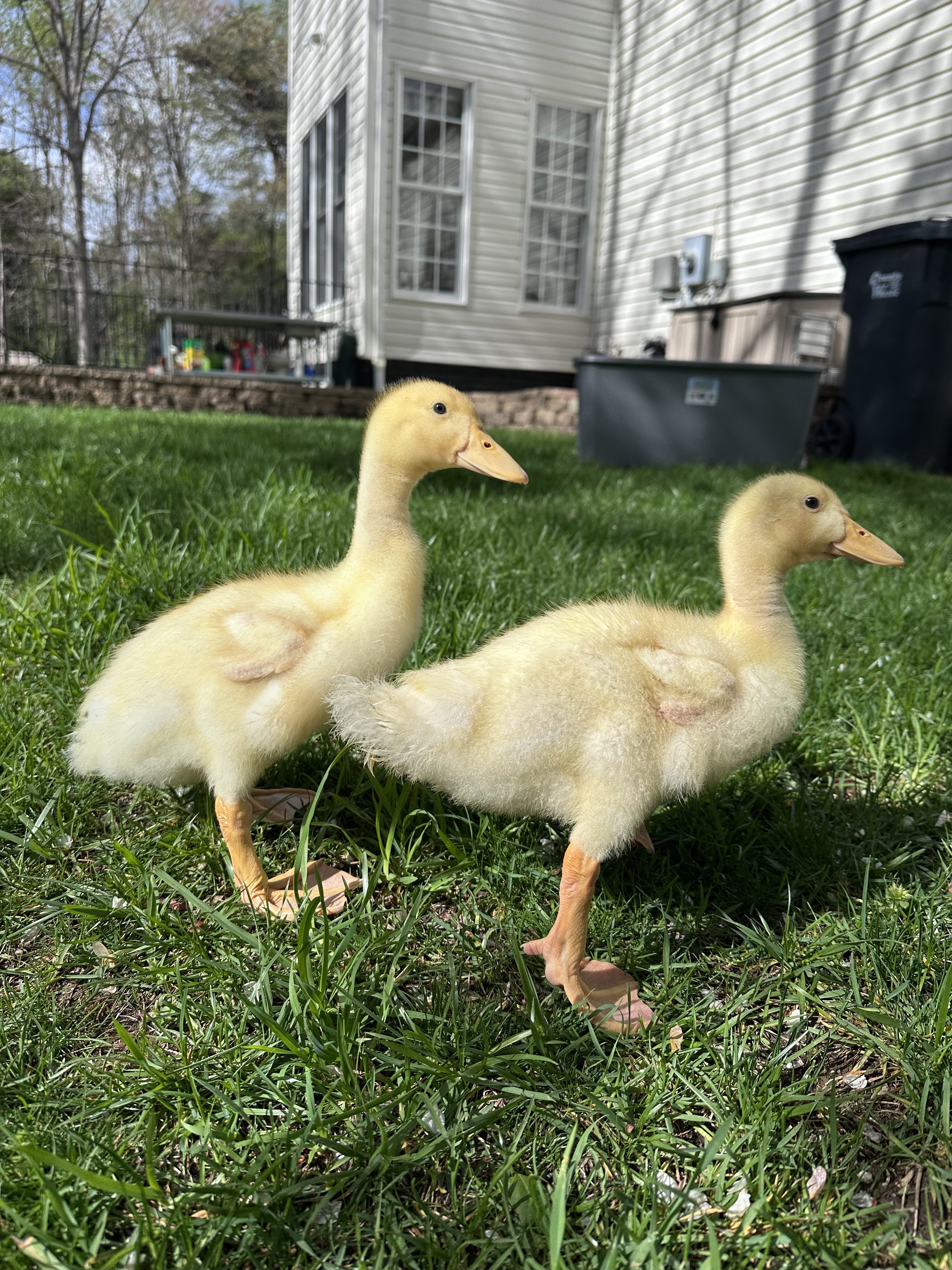
They were the very first animals we brought onto the homestead. I picked them up as tiny ducklings from Tractor Supply Company, and like many first animals on a homestead, they represented something bigger than themselves. They were the start of the dream. Raising them from ducklings was an adventure filled with learning curves, laughter, and more than a little mess.
Pekin ducks, in particular, are full of personality. They waddle around the yard like they own the place and always seem to have something to say about whatever you’re doing. They are curious, social, and endlessly entertaining.
But ducks also come with realities that become more noticeable as a homestead grows.

The Reality of Ducks on a Small Homestead
One of the biggest lessons in homesteading is understanding the balance between effort, resources, and return.
Ducks, as adorable as they are, require a significant amount of daily maintenance.
Their water must be changed constantly because they love to splash, play, and turn clean water into muddy soup within minutes. Anywhere ducks spend time quickly becomes a muddy environment. Managing that mud can be challenging, especially when you are trying to keep areas functional for other animals or garden work.
Winter brought its own challenges. Like many homesteaders in Virginia, we spend part of the colder months battling frozen water containers. Ducks require consistent access to water deep enough to dunk their heads, which means that keeping their water from freezing becomes a daily task.
Over time, we also had to look realistically at production.
We had two ducks, only one of which was female. When she was laying, we received one egg per day. While duck eggs are wonderful, the cost of time, water management, space, and winter care eventually outweighed the benefit.
As the homestead continues to expand—with chickens, bees, gardens, and now a farmstand in the works—we have to be intentional about where our energy goes.
And that meant acknowledging something that many homesteaders eventually face.
The ducks no longer made sense for our system.
Making the Hard Decision
Letting go of animals is never easy.
Homesteaders build relationships with the animals they raise. Even when those animals serve a practical role, there is still an emotional connection that forms through daily care.
As we looked ahead to the coming year, with the farmstand opening and the garden expanding, it became clear that we needed to simplify and focus our efforts on the parts of the homestead that were most productive and sustainable.
So I made a post in a local Facebook homesteading group.
I explained the situation and hoped that someone with more space and the right setup might be interested.
Sometimes things have a way of working out exactly as they should.
Finding the Perfect Home
Not long after the post went up, a wonderful family reached out.
They run a small homestead of their own and have a menagerie of animals. A few months earlier, they had lost two of their Pekin ducks and were hoping to add ducks back into their flock.
It felt like the perfect fit.
Today, they came to pick up our ducks.
Watching them leave was a little bittersweet. They had been part of the homestead since the very beginning. But there was also a sense of relief and gratitude knowing they were heading to a place where they would have more room, more companions, and a family excited to care for them.
Sometimes the right decision can feel both sad and right at the same time.
The Homestead Is Always Evolving
This moment is a reminder that homesteading is not static.
A homestead is a living system that grows and changes as we learn more about what works and what doesn’t. The animals you start with may not be the animals you keep forever. The garden layout changes. New projects emerge. Old systems get replaced with better ones.
Everything on a homestead should have a purpose.
That purpose might be food production, education, sustainability, or even simple joy. But when something no longer fits into the system, it’s okay to make a change.
In fact, those changes are often what allow a homestead to thrive.
The Next Chapter: Turkeys on the Homestead
And like many homesteading stories, this one ends with a new beginning.
The same wonderful family that adopted our ducks will be giving us turkeys to add to the homestead.
Turkeys are something we’ve been considering for a while. They offer a different opportunity for the homestead and represent the next step in the evolution of our livestock.
So while the ducks have waddled off into their next adventure, J & J Homestead is stepping into a new phase.
That is the beauty of this lifestyle.
The homestead is never finished. It is always growing, always teaching, and always becoming something new.

Leave a Reply