
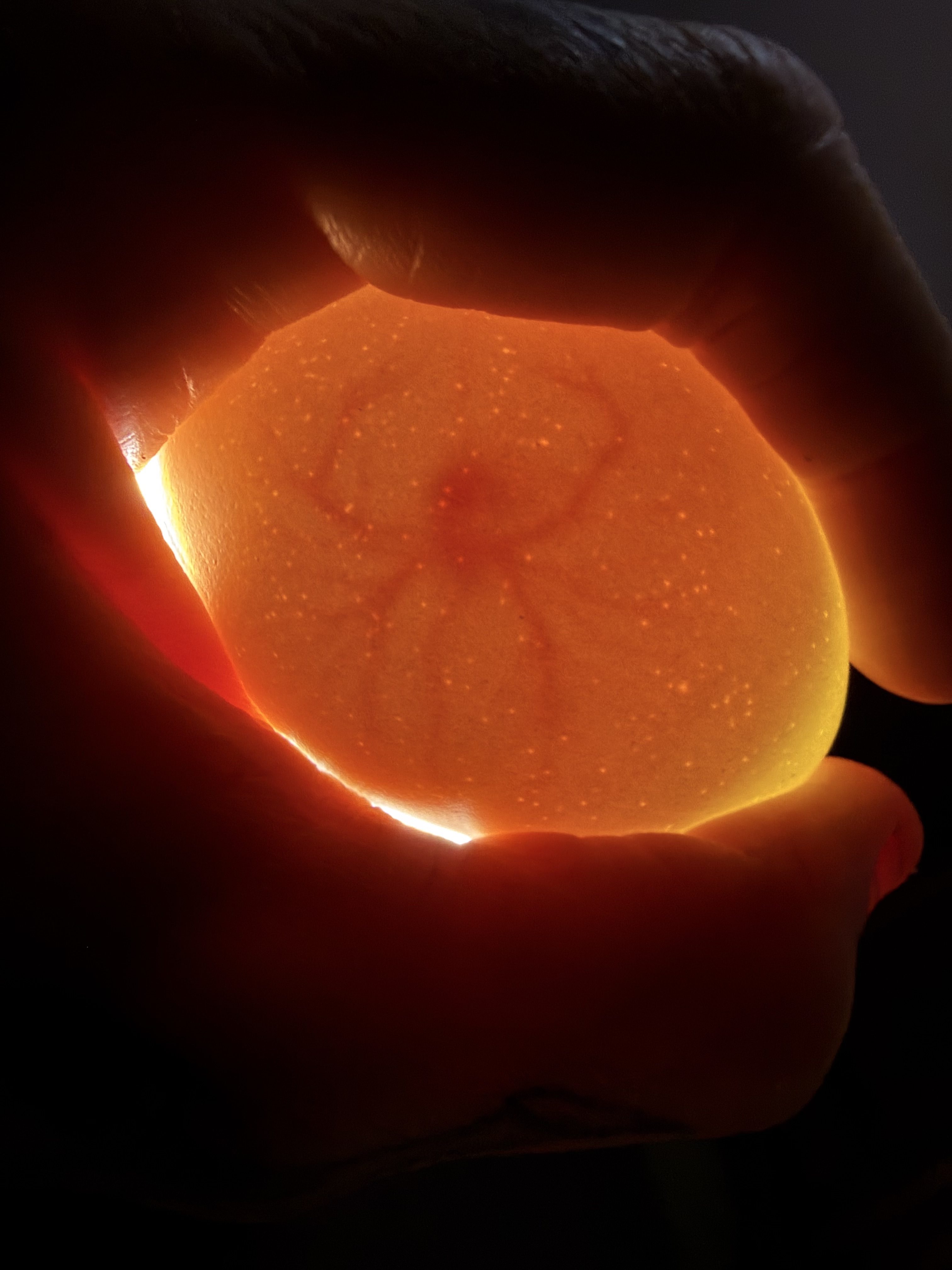
There are moments on the homestead that never lose their magic—and candling chicken eggs is one of them. The first time you shine a light through an egg and see life beginning to form, it stops you in your tracks. What looks like an ordinary egg suddenly becomes something extraordinary.
Whether you’re incubating eggs for the first time or you’ve done it for years, candling is one of the most valuable (and awe-inspiring) tools you have. It allows you to check fertility, monitor development, and ensure your hatch is progressing as it should.
Let’s walk through everything you need to know.

What Is Candling?
Candling is the process of shining a bright light through an egg to see what’s happening inside. Before modern tools, people literally used candles—hence the name. Today, a simple flashlight or egg candler works perfectly.
By candling, you can:
- Determine if an egg is fertilized
- Track embryo development
- Identify non-viable eggs early
- Prevent contamination in your incubator
It’s equal parts science and wonder.
Why Candling Matters
If you’ve ever set a batch of eggs in the incubator and just hoped for the best, candling gives you clarity and control.
Here’s why it’s important:
- Removes infertile eggs that will never develop
- Helps prevent spoiled or exploding eggs in the incubator
- Improves hatch rates by focusing on viable eggs
- Allows you to monitor progress and make adjustments
On a practical level, it’s smart flock management. On a personal level, it’s one of the most incredible ways to witness life unfolding.
What You Need to Candle Eggs
You don’t need anything fancy:
- A bright flashlight (your phone can work in a pinch)
- A dark room
- Clean hands
Optional:
- A dedicated egg candler
- A notebook to track progress
That’s it—simple and effective.
When to Candle Chicken Eggs
Timing matters. Candling too early can be confusing, and candling too often can disrupt development.
Here’s a simple schedule:
- Day 7 – First check for fertility
- Day 10–14 – Monitor development
- Day 18 – Final check before lockdown
After day 18, it’s best to leave the eggs alone and let the chicks do their thing.
How to Candle Eggs (Step-by-Step)
- Go into a dark room
- Hold the egg gently in your hand
- Shine the light at the large end of the egg
- Slowly rotate the egg to view inside
- Return it carefully to the incubator
Keep handling to a minimum—quick checks are best.
What to Look for During Candling
Day 7: Is the Egg Fertile?
At this stage, you’re looking for early signs of life.
Fertile egg:
- A network of blood vessels
- A small dark spot (the embryo)
Infertile egg:
- Clear, with only a faint yolk shadow
- No visible veins
If the egg is completely clear at day 7, it is likely not developing.
Day 10–14: Development Progress
Now things get exciting.
You may see:
- A larger, darker mass
- More defined veins
- Movement inside the egg
This is when it truly starts to feel real—you are watching a chick grow.
Day 18: Almost Hatch Time
By now:
- The egg is mostly dark
- The chick fills nearly all available space
- A clear air cell is visible at the large end
At this point, it’s time for lockdown—no more turning and no more handling.
Signs of Problems to Watch For
Not every egg will make it, and that’s part of the process.
Look out for:
- Blood rings (a red circle inside the egg), which indicate early death
- Cloudy or leaking eggs—these should be removed immediately
- Eggs with no development after multiple checks
It’s never fun, but removing non-viable eggs helps protect the rest of your hatch.
Tips for Successful Candling
- Candle quickly to avoid cooling the eggs
- Always handle eggs gently
- Keep notes on what you observe
- Avoid over-candling—less is more
And most importantly—trust the process.
The Magic of Watching Life Begin
There’s something deeply grounding about candling eggs. In a world that moves fast, this slows you down. It reminds you that life develops quietly, steadily, and in its own time.
On our homestead, candling nights have become a bit of a ritual. Lights off, flashlight on, and one by one, we check each egg—hoping to see those tiny veins that signal life is on its way.
It never gets old.
Final Thoughts
Candling chicken eggs is one of the simplest yet most rewarding parts of incubating. It gives you insight, improves your success rate, and connects you to the process in a meaningful way.
If you’re incubating eggs this season, take the time to candle them—not just for the data, but for the experience.
Because inside each of those eggs is a story just beginning.



Leave a Reply