
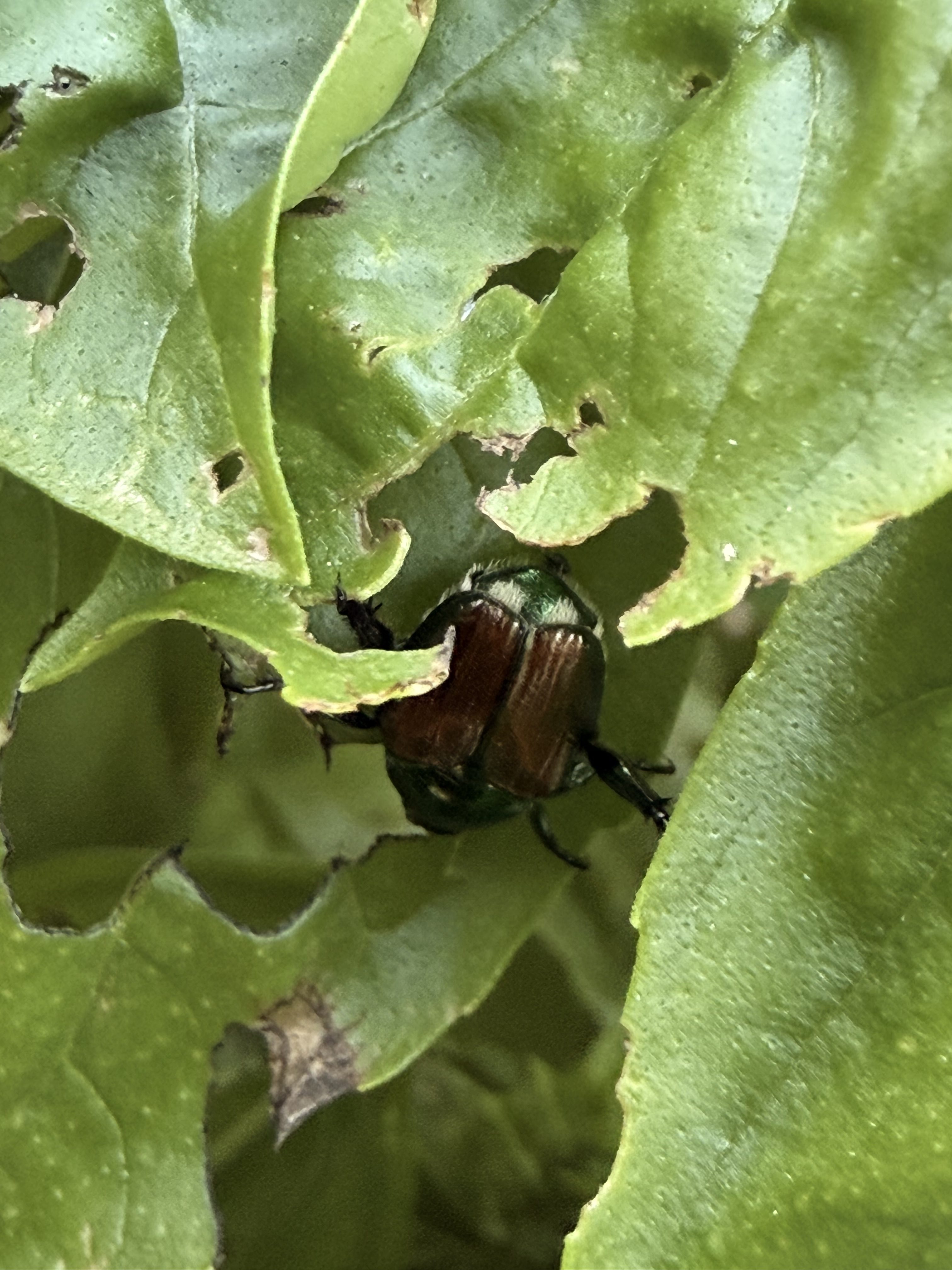
It finally happened.
I walked out into the garden for my morning harvest, reached for a handful of beautiful basil, and immediately knew something wasn’t right.
The leaves looked like lace.
A closer look revealed the culprits—Japanese beetles.
Unfortunately, they hadn’t stopped with the basil. As I looked around the garden, I found them beginning to move onto the blackberry bushes as well. If you’ve ever dealt with these metallic green pests before, you know just how quickly they can turn a healthy garden into something that looks like it’s been shredded overnight.
As frustrating as it is, spraying pesticides isn’t an option for us here at J & J Homestead.
Between our honey bees, our chickens, turkeys, rabbits, and the fact that many of our garden greens—including basil—are fed directly to our animals, we work hard to avoid chemical pesticides whenever possible. Thankfully, there are several effective ways to reduce Japanese beetle damage naturally.
What Are Japanese Beetles?
Japanese beetles (Popillia japonica) are invasive insects that feed on more than 300 different species of plants. Adult beetles typically emerge in Virginia from late June through August, making early summer the time when gardeners begin noticing sudden damage.
Adults are easy to identify by their:
- Metallic green heads
- Copper-colored wing covers
- White tufts of hair along each side of the abdomen
- About ½-inch body length
The real damage comes from their feeding behavior. Instead of eating entire leaves, they consume the soft tissue between the veins, leaving behind a distinctive skeletonized appearance.
Once one beetle finds a favorite plant, it releases aggregation pheromones that attract dozens—or even hundreds—of additional beetles.
Why They Love Basil and Blackberries
Apparently, our basil is considered a gourmet meal.
Japanese beetles are especially attracted to:
- Basil
- Blackberries
- Raspberries
- Grapes
- Roses
- Apples
- Beans
- Corn silk
- Linden trees
- Birch trees
Their preference varies from garden to garden, but once they’ve discovered a favorite food source, they’ll continue returning daily.
Why We Don’t Spray Pesticides
Many conventional insecticides are effective against Japanese beetles, but they aren’t the right solution for every homestead.
Our honey bees spend their days visiting flowers throughout the property, and pollinators are incredibly important for our vegetable garden, berry bushes, and fruit production. Even pesticides labeled for garden use can harm beneficial insects if applied improperly.
Additionally, our chickens and turkeys love fresh garden trimmings. Basil, lettuce, Swiss chard, kale, and other greens often become healthy treats for the flock.
Because those plants become animal feed, we’d rather use natural management methods than introduce unnecessary chemicals.
The Best Natural Ways to Get Rid of Japanese Beetles
Hand Pick Them Every Morning
This is still one of the most effective methods.
Japanese beetles move slowly during the cool hours of early morning.
Take a container filled with water and a few drops of dish soap, then simply knock the beetles into the solution. They quickly sink and drown.
We’re finding ourselves making this part of our daily morning garden routine.
The key is consistency. Removing beetles before large groups gather helps reduce the number that release aggregation pheromones.
Avoid Japanese Beetle Traps Near Your Garden
This one surprises many gardeners.
While Japanese beetle traps certainly catch thousands of beetles, research has shown they often attract far more beetles than they actually capture.
If you choose to use traps, place them well away from your garden—at least 30 to 50 feet from the plants you’re trying to protect.
Otherwise, you may unintentionally invite even more beetles into your vegetable beds.
Cover Vulnerable Crops
Floating row covers or insect netting can work well for plants that don’t require insect pollination during that period.
For herbs like basil, lightweight insect netting can provide excellent protection while still allowing sunlight and airflow.
Just remember to remove covers when necessary for harvesting or pollination.
Encourage Natural Predators
Nature has its own pest control team.
Birds, chickens, guinea fowl, certain wasps, and beneficial insects all feed on Japanese beetles at various stages of their life cycle.
Our chickens would happily spend all day chasing insects if they were allowed into every garden bed. While they can’t roam through the vegetables full-time, giving poultry supervised access to finished beds after harvest can help reduce insect populations.
One of the most effective natural controls actually works beneath the soil. Beneficial nematodes are microscopic roundworms that seek out and kill Japanese beetle grubs before they have a chance to mature into adults. Species such as Heterorhabditis bacteriophora are commonly recommended because they actively infect and kill beetle grubs while leaving earthworms, pollinators, pets, livestock, and people unharmed.
Keep Plants Healthy
Healthy plants recover from insect damage much more successfully than stressed plants.
Continue:
- Watering consistently during hot weather
- Mulching around plants
- Fertilizing appropriately
- Harvesting herbs regularly
Strong, vigorous plants are far more resilient.
Remove Damaged Leaves
If leaves are heavily infested, removing the worst damage can sometimes reduce the number of beetles lingering on a plant.
It’s also a good opportunity to inspect for new arrivals before they begin attracting more friends.
Should You Kill the Grubs?
Japanese beetles begin life underground as white grubs feeding on grass roots.
While treating lawns for grubs may seem like an obvious solution, research has shown that grub treatments often have only a modest impact on the number of adult beetles that appear the following year. Adult beetles are strong fliers and can easily travel from neighboring properties.
For most backyard gardeners, focusing on protecting the plants themselves is usually a better investment of time.
Plants That May Help Repel Japanese Beetles
Although no companion plant is guaranteed to keep Japanese beetles away, some gardeners report fewer problems around:
- Garlic
- Chives
- Catnip
- Tansy (use caution, as it can spread aggressively)
- White geraniums
- Marigolds
Think of these as one tool in a larger integrated pest management strategy rather than a complete solution.
Don’t Panic
As discouraging as it is to discover Japanese beetles covering your favorite plants, remember that they are seasonal visitors.
Adult beetle populations generally peak during July before gradually declining through August.
Daily hand removal, protecting valuable plants, encouraging beneficial insects, and avoiding unnecessary pesticides can dramatically reduce the damage while keeping your garden safe for pollinators and livestock.
That’s exactly the approach we’ll be taking here at J & J Homestead.
The basil may have become this year’s first casualty, but we’re not giving up on it—or on those blackberries. Every morning we’ll head back out with our bucket of soapy water, knock off another batch of beetles, and remind ourselves that gardening is always an adventure. Every season brings a new lesson, and this year, Japanese beetles have decided they’re our latest teachers.



Leave a Reply