
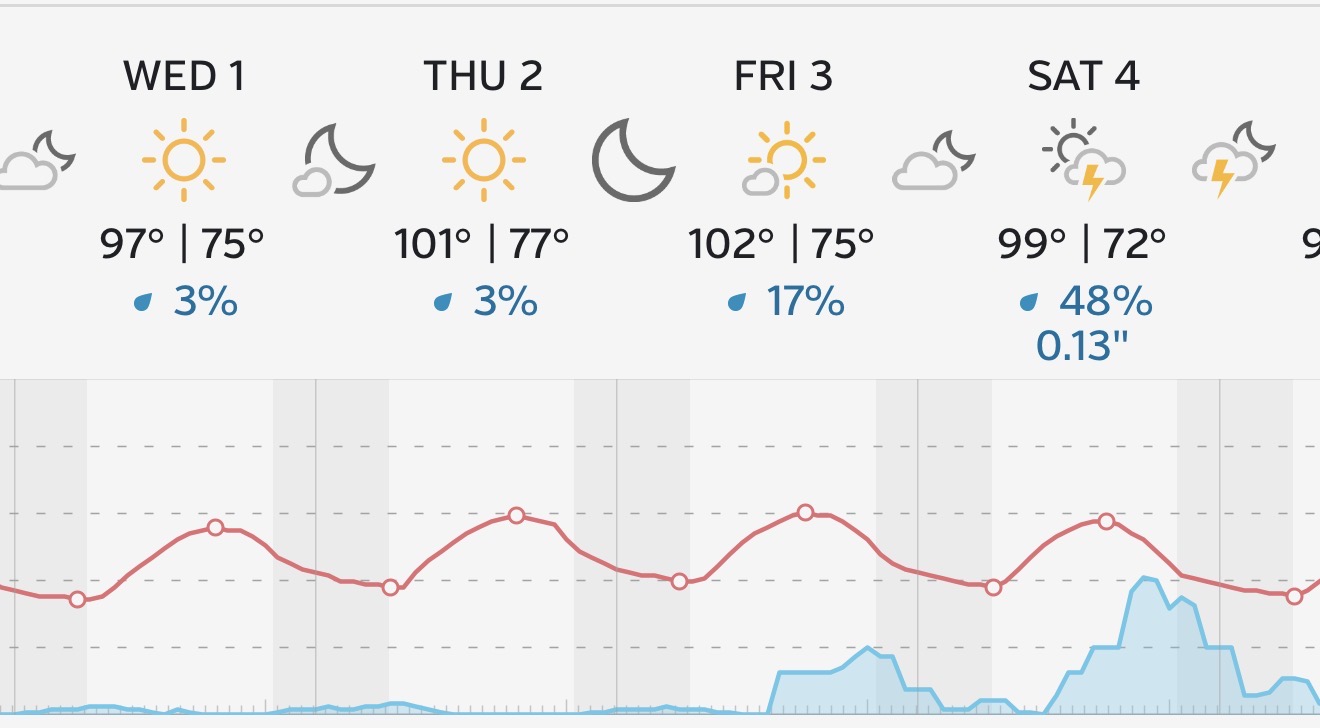
When people picture homesteading, they often imagine beautiful spring mornings, overflowing gardens, fresh eggs, and peaceful evenings watching the sun set over the pasture.
What they don’t always picture is standing outside before sunrise because the forecast is calling for another day over 100 degrees.
That’s exactly where we find ourselves this week.
Like much of Virginia, our little corner of the world is settling into an intense stretch of summer weather. Triple-digit temperatures are never easy—for people or animals—and on a homestead, there isn’t an option to simply stay inside with the air conditioning. The chickens still need care, the turkeys still need fresh water, and the garden still depends on us.
Over the years, we’ve learned that preparing for a heatwave is far easier than reacting to one. A little extra work before the hottest part of the day makes a tremendous difference for the health of both our animals and our plants.
Why Extreme Heat Is Such a Challenge on the Homestead
Unlike winter storms, which often arrive with plenty of warning and allow us to hunker down, summer heat can quietly wear everything down over several days.
Animals eat less, drink more, and spend most of the afternoon trying to stay cool. Egg production often slows as laying hens divert energy toward regulating their body temperature instead of producing eggs. Gardens wilt surprisingly quickly, even when the soil still feels damp a few inches below the surface.
The key isn’t trying to eliminate the heat—it’s impossible. Instead, the goal is helping everything on the homestead handle it as safely and comfortably as possible.
Keeping Our Chickens Comfortable
Chickens actually handle cold weather much better than they handle extreme heat.
Once temperatures climb into the upper 90s and low 100s, keeping air moving becomes our highest priority.
We run large fans in both the chicken runs and the coops throughout the hottest portions of the day. Moving air doesn’t lower the outside temperature, but it dramatically improves the birds’ ability to cool themselves.
Fresh, cool water is equally important.
During heatwaves, we check water multiple times throughout the day because chickens drink far more than usual. Warm water quickly becomes less appealing, so we refill containers often and add electrolytes to help replace minerals lost during excessive panting.
Treat time also becomes cooling time.
Our flock absolutely loves chilled watermelon on hot afternoons. They also eagerly devour thawed frozen peas, which provide both hydration and enrichment while helping lower their body temperature.
Shade becomes everyone’s favorite place. Fortunately, our runs provide plenty of protection from direct sunlight, allowing the flock to spend the hottest hours resting comfortably instead of baking in the sun.
One thing we’ve learned over the years is that chickens naturally know how to conserve energy during extreme weather. They move less, eat during the cooler parts of the day, and spend much of the afternoon simply resting.
Sometimes the best thing we can do is make sure they have the resources they need and let them do what comes naturally.
Heritage Turkeys Need Even More Help
One of the biggest lessons we’ve learned since raising heritage turkeys is just how poorly they tolerate Virginia’s summer heat.
Our Narragansett and Black Slate turkeys are incredibly hardy birds during cooler months, but once temperatures approach triple digits, they become noticeably uncomfortable.
The large fans outside their run have become absolute necessities rather than luxuries.
The constant airflow keeps fresh air circulating through the enclosure and makes a remarkable difference in their activity level. Combined with shade tarps that block the intense afternoon sun, the fans help create a much more comfortable environment.
Like the chickens, the turkeys receive electrolyte water and plenty of fresh drinking water throughout the day.
Cold treats disappear just as quickly in the turkey pen as they do in the chicken run.
Watching a flock of turkeys race toward watermelon is something every homesteader should experience at least once.
Helping the Garden Survive Triple-Digit Temperatures
Animals aren’t the only ones struggling during a Virginia heatwave.
Even established vegetable gardens can suffer when temperatures remain above 100 degrees for several consecutive days.
During these stretches, our watering schedule changes significantly.
Instead of watering during the heat of the day—when much of the moisture quickly evaporates—we water early in the morning before the sun becomes intense.
If the forecast calls for another brutally hot afternoon, we’ll also water again in the evening after temperatures begin to fall.
This gives the plants time to absorb moisture without losing so much to evaporation.
Tomatoes, peppers, squash, cucumbers, and many other summer vegetables are surprisingly resilient, but even heat-loving crops have limits.
Consistent watering helps reduce plant stress, minimizes blossom drop, and encourages continued production throughout the hottest weeks of summer.
Don’t Forget the Greenhouse
Many people assume greenhouses are only challenging during the winter.
In reality, summer is even harder.
Without proper ventilation, greenhouse temperatures can soar far beyond the outside air temperature.
On extremely hot days, we open everything possible to maximize airflow and closely monitor moisture levels throughout the day.
Plants growing under cover dry out much faster than many gardeners realize.
Checking them morning and evening has become part of our daily routine during heatwaves.
Planning Chores Around the Weather
One unexpected benefit of homesteading has been learning to work with nature instead of fighting it.
Our busiest outdoor chores now happen before the sun fully rises.
Watering, feeding, collecting eggs, harvesting vegetables, and general maintenance all happen in the cooler morning hours whenever possible.
By afternoon, both we and the animals are looking for shade.
It isn’t laziness—it’s good management.
Every Season Brings New Lessons
One of the reasons we enjoy sharing our homesteading journey is because every season teaches us something new.
A few years ago, I didn’t fully appreciate how much difference a simple fan could make in a chicken run.
I hadn’t yet discovered how much our birds love frozen peas or just how quickly heritage turkeys become uncomfortable during Virginia summers.
Experience has been our greatest teacher.
Every heatwave helps us improve our systems just a little bit more, making the next one easier for both us and our animals.
Homesteading isn’t about having perfect conditions.
It’s about adapting to whatever Mother Nature decides to throw your way.
This week, that means triple-digit temperatures, early mornings, lots of cold watermelon, fans humming in the background, and countless trips carrying fresh water across the property.
It may not be glamorous, but it’s all part of caring for the animals and plants that make this homestead feel like home.
If you’re experiencing this heatwave too, remember to take care of yourself as well. Drink plenty of water, work during the cooler parts of the day when possible, and don’t be afraid to save the heavy chores for another morning. Your garden, your animals, and your body will all thank you.




Leave a Reply