
What are three objects you couldn’t live without?
If you’ve been following along with J & J Homestead for a while, you already know that homesteading is equal parts dream and determination. It’s muddy boots, cracked eggs, early mornings, late nights, seed trays on every surface in February, and a freezer full of food you raised yourself.
Over the years, we’ve added chickens, ducks, honeybees, a greenhouse, a growing garden, and now the farmstand coming to life here in Virginia. And while there are plenty of tools and gadgets I love, there are three things I truly couldn’t homestead without.
These aren’t just conveniences. They’re foundational.
If you’re building your own homestead—whether that’s on 100 acres or a small backyard—these three essentials will change everything.
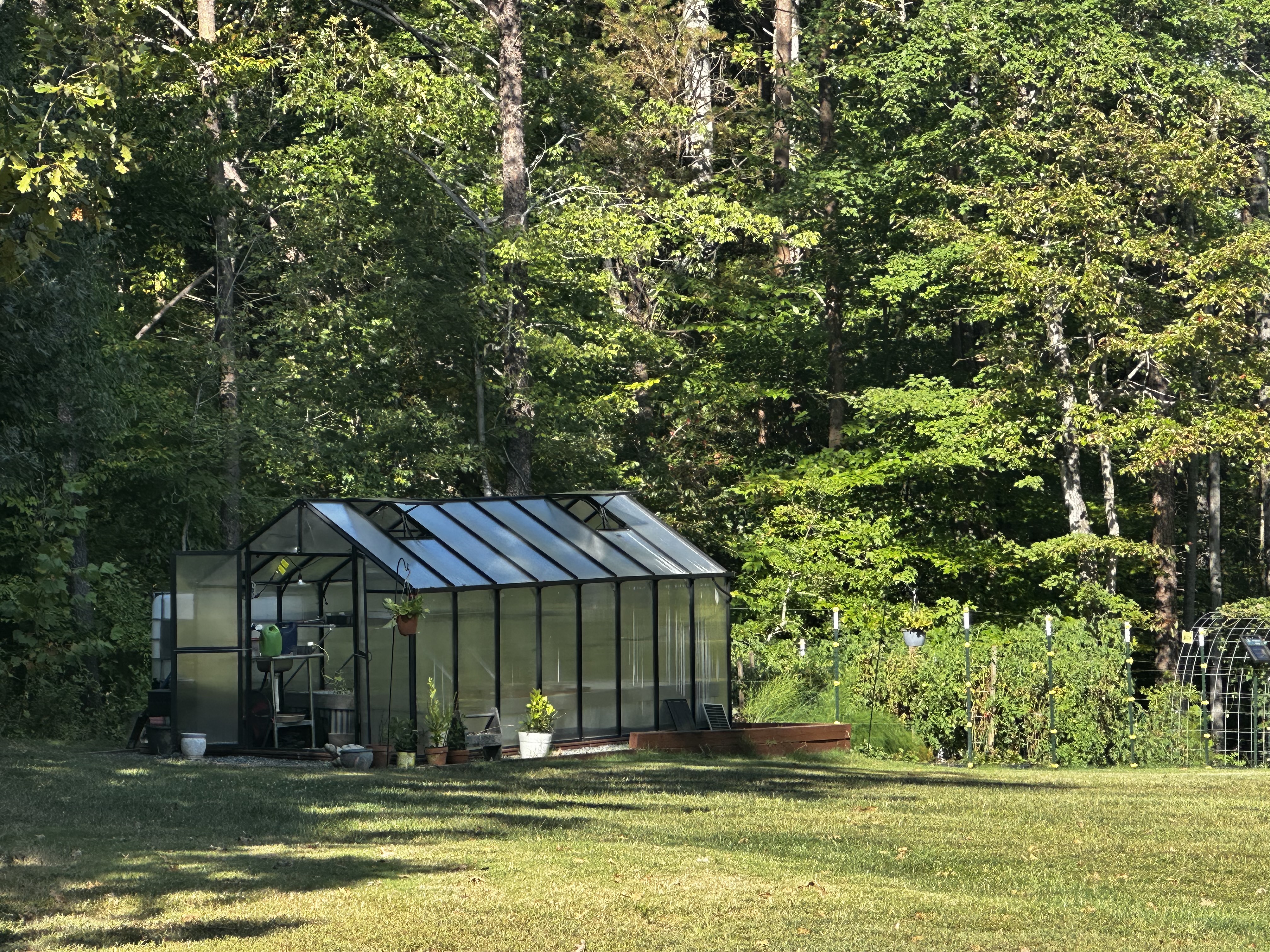
1. A Greenhouse (Or At Least a Protected Growing Space)
If I had to choose one structure that transformed our homestead the most, it would be the greenhouse.
Living in Virginia means unpredictable weather. Snow in late winter. Ice storms. Surprise cold snaps. And then, suddenly, blazing heat. Without protection, seed starting can feel like a gamble.

Our greenhouse allows us to:
• Start seeds weeks earlier
• Protect tender seedlings from frost
• Control temperature and humidity
• Extend the growing season
• Grow more food in less space
Instead of waiting on the weather, we work ahead of it. Lavender, cabbage, beets, chard, and lettuce begin their lives under protection before the rest of the world is ready. By the time outdoor planting season arrives, we already have strong, thriving plants ready to go.
The greenhouse doesn’t just extend the season—it extends possibility.
If a full greenhouse isn’t realistic yet, consider cold frames, low tunnels, or even a simple indoor seed-starting setup with heat mats and covers. Protected growing space is one of the best investments you can make in self-sufficiency.
2. A Reliable Chicken Setup (Especially an Automated Door)
Chickens are the heartbeat of our homestead. They provide eggs, compost material, pest control, and an endless source of entertainment.
But chickens also require consistency.
One of the biggest game-changers for us has been installing an automated chicken coop door. It opens at sunrise and closes at dusk without fail. No matter how busy the day gets—or how early it starts—the flock is protected.
Why this matters:
• Protects chickens from predators at night
• Reduces stress and missed closures
• Maintains a routine for the flock
• Allows flexibility if we’re away
Early spring especially brings increased predator activity. Raccoons, foxes, and snakes become more active as temperatures warm. Having a secure system in place provides peace of mind.
The coop itself matters, too. After building our first coop from scratch (armed mostly with a saw and determination), I learned that functionality outweighs aesthetics every single time. Proper ventilation, predator-proof hardware cloth, easy cleaning access, and adequate run space are non-negotiable.

A solid chicken system doesn’t just protect your flock. It protects your time and your sanity.
3. A Plan (And the Discipline to Follow It)
This might sound less tangible than a greenhouse or a coop, but it’s the most important thing on this list.
Homesteading without a plan quickly turns into overwhelm.
There are seeds to start, chicks to brood, honey to harvest, beds to rotate, feed to order, fences to repair, and—if you’re like us—a farmstand to prepare. Without intentional planning, it’s easy to constantly feel behind.
Here’s what planning does for us:
• Keeps seasonal tasks on schedule
• Prevents last-minute scrambling
• Controls spending
• Aligns projects with long-term goals
• Makes growth sustainable
We don’t just plant randomly. We map out garden beds. We plan seed starts by date. We track egg production. We budget for supplies. We think ahead to what will sell at the farmstand and what will feed our family.
Homesteading is romantic—but it’s also operational.
Jason and I talk constantly about what’s next. What are we building this season? What are we scaling back? What makes sense financially? What aligns with our values?
A plan turns dreams into momentum.
If you’re new to homesteading, start small and write it down. What are your goals this year? Food security? Supplemental income? Learning a new skill? Every successful homestead begins with clarity.
What This Really Comes Down To
When I think about the three things I couldn’t do without—our greenhouse, our reliable chicken setup, and our seasonal plan—they all have something in common.
They create stability.
Homesteading will always have unpredictability. Weather shifts. Equipment breaks. Animals surprise you. But strong systems absorb that unpredictability.
If you’re building your own homestead, ask yourself:
What systems would reduce stress and increase sustainability?
What investments would give you back time?
What planning would prevent burnout?
You don’t need everything at once. We certainly didn’t start here. Every structure, every improvement, every system was built one decision at a time.
But looking back, these three made the biggest difference.
And I wouldn’t want to homestead without them.





Leave a Reply