
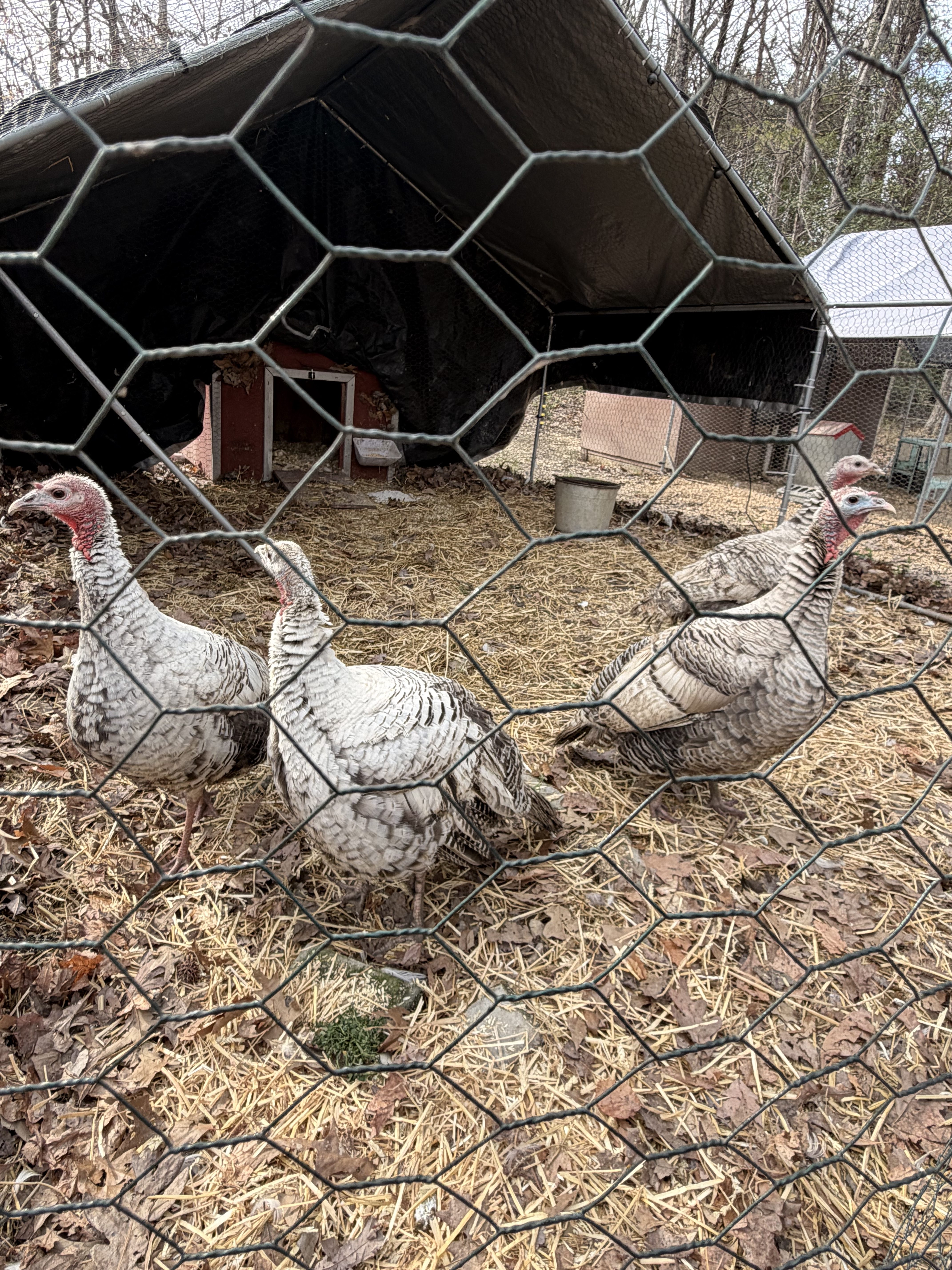
Adding new animals to a homestead is always an exciting moment, but it also comes with a mix of anticipation, preparation, and a bit of uncertainty. Yesterday marked the beginning of a brand-new chapter for us here at J & J Homestead—we brought home four turkey hens.
It was one of those days that perfectly captures the unpredictable, joyful nature of homesteading.
A Homestead Swap: Ducks for Turkeys
Just last week we made a difficult but practical decision on the homestead: we rehomed our two ducks. As much as we enjoyed having them, space, time, and priorities on a growing homestead sometimes require tough choices.
Fortunately, the homestead that welcomed our ducks had something they were looking to rehome as well—four turkey hens.
What started as a simple conversation quickly turned into a plan for a homestead swap.
Throughout the week, Jason and I focused on preparing a turkey run so that the birds would have a safe and comfortable place to settle in when they arrived. While our long-term goal is to allow the turkeys to free range around the homestead, it’s important to give new birds time to adjust to their surroundings before letting them roam freely.
Settling them in first helps them recognize home base, which is essential for preventing wandering or predator risks.
Visiting a Truly Incredible Homestead
Yesterday we made the 40-minute drive to pick up the turkeys.
To be honest, I didn’t remember exactly how many we were getting—or even what breed they were. I thought we were bringing home two. Jason was convinced we were getting four.
It turns out Jason was right.
Pulling into their property was incredible. Their homestead was alive with animals and energy. Everywhere you looked there were animals living peacefully together:
- Goats—many of them babies
- Two Shetland ponies
- A horse
- Chickens
- Turkeys
- Dogs
- And of course, our former ducks (who were doing great, such a relief to see!)
It was the kind of homestead scene that makes you stop and smile.
The highlight for me? I got to hold a baby goat, which absolutely made my day.
Meeting Our New Turkey Hens
Then we met the turkeys.
They were huge.
Seeing them in person made it clear that bringing the large dog crate had been a very good decision. Thankfully, getting them into the crate was surprisingly easy, and before long we were on the road back home with four very large passengers in the back of the vehicle.
The drive itself was uneventful, which is exactly what you hope for when transporting livestock. All four hens settled into the crate without much fuss.
There was, however, one unavoidable side effect.
Turkeys poop. A lot.
Needless to say, the vehicle received a thorough cleaning and airing out once we got home.

Settling the Turkeys Into Their New Home
Once back at the homestead, we carried the crate to their prepared run and opened the door.
The first three hens required a bit of encouragement—I gently lifted them out one at a time. The fourth turkey, however, watched what was happening and figured things out for herself.
Once out, they stood quietly for a moment, clearly unsure about their new surroundings. But curiosity quickly took over.
It was fascinating to watch them explore.
We gave them fresh food, and they immediately began eating enthusiastically—as if they hadn’t eaten in days. Of course, judging by their size, that clearly wasn’t the case.

Before long, they began making the soft chirps and gobbling sounds that turkeys are known for. As the day went on, we could visibly see them becoming more relaxed and comfortable in their new space.
Prioritizing Turkey Health and Biosecurity
While bringing new animals onto a homestead is exciting, it’s also important to approach it responsibly.
Even when animals come from a wonderful and well-managed farm, every homestead has its own micro-environment and disease exposure. That’s why biosecurity measures are critical whenever new birds arrive.
Our first step was preventative care.
We mixed Corid (amprolium) into their drinking water as a precautionary treatment for coccidiosis, a common protozoal disease that affects poultry.
Anyone who raises poultry knows that coccidiosis is simply a fact of life when working with birds and soil. Taking preventative steps early helps reduce the risk of problems later.
Our general health plan for the turkeys will follow this sequence:
First, we address coccidiosis prevention with Corid in their water. Once that period is complete, we will transition them to vitamins and electrolytes to help support their immune systems and reduce stress from transport and relocation.
Later, after they’ve fully settled and acclimated, we will evaluate and treat for internal parasites (worms) if necessary.
That step is still weeks away, but planning ahead is part of responsible livestock management.
Adapting the Run for Turkey Needs
Although the turkeys are now home, there is still plenty of work ahead.
One of the biggest adjustments we need to make involves roosting structures.
Turkey roosting needs are very different from chickens. Their size and weight mean that the narrow bars often used for chickens simply don’t work well.
Instead, turkeys prefer wide, sturdy roosting platforms or broad perches that can support their weight comfortably.
Over the next few days we’ll be modifying their run to include:
- Strong, wide roosting areas
- Additional space for movement
- Shade and weather protection
- Areas where they can feel secure while settling in
As they grow comfortable with their new environment, we’ll eventually begin allowing them to free range around the homestead.
The Beginning of Another Homesteading Adventure
Bringing home these four turkey hens marks the beginning of another learning experience for us here at J & J Homestead.
Every animal we add teaches us something new—about care, behavior, health, and how all the moving parts of a homestead work together.
For now, we’re focused on helping them settle in, keeping them healthy, and making their run as comfortable as possible.
And of course, we’ll be sharing the journey along the way.
Stay tuned as we continue learning our way through the wonderful—and sometimes messy—adventure of raising turkeys on the homestead.




Leave a Reply