

It seems like our chickens have been extra broody this year!
Just today, I pulled our latest moody—and very broody—hen out of the nesting box and gave her a cooling bath. She was completely committed to the idea that she should be sitting on eggs, whether we agreed with her or not.
If you raise laying hens, chances are you’ll eventually encounter a broody chicken. Some breeds are certainly more prone to broodiness than others, but when those hormones kick in, even the sweetest hen can suddenly transform into a puffed-up, growling little dinosaur who refuses to leave the nesting box.
On our homestead, we generally don’t encourage our chickens to hatch eggs naturally, so when a hen becomes broody, our goal is to break the broodiness as quickly and humanely as possible.
Here’s why—and what you can do when one of your own hens decides it’s time to become a mother.
What Is a Broody Chicken?
A broody hen is a chicken whose hormones have triggered the instinct to sit on eggs and hatch chicks.
Instead of laying an egg and going about her day, she begins spending most—or sometimes nearly all—of her time in a nesting box.
A broody hen may:
- Refuse to leave the nesting box
- Puff up her feathers when you approach
- Growl, squawk, or peck when you try to move her
- Flatten herself over the nest
- Pull feathers from her breast
- Stop or dramatically reduce egg laying
- Leave the nest only briefly to eat, drink, and poop
- Produce an unusually large and unpleasant-smelling “broody poop”
And here’s the funny part: there don’t even have to be fertile eggs underneath her.
Sometimes there aren’t any eggs at all.
Her hormones are telling her that she needs to hatch something, and she is determined to fulfill that mission.
Why Have My Chickens Been So Broody?
Broodiness is influenced by several factors, including genetics, hormones, daylight, season, and environmental conditions.
Spring and summer are particularly common times for broodiness because longer daylight hours naturally encourage reproductive behavior.
Some breeds are also much more likely to become broody.
Breeds such as Silkies, Cochins, Brahmas, Orpingtons, and Sussex are well known for their maternal instincts. Other high-production breeds, including many Leghorns and production hybrids, have generally been selectively bred to be less broody.
But chickens don’t always read the breed descriptions.
Sometimes a hen simply decides that today is the day she is going to become a mother.
Why We Break Our Broody Hens
There is absolutely nothing wrong with allowing a broody hen to hatch chicks if that fits your flock-management goals.
In fact, a good broody hen can be an incredible little mother.
But that’s not what we’re trying to accomplish with our laying flock.
We rely on our hens for egg production, and broodiness essentially puts egg production on pause.
Once a hen becomes seriously broody, she typically stops laying because her body has shifted from producing eggs to incubating them.
And that’s not the only reason we prefer to intervene.
1. Broodiness Reduces Egg Production
This is the biggest reason we break broodiness on our homestead.
A broody hen usually stops laying while she’s attempting to hatch eggs. Even after the broodiness ends, it may take some time for her normal laying cycle to resume.
For a backyard flock, that may not matter.
For a homestead producing eggs, however, multiple broody hens can make a noticeable difference in overall egg production.
2. A Broody Hen Can Lose Weight
A determined broody hen may leave the nest only once or twice a day.
She’ll quickly eat, drink, relieve herself and then hurry right back to her nest.
Because she is eating considerably less than normal, prolonged broodiness can result in weight loss and declining body condition.
If there aren’t actually chicks coming at the end of those three weeks, there’s little benefit to allowing her to continue.
3. Broody Hens May Not Drink Enough
The same behavior can potentially contribute to dehydration, particularly during hot weather.
That’s especially important here in Virginia, where summer temperatures and humidity can make an already-hot nesting box even more uncomfortable.
4. Nesting Boxes Aren’t Designed for Permanent Occupancy
When one hen claims a favorite nesting box, the other hens still need somewhere to lay.
Sometimes they’ll pile into the same box. Sometimes they’ll lay somewhere else. Sometimes you’ll find eggs in places you never expected.
A territorial broody hen can disrupt the normal flow of the entire laying flock.
5. Broody Hens Can Become Vulnerable to Parasites
A chicken spending extended periods sitting in the same warm, dark nesting material can potentially have greater exposure to external parasites such as mites and lice.
This is another reason I don’t like allowing unnecessary broodiness to drag on indefinitely.
How to Break a Broody Hen
The earlier you recognize broodiness and intervene, the easier it can be to change the behavior.
The goal isn’t to punish the chicken.
You’re essentially trying to interrupt the environmental and hormonal cues encouraging her to remain in nesting mode.
Remove Her From the Nest
This is always our first step.
Take the broody hen out of the nesting box and place her with the rest of the flock.
Encourage her to:
- Eat
- Drink
- Walk around
- Scratch
- Dust bathe
- Socialize with the flock
Sometimes catching broodiness early and repeatedly removing the hen from the nest is enough.
The problem?
She may march directly back into the coop.
That’s when we move to the next strategy.
Collect Eggs Frequently
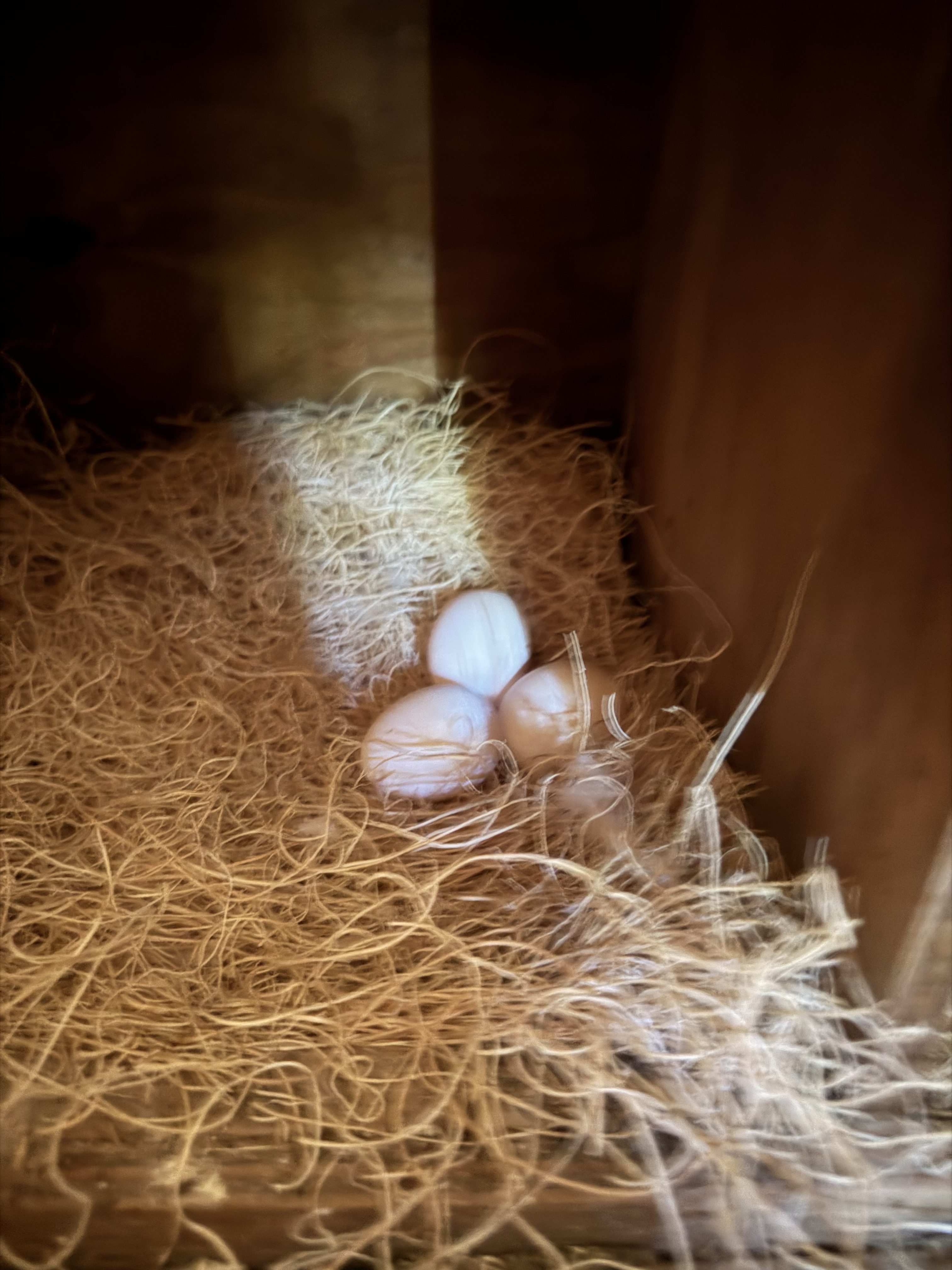
A pile of eggs sitting in a dark, comfortable nesting box can encourage a hen that is already inclined toward broodiness.
During broody season, collect eggs frequently throughout the day.
Removing the eggs eliminates one more reason for her to stay planted in the nesting box.
Block Access to the Favorite Nest
If possible, temporarily block the nesting box she’s determined to occupy.
This works particularly well if she has chosen one specific box.
Of course, you’ll need to make sure your other laying hens still have adequate nesting space.
Get Her Moving
Sometimes I’ll carry a broody hen away from the coop and place her near food, water, or an interesting area of the run.
The farther she is from her favorite nesting box, the more opportunities she has to become distracted by normal chicken activities.
Treats can occasionally help, too.
Suddenly hunting for a handful of mealworms sounds a little more interesting than staring at an empty nesting box!
Should You Give a Broody Chicken a Cooling Bath?
This is something we did with our latest broody hen today.
Historically, some chicken keepers have used cool or lukewarm water to help cool the underside of a broody hen and interrupt her nesting behavior.
However, I wouldn’t consider bathing the best or primary method for breaking broodiness.
If you do use water, avoid ice-cold water, don’t submerge the hen’s head, and don’t leave her soaking wet or chilled. The goal should never be to shock or stress the chicken.
There is another method that accomplishes the cooling and behavioral interruption more consistently.
The Broody Breaker: Our Most Reliable Option
For an especially determined hen, a broody breaker is often the most effective solution.
A broody breaker is usually a wire-bottom dog crate or similar enclosure placed somewhere safe, bright, and well ventilated.
The hen goes inside with:
- Food
- Clean water
- Enough room to comfortably stand and move around
- A roost if the setup allows it
What she doesn’t get is a cozy nest.
No deep bedding.
No dark nesting corner.
No pile of eggs.
The wire floor allows airflow underneath the hen and removes the warm, enclosed environment that reinforces nesting behavior.
We have used the crate method with broody hens before, and sometimes that’s what it takes for a particularly determined chicken.
Depending on the hen, she may need to remain in the broody-breaker setup for a few days.
How Do You Know When a Hen Is No Longer Broody?
Before returning her completely to normal life, watch her behavior.
A hen who is still broody may immediately race back to the nesting box, flatten herself down, puff up and resume her protest against anyone who comes near her.
A hen whose broodiness has broken should begin behaving much more normally.
She’ll spend her time:
- Foraging
- Eating and drinking normally
- Dust bathing
- Roosting with the flock
- Exploring the run
- Generally doing regular chicken things again
If she goes straight back to the nest, she probably needs a little more time.
Don’t Confuse Broodiness With Illness
This is important.
A chicken sitting around, puffing up her feathers, eating less, or acting withdrawn isn’t automatically broody.
A truly broody hen is typically very focused on the nesting box and often becomes defensive when disturbed.
If a hen seems lethargic, weak, isn’t eating or drinking, has abnormal droppings, is losing significant weight, has difficulty breathing, or displays other signs of illness, don’t assume hormones are responsible simply because she’s sitting down.
Take a closer look.
Knowing what’s normal for your flock makes spotting these differences much easier.
What If You Actually Want Chicks?
Then broodiness can be a wonderful thing!
If you have fertile eggs and a dependable broody hen, she can potentially handle much of the incubation process herself.
Chicken eggs generally take about 21 days to hatch, and a good broody hen will carefully regulate the temperature of the eggs, turn them, and eventually care for the chicks.
In that situation, instead of breaking her broodiness, your focus shifts toward providing a safe nesting location, proper food and water access, predator protection, and eventually a safe environment for the chicks.
But if you’re not trying to hatch chicks, there’s little reason to let a hen spend weeks sitting on an empty nest.
Broody, Moody, and Completely Determined
There is something almost comical about a broody chicken.
One day she’s happily wandering around the run.
The next day you reach toward the nesting box and are greeted by a puffed-up chicken making noises that sound like they came straight out of Jurassic Park.
She has made her decision.
She is going to hatch those eggs.
Even if there aren’t any eggs.
And apparently, we’re the unreasonable ones for suggesting otherwise.
Our chickens seem to have been especially broody this year, so breaking broodiness has become another regular part of managing our flock.
For us, because our laying hens are primarily there to produce eggs rather than naturally hatch chicks, we prefer to intervene early. Removing hens from the nest, collecting eggs frequently, encouraging activity, eliminating access to favorite nesting areas, and using a broody-breaker crate when necessary usually gets everyone back to normal.
Eventually, our moody little hen will forget all about becoming a mother.
At least until another chicken decides it’s her turn.
And judging by how this year has been going, I’m sure one will.


Leave a Reply