
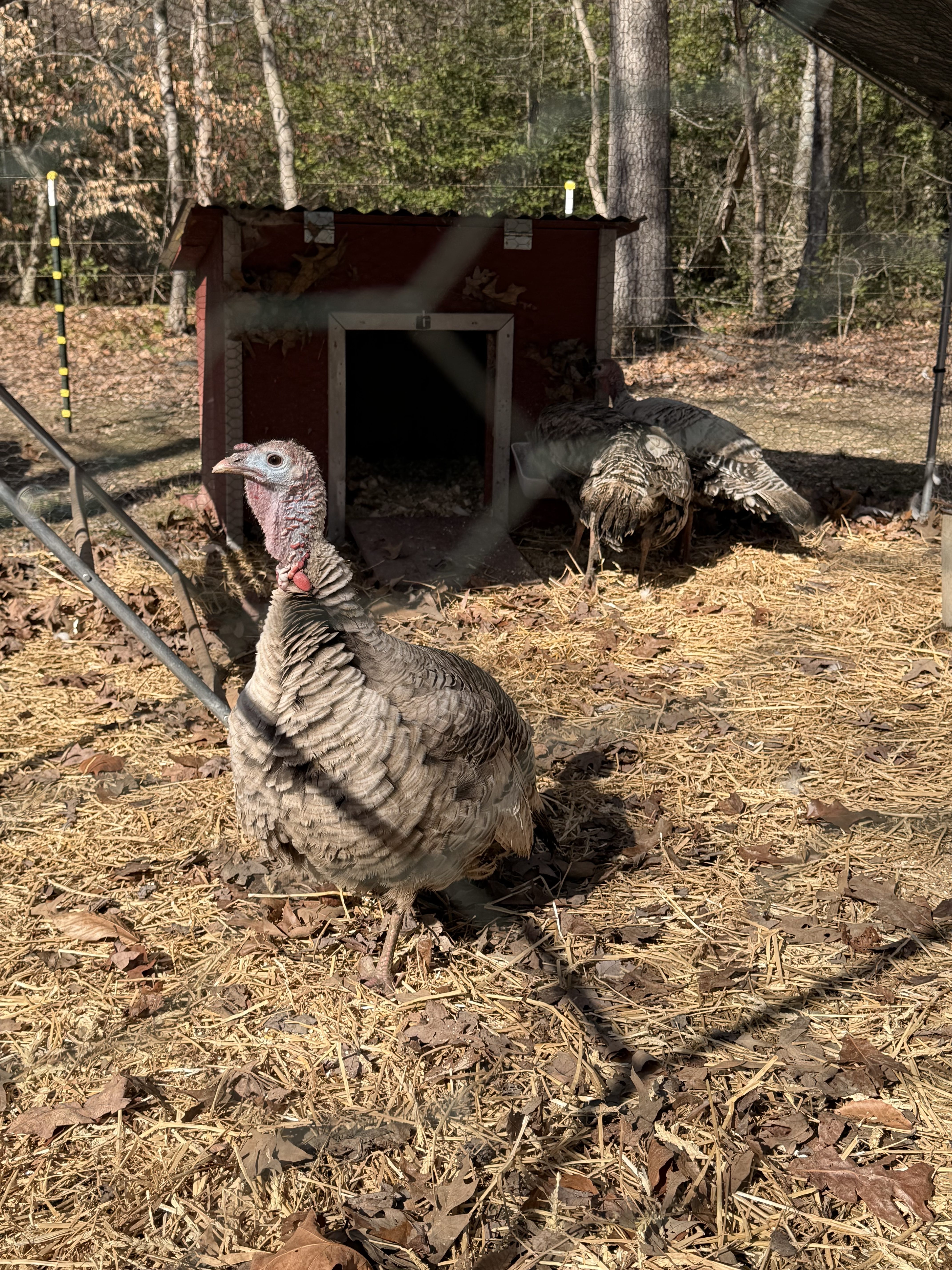
Bringing turkeys onto the homestead has already been an exciting new chapter, and if you’re anything like me, it doesn’t take long before you start thinking… should we add a tom?
Right now, I have four turkey hens settling into their new home. While the idea of adding a tom turkey is tempting—especially with thoughts of breeding, flock dynamics, and future sustainability—I’m taking a step back to ask an important question:
Is this the right time?
If you’re in the same position, here are the key things to consider before adding a tom turkey to your flock.
Let Your Hens Get Fully Established First
One of the most important (and often overlooked) steps is simply giving your hens time to acclimate.
Turkeys are highly social birds, and they establish a pecking order just like chickens—but often with even stronger personalities. Adding a tom too soon can disrupt that process and create unnecessary stress.
Right now, my priority is:
- Letting the hens settle into their new environment
- Allowing them to bond as a group
- Observing their natural behaviors and hierarchy
A calm, established flock will handle the introduction of a tom much better than one still figuring things out.

Space Matters More Than You Think
Before adding a tom, I’m also looking hard at our setup—because space is everything with turkeys.
A mature tom is significantly larger than hens and requires:
- More room to roam
- Wider roosting space
- Extra clearance (they’re not small birds!)
If your run feels “just right” now, it may feel crowded very quickly with a tom added.
My current plan:
- Expand the turkey run before introducing a tom
- Ensure multiple roosting areas
- Create space for separation if needed
Overcrowding leads to stress, aggression, and health issues—none of which we want on the homestead.
Understand Tom Behavior (It’s Not Just the Gobble)
Toms are impressive birds—large, beautiful, and full of personality—but they also come with very different behaviors than hens.
A few things to be ready for:
- Dominance displays (strutting, puffing up, gobbling)
- Potential aggression, especially during breeding season
- Increased noise levels (that gobble carries!)
Some toms are gentle and manageable, while others can become territorial. Knowing your comfort level—and your setup—is key.
Breeding: Are You Ready for the Commitment?
Adding a tom naturally brings up the question of breeding.
Before going down that path, ask yourself:
- Do I want fertilized eggs?
- Am I prepared to hatch and raise poults?
- Do I have space for more turkeys long-term?
Breeding isn’t just a one-time decision—it creates a cycle of growth that needs planning, space, and resources.
If your focus right now is getting your current flock established and your farmstand running smoothly, it may make sense to wait.
Feeding and Nutrition Considerations
A tom will change your feeding dynamic slightly.
While hens are often maintained on a balanced turkey feed, toms:
- Eat more (especially as they grow larger)
- May require adjustments during breeding season
- Can outcompete hens at feeders
Make sure you have:
- Multiple feeding stations
- Adequate protein levels
- A feeding setup that ensures hens still get what they need
Health and Biosecurity
Any time you introduce a new bird, you introduce risk.
Before adding a tom:
- Plan for quarantine (at least 2–4 weeks)
- Observe for signs of illness
- Ensure your current flock is healthy and stable
Turkeys can be more sensitive than chickens, so taking this step seriously is critical.
Timing Is Everything on the Homestead
Spring always feels like the perfect time to add more animals—but it’s also one of the busiest seasons on the homestead.
Right now, I’m balancing:
- Garden planting schedules
- Farmstand preparations
- Managing chickens, bees, and now turkeys
Adding a tom would mean:
- More time commitment
- More management
- More moving pieces
And sometimes, the best decision is simply… not yet.
A Thoughtful Approach to Growing Your Flock
One thing homesteading has taught me time and time again is this:
Just because you can expand, doesn’t mean you should—at least not right away.
For now, my focus is:
- Letting the hens settle
- Expanding their run
- Learning their personalities and needs
The tom can come later—when the setup, timing, and flock are truly ready.
Final Thoughts: Should You Add a Tom Turkey Now?
If you’re considering adding a tom to your flock of hens, ask yourself:
- Is my current flock fully acclimated?
- Do I have enough space (and then some)?
- Am I ready for breeding and flock expansion?
- Do I have the time and resources right now?
If any of those answers are “not quite yet,” that’s okay.
Homesteading isn’t a race—it’s a series of thoughtful decisions that build something sustainable, one step at a time.





Leave a Reply