
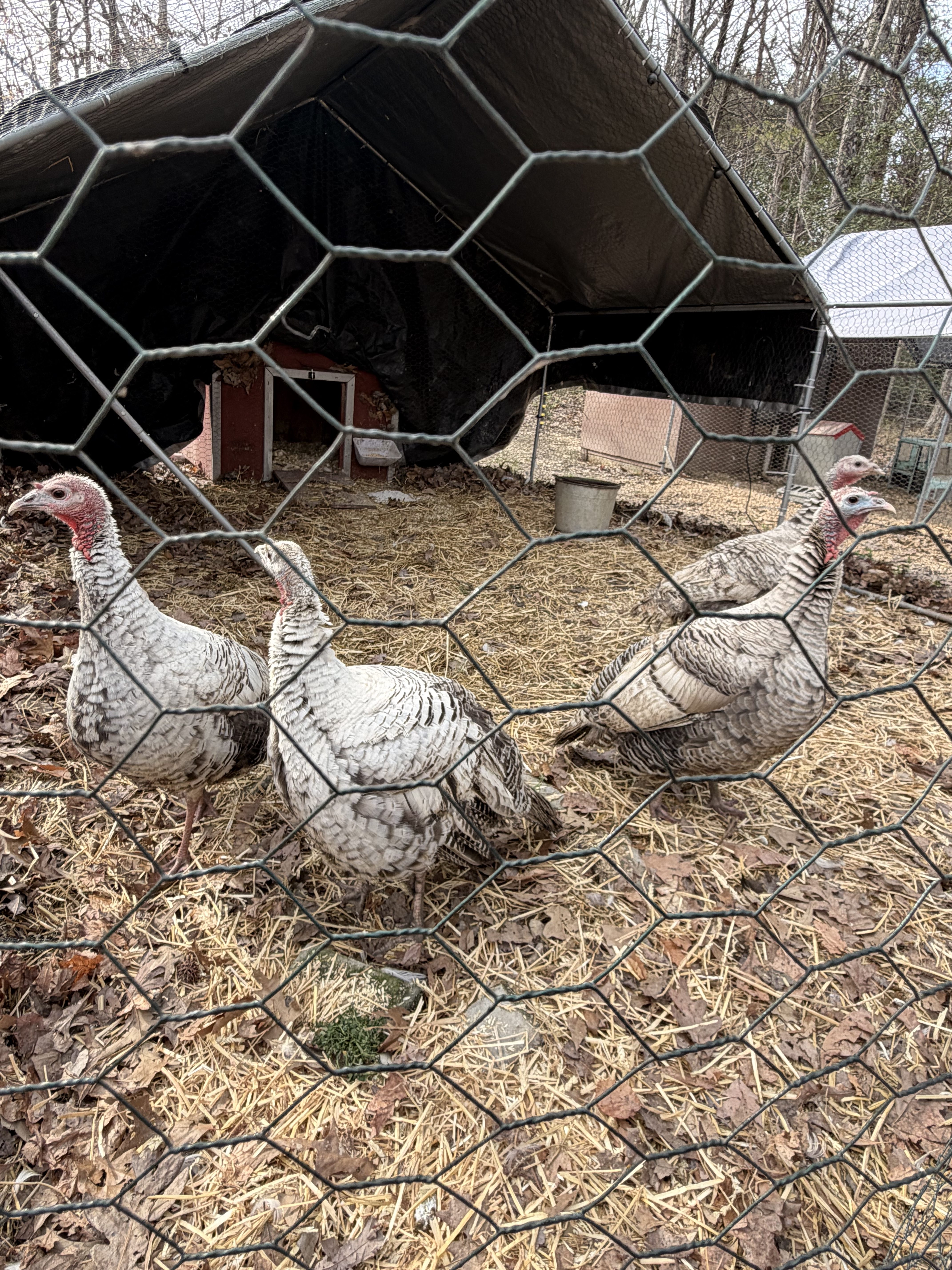
Reinforcing Our Turkey Run After a Difficult Morning
There are some mornings on the homestead that feel incredibly rewarding, and then there are mornings that remind you just how vulnerable livestock can be. Saturday morning, we experienced one of those heartbreaking reminders when a predator got into our turkey run and killed one of our turkeys overnight.
Unfortunately, the predator (raccoon or possum) tore its way into the run, and drug the turkey out. We found her about thirty feet away with tell-tale signs that it was a raccoon or possum. Predators often leave behind clues based on feeding patterns, but several nighttime hunters can cause similar damage. While we cannot say for certain what animal was responsible (though I obviously have my suspicions), the attack was enough to immediately put us into action mode this morning.
Like many homesteaders, we know that predator pressure is simply part of raising poultry. Even with preparation, losses can still happen. The important thing is learning from every event and continuing to improve the safety and security of the flock.
This Morning’s Emergency Turkey Run Reinforcements
As soon as daylight came, the first priority was checking the rest of the flock and assessing the turkey run for weaknesses. Predators are opportunists, and once they successfully gain access to a food source, there is always the risk that they will return.
This morning was spent reinforcing the turkey run to help ensure that whatever got in last night cannot easily return again.
We carefully inspected every corner of the enclosure, looking for gaps, loose wire, weak spots, or signs of digging. Additional reinforcement was added around vulnerable areas, and we tightened sections of fencing that may have shifted over time.
We also set up a live trap nearby in hopes of identifying and removing the predator before another attack occurs. While trapping can sometimes help, it is only one piece of a larger predator prevention strategy.
Unfortunately, this incident also happened despite having an electric fence in place around the run. Electric fencing can be incredibly effective, but it is not foolproof. A determined predator, improper grounding, vegetation touching the fence, or even one weak point can create an opportunity for disaster.
Homesteading constantly teaches humility, and this morning was another reminder that predator prevention requires multiple layers of protection working together.
Why Predators Target Turkey Runs
Turkeys can be especially vulnerable to predators, particularly at night. Unlike chickens, many turkeys are less cautious and often slower to react in stressful situations.
Predators are typically drawn by:
- The smell of feed
- Easy nighttime access
- Weak fencing or gaps
- Birds roosting too low
- Areas with poor visibility
- Lack of overhead protection
Depending on where you live, common turkey predators may include raccoons, foxes, coyotes, bobcats, owls, hawks, opossums, weasels, stray dogs, and even bears. We have all of those!
One of the hardest parts about predator management is that attacks often happen quickly and silently overnight.
Steps Homesteaders Can Take to Prevent Turkey Predator Attacks
After this morning’s events, we spent a lot of time discussing additional steps we can take moving forward to better protect the flock. Predator prevention is never truly “finished.” It is an ongoing process of evaluating risks and adapting to changing conditions.
Reinforce Fencing with Hardware Cloth
Standard chicken wire is often not enough to stop determined predators. Hardware cloth is significantly stronger and far more difficult for predators to tear through.
Covering lower sections of runs with hardware cloth and securing it tightly can help prevent nighttime break-ins.
Bury Wire to Prevent Digging
Many predators attempt to dig underneath fencing rather than climb over it.
Installing buried wire barriers or creating an outward “predator apron” around the run can discourage digging animals like foxes and coyotes.
Double-Check Electric Fence Performance
Even though we already use electric fencing, this incident reinforced the importance of regularly checking:
- Fence voltage
- Grounding quality
- Vegetation touching the wire
- Broken connections
- Areas where terrain creates gaps
Electric fences work best when they are consistently maintained and paired with additional physical barriers.
Secure Birds Earlier in the Evening
Predator activity often increases around dusk and overnight. Locking birds into more secure nighttime housing earlier in the evening may help reduce risk.
Consider Livestock Guardian Animals
Some homesteads successfully use livestock guardian dogs, geese, or even donkeys to discourage predators. While not practical for every setup, guardian animals can create an additional deterrent.
Homesteading Comes with Hard Lessons
Losing an animal is never easy, especially when you work so hard to give your flock a safe and healthy life. This morning was frustrating, exhausting, and honestly a little heartbreaking.
Still, one of the realities of homesteading is that setbacks often become learning experiences. Every predator event teaches you something about your setup, your weak points, and the improvements that still need to be made.
Today, we reinforced the turkey run, set traps, checked fencing, and made plans for even more upgrades moving forward. Hopefully, those changes will help keep the rest of the flock safe.
If you raise poultry, especially turkeys, now is a good time to walk your fencing lines, inspect your coop security, and think like a predator. Sometimes the smallest weakness is all it takes.
From our homestead to yours, stay safe out there.


Leave a Reply