
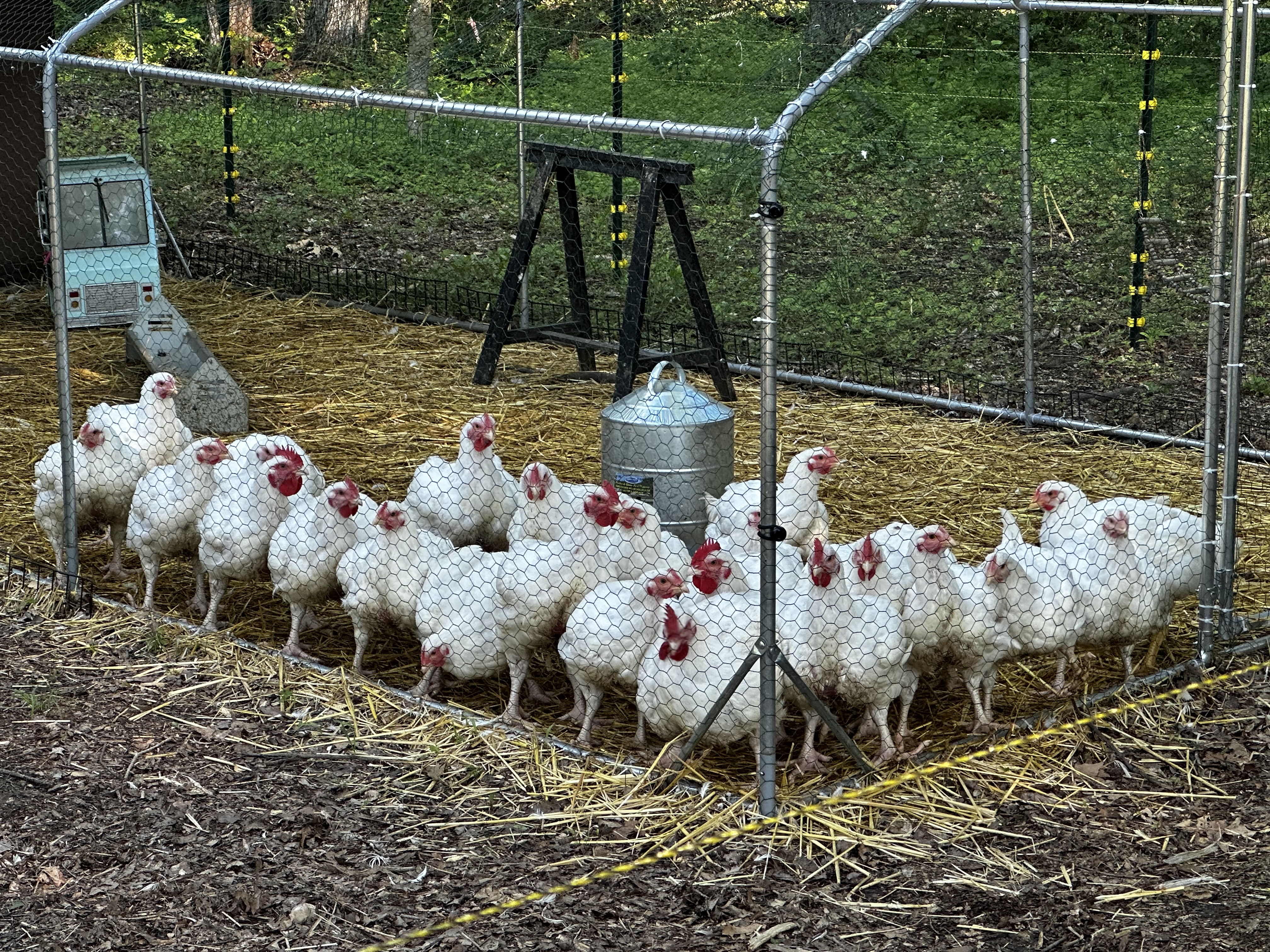
If you’re raising meat birds on the homestead, there comes a point when all of the planning, feeding, watering, and daily care culminates in harvest day. While processing poultry isn’t the most glamorous part of homesteading, it is one of the most important. Providing a humane, efficient harvest ensures that the birds you’ve raised receive respectful care from beginning to end.
As our processing day approaches, we’re busy making preparations to ensure everything goes smoothly. Whether you’re processing your first batch of meat birds or your fiftieth, having a solid plan can make the day far less stressful.

Why Preparation Matters
Processing day moves quickly once it begins. The last thing you want is to discover a dull knife, a malfunctioning plucker, or a shortage of ice halfway through the process.
A little preparation beforehand helps reduce stress, improve food safety, and make the entire experience more efficient.
One Week Before Processing
About a week before harvest day, we start inspecting all of our equipment.
Check Your Scalder
A properly functioning scalder is essential for easy feather removal. Make sure:
- The heating element is working properly.
- The thermostat is accurate.
- Water temperatures can be maintained consistently.
- Any valves or drains are functioning correctly.
Inspect Your Plucker
If you use a mechanical plucker, now is the time to:
- Test the motor.
- Inspect rubber fingers for wear.
- Verify that water connections work properly.
- Run a quick test to ensure everything operates smoothly.
Sharpen Knives
Sharp knives are safer, more humane, and more efficient.
We sharpen every knife that will be used during processing and keep a sharpening tool nearby just in case touch-ups are needed throughout the day.
Gather Supplies
Several days before processing, we begin collecting everything we’ll need.
Our supply checklist includes:
- Harvest cones
- Sharp knives
- Processing tables
- Buckets
- Disposable gloves
- Thermometer
- Shrink bags or freezer bags
- Hose and spray nozzle
- Paper towels
- Cleaning and sanitizing supplies
- Coolers
Having everything staged and ready saves valuable time once processing begins.
Plan for Plenty of Ice
One item that is easy to underestimate is ice.
After processing, birds need to be chilled rapidly to maintain quality and food safety. We purchase significantly more ice than we think we’ll need because it’s always better to have extra than not enough.
Large coolers filled with ice water create an efficient chilling station that helps bring carcass temperatures down quickly.
Prepare the Birds
The evening before processing, many homesteaders choose to remove feed while continuing to provide access to fresh water.
This helps reduce the amount of feed remaining in the digestive tract, making evisceration cleaner and easier.
Always ensure birds continue to have access to water.
Recruit Helpers
Processing poultry is much easier with extra hands.
A good processing crew allows different people to focus on specific stations:
- Catching birds
- Dispatching
- Scalding
- Plucking
- Evisceration
- Chilling
- Bagging and weighing
Even one or two helpers can dramatically improve efficiency.
Harvest Day Workflow
On processing day, we like to start early before temperatures begin to climb.
Our general workflow looks like this:
1. Catch and Stage Birds
Birds are moved to a holding area close to the processing station.
2. Humane Dispatch
Using killing cones and sharp knives helps ensure a humane and efficient process.
3. Scald
Birds are immersed in properly heated water to loosen feathers.
4. Pluck
Feathers are removed either mechanically or by hand.
5. Eviscerate and Clean
Internal organs are removed, and the carcass is thoroughly cleaned.
6. Chill Immediately
Birds are placed into ice water to rapidly reduce temperature.
7. Weigh and Package
Once chilled, birds are weighed, labeled, and packaged for storage.
8. Clean Up
Perhaps the least exciting step, but one of the most important.
All equipment, tables, coolers, and tools should be cleaned and sanitized before being stored away.
The Reward of Raising Your Own Food
Processing day is a reminder of what homesteading is truly about: understanding where our food comes from and taking responsibility for every step of the process.
While it can be physically demanding and emotionally challenging, there is also tremendous satisfaction in filling the freezer with food that you’ve raised yourself.
For us, processing day represents the completion of months of care, feeding, and stewardship. It’s a day that requires preparation, teamwork, and respect—but it also provides one of the most tangible rewards of homestead life.
If you’re preparing for your own processing day, start planning early, gather your supplies, and don’t be afraid to ask for help. A little preparation goes a long way toward making the day safe, efficient, and successful.



Leave a Reply