
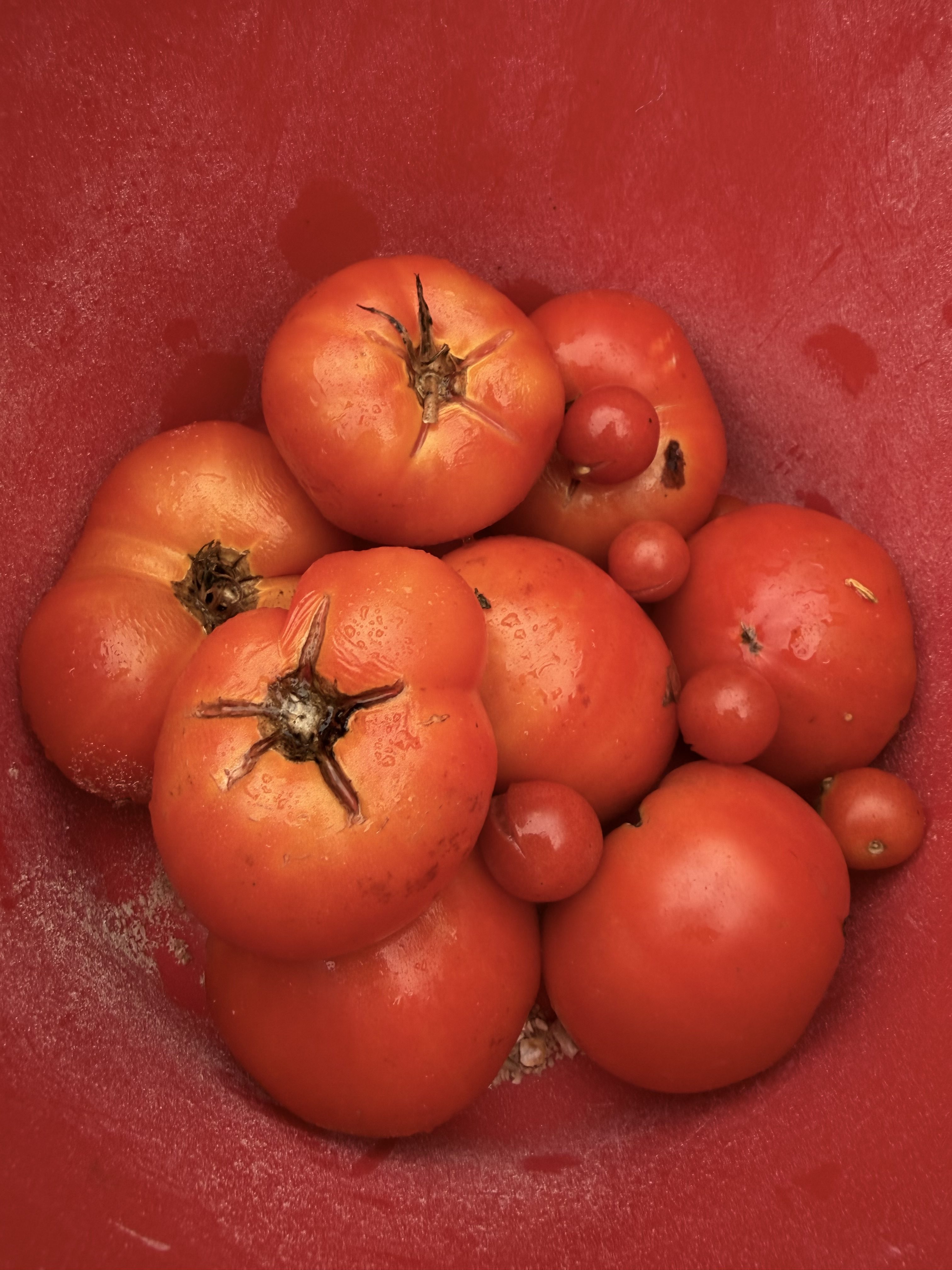
Yesterday I spent time walking through the garden after a heavy rain, picking tomatoes before they split from rapid growth. I always have two buckets with me, one for the tomatoes that will make it to the table or to the farmstand, and one bucket for split tomatoes that can be fed to the chickens.
But wait – you ask!
Can chickens eat tomatoes?
The short answer is yes—but only the ripe fruit.
Like many aspects of homesteading, the answer is a little more complicated than a simple yes or no. Knowing which parts of the tomato plant are safe and which should stay out of your flock’s reach can help keep your chickens healthy while reducing food waste around the homestead.
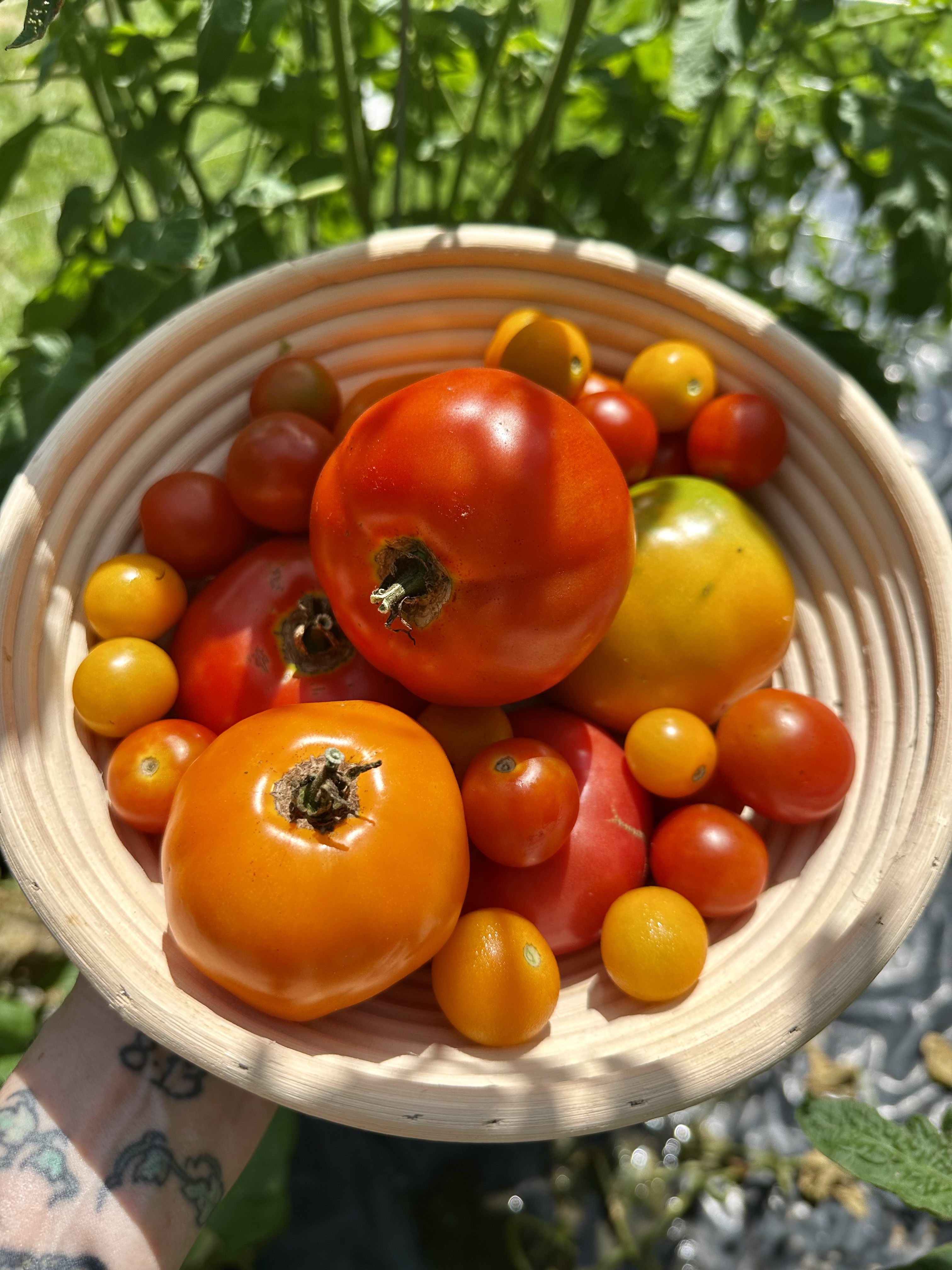
Here at J & J Homestead, tomatoes are one of the biggest crops in our summer garden. Every season we end up with cracked tomatoes, overripe tomatoes, and those funny-shaped ones that simply aren’t pretty enough for the farmstand. Instead of letting them go to waste, many of them become treats for our flock—and they absolutely love them.
Yes, Chickens Can Safely Eat Ripe Tomatoes
The juicy, red fruit of a ripe tomato is perfectly safe for chickens in moderation.
Tomatoes are made up of mostly water, making them an excellent summertime treat when temperatures climb into the 90s and even over 100°F here in Virginia. They provide hydration while also offering several beneficial nutrients.
Ripe tomatoes contain:
- Vitamin A for healthy vision and immune function
- Vitamin C to support overall health
- Potassium for muscle and nerve function
- Antioxidants such as lycopene
- Plenty of moisture to help chickens stay hydrated during hot weather
On especially warm afternoons, we’ll often toss a few overripe tomatoes into the run. The chickens usually come running before the tomatoes even hit the ground.
Watching them race around with a tomato almost becomes entertainment for us.

The Green Parts Are a Different Story
While ripe tomatoes are safe, the leaves, stems, vines, and unripe green tomatoes should not be fed to chickens.
These parts contain naturally occurring compounds called glycoalkaloids, primarily tomatine, which can be toxic if consumed in large amounts.
Although chickens generally do a good job of avoiding foods that taste bitter, it’s still best practice to keep them away from tomato plants whenever possible.
If you’re cleaning up your garden at the end of the season, don’t toss tomato vines into the chicken run thinking they’ll compost them for you.
Instead, compost them separately.
What About Green Tomatoes?
This is where many chicken keepers become confused.
Green tomatoes contain significantly higher levels of tomatine than fully ripe tomatoes. While a tiny accidental nibble probably isn’t cause for panic, intentionally feeding green tomatoes isn’t recommended.
Simply wait until they’re fully ripe.
If frost threatens before your tomatoes ripen, those green tomatoes are probably better suited for fried green tomatoes or ripening indoors than becoming chicken treats.
How Often Should Chickens Eat Tomatoes?
Like any treat, tomatoes should only make up a small portion of your flock’s overall diet.
A good rule of thumb is that treats—including tomatoes, watermelon, berries, mealworms, kitchen scraps, and other goodies—should make up no more than about 10% of a chicken’s daily diet.
The rest should come from a complete layer feed (or starter/grower feed for younger birds), which provides the balanced nutrition chickens need for egg production, feather health, and overall wellbeing.
Think of tomatoes as dessert—not dinner.
Benefits of Feeding Tomatoes During Summer
During Virginia’s hot summers, our chickens appreciate anything that helps them stay cool.
Because tomatoes contain so much water, they can provide:
- Extra hydration
- A cooling summertime snack
- Natural enrichment
- Reduced food waste from the garden
- A fun way to encourage natural pecking behavior
We often pair tomatoes with watermelon rinds, cucumbers, and zucchini as occasional warm-weather treats.
The flock seems convinced these are the best days of summer.
Can Baby Chicks Eat Tomatoes?
It’s better to wait.
Young chicks need carefully balanced nutrition to support rapid growth. Their starter feed provides everything they need, so treats—including tomatoes—should be introduced sparingly once they’re older.
If you do offer tomatoes to older juvenile birds, keep the pieces very small and only offer ripe fruit.
What Happens If Chickens Eat Tomato Leaves?
If a chicken accidentally pecks at a leaf once or twice, it’s usually not an emergency.
However, eating larger quantities of tomato foliage could potentially cause digestive upset or toxicity.
Signs that warrant contacting a veterinarian include:
- Weakness
- Difficulty walking
- Severe diarrhea
- Loss of appetite
- Lethargy
Fortunately, chickens tend to avoid eating large amounts of bitter tomato foliage when other food is available.
Other Garden Vegetables Chickens Love
Tomatoes aren’t the only fresh produce your flock can enjoy.
Some of our chickens’ favorite garden treats include:
- Zucchini
- Yellow squash
- Cucumbers
- Pumpkins
- Bell peppers
- Lettuce
- Kale
- Swiss chard
- Watermelon
- Cantaloupe
As always, introduce new foods gradually and avoid anything moldy, spoiled, or heavily seasoned.
The Bottom Line
So, can chickens eat tomatoes?
Absolutely.
Ripe tomatoes are a safe, healthy, and refreshing treat that many backyard flocks enjoy, especially during the heat of summer. Just remember to avoid feeding green tomatoes, leaves, stems, and vines, and keep tomatoes as an occasional treat rather than a dietary staple.
One of my favorite parts of homesteading is finding simple ways to reduce waste while giving our animals something they’ll truly enjoy. Those imperfect tomatoes that never make it to the farmstand don’t go to waste around here—they usually end up surrounded by a very enthusiastic group of chickens.
And judging by how quickly they disappear, I’d say the flock approves.

Leave a Reply