
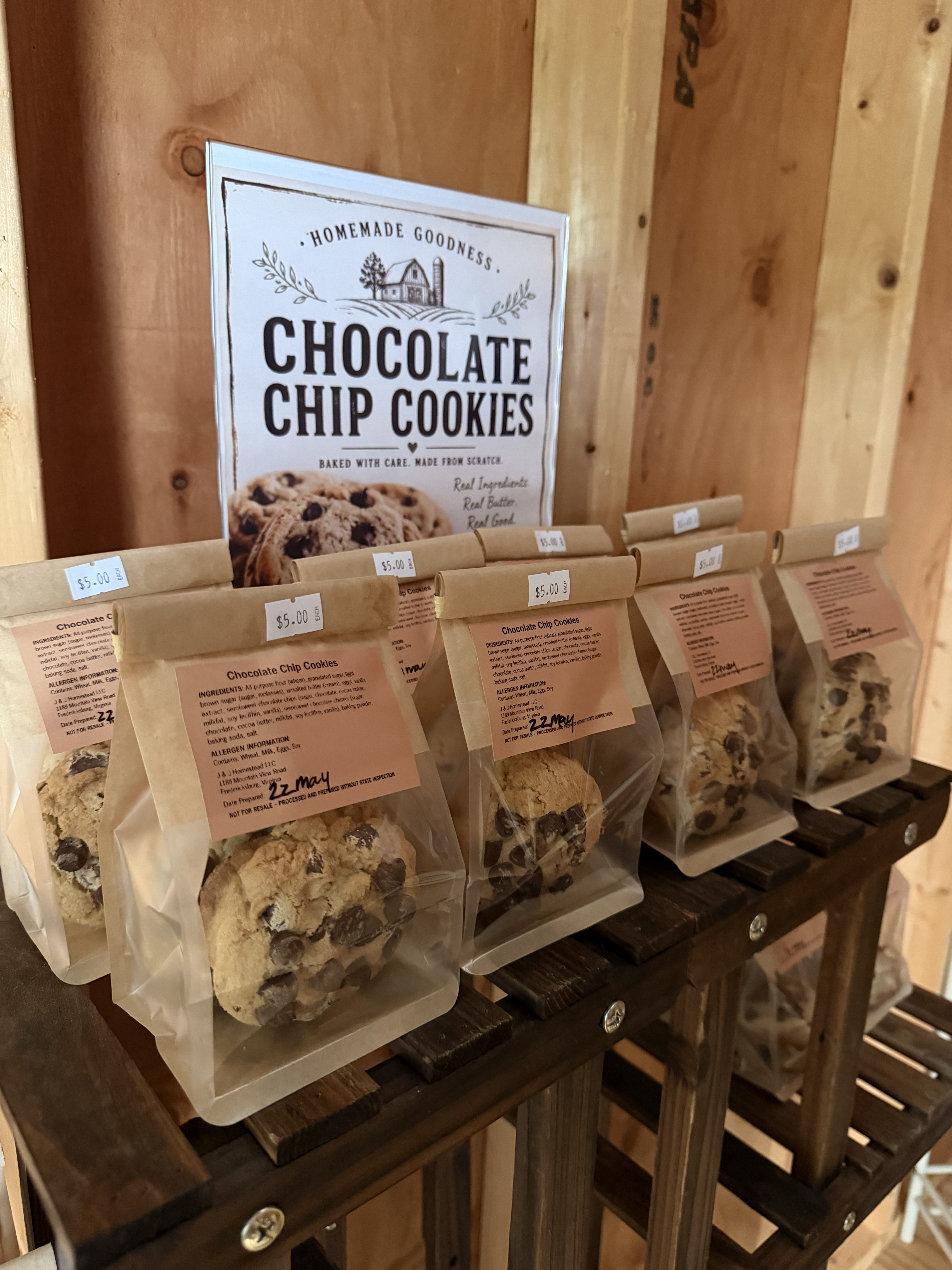
If you’ve ever dreamed of turning your favorite cookie recipe, fresh-baked bread, or homemade muffins into a small business, there’s exciting news for Virginia homesteaders.
As of July 1, 2026, Virginia’s cottage food law has expanded significantly through House Bill 402 (HB 402). While cottage food producers have always enjoyed more flexibility than many other states, this new law removes several barriers that made it difficult for small businesses to grow.
For those of us running farmstands, selling at farmers markets, or simply looking for a way to share homemade baked goods with our communities, HB 402 opens the door to exciting new opportunities.
Here’s what changed—and what it means for your homestead.
What Is Virginia’s Cottage Food Law?
Virginia’s cottage food law allows individuals to prepare certain low-risk foods in their home kitchens without obtaining a commercial kitchen license or routine state inspection.
These foods are considered “non-potentially hazardous,” meaning they do not require refrigeration for food safety.
For many homesteaders, this includes products such as homemade breads, cookies, muffins, brownies, cakes, candies, dry baking mixes, granola, dried herbs, and similar shelf-stable foods.
This exemption has made it possible for thousands of Virginians to earn additional income while sharing homemade products with their local communities.
The Biggest Change: You Have More Freedom to Sell
Before HB 402, Virginia cottage food producers had fairly strict limitations on where and how they could sell their products.
The new law greatly expands those opportunities.
If you operate a roadside farmstand like we do at J & J Homestead, this is fantastic news.
You can now legally sell qualifying cottage foods at virtually any location within Virginia, including roadside farmstands, farmers markets, festivals, craft fairs, community events, pop-up markets, and many other venues.
The law also makes it much easier for customers to purchase your products in the way they expect in today’s world.
Online Ordering Is Finally Allowed
Perhaps the most exciting change is that Virginia now clearly allows online ordering and electronic payments for qualifying cottage foods.
Instead of requiring customers to stop by your farmstand and hope their favorite muffins haven’t sold out, they can now place an order ahead of time.
Customers can now order through your website. Because of this, this weekend, we will now have a special section on the website where orders can be placed.
For many small homesteads, this may be the single biggest opportunity created by HB 402.
Imagine accepting pre-orders for fresh cinnamon rolls on Saturday morning or allowing customers to reserve a loaf of homemade bread before it ever reaches the farmstand.
Delivery Is Now an Option
Another welcome improvement is the ability to deliver qualifying cottage food products.
Rather than requiring customers to travel to your home or farmstand, you may now personally deliver orders or use a commercial delivery service.
For rural homesteads, this creates entirely new possibilities.
Weekly bread deliveries, neighborhood bakery routes, or delivering a box of fresh muffins to a local office are all much more practical under the updated law.
Shipping Within Virginia
HB 402 also allows qualifying cottage food products to be shipped to customers within Virginia.
If someone in Richmond, Virginia Beach, Roanoke, or Charlottesville discovers your website and wants to order your homemade cookies or banana bread, you can now ship those qualifying products directly to them—as long as the shipment stays within Virginia and the product qualifies under the cottage food exemption.
For many small businesses, this greatly expands the potential customer base beyond those who happen to drive past the farmstand.
What Didn’t Change?
Although HB 402 greatly expands how you can sell your products, it doesn’t change which foods qualify under Virginia’s cottage food exemption.
Shelf-stable baked goods such as breads, muffins, cookies, brownies, cakes without perishable frostings, candies, granola, and dry mixes continue to qualify.
Foods requiring refrigeration for safety generally do not.
Items such as cheesecakes, cream pies, refrigerated desserts, dairy-based foods requiring refrigeration still require different licensing and inspection.
Labeling Still Matters
The updated law does not eliminate Virginia’s labeling requirements.
Every qualifying cottage food product should continue to include:
- The name of the product
- A complete ingredient list
- Major food allergens
- The producer’s identifying information (Virginia now allows the use of a mailing address, such as a P.O. Box, instead of your physical home address if you prefer additional privacy.)
- The required statement:
“NOT FOR RESALE – PROCESSED AND PREPARED WITHOUT STATE INSPECTION.”
Proper labeling remains one of the easiest ways to demonstrate professionalism while helping customers make informed purchasing decisions.
No Commercial Kitchen Required
One of the greatest advantages of Virginia’s cottage food law remains unchanged.
If your products qualify under the exemption, you can continue preparing them in your home kitchen without obtaining a commercial kitchen license or undergoing routine state inspection.
This significantly lowers the barrier for new homesteaders looking to start a small food business.
What HB 402 Means for J & J Homestead
As we’ve grown our own honor-system farmstand, we’ve learned that many customers would love to reserve baked goods before they arrive.
Some commute past our farmstand on their way to work. Others stop by after work hoping there are still muffins or fresh bread available.
HB 402 opens the door to making that possible.
Instead of baking extra and hoping everything sells, we can accept advance orders via our webstite, prepare exactly what customers want, and have everything ready for pickup or delivery.
It also creates exciting possibilities for seasonal cookie boxes, fresh bread subscriptions, holiday baked goods, and local delivery throughout our community.
For small homesteads, that’s a tremendous opportunity.
Final Thoughts
Virginia has long been one of the more homesteader-friendly states for cottage food businesses, and HB 402 makes it even better.
Whether you’re considering selling your first loaf of homemade bread or you’re already running a successful roadside farmstand, these updates provide more flexibility than ever before.
If you’ve been waiting for the right time to expand your homestead business, accept online orders, or reach customers beyond your driveway, this may be exactly the opportunity you’ve been waiting for.
We’ll certainly be taking advantage of these new possibilities here at J & J Homestead, and we can’t wait to share what we learn along the way.
Learn More
For those who would like to read the law for themselves, you can review the full text of Virginia House Bill 402 on the Virginia Legislative Information System website. It’s always worth reading the source material to understand exactly how these changes apply to your own homestead business.


Leave a Reply