
Whether you keep six backyard hens or a growing flock of chickens and turkeys like we do here at J & J Homestead, one thing is certain: eventually, something will happen. A chicken will scrape herself on fencing. A turkey will get into a disagreement with another bird. A chick may seem weak. One of your birds might develop respiratory symptoms or even show signs of coccidiosis.
The goal isn’t to have a medicine cabinet full of products for every possible illness. Instead, it’s about having the right supplies on hand so you’re prepared to act quickly while you determine exactly what’s going on.
Over the years, we’ve built a poultry first aid kit that has helped us care for everything from minor pecking injuries and heat stress to coccidiosis outbreaks, parasites, and weak chicks. These are the products I keep stocked at all times—and why I think every poultry keeper should consider having them available before they’re needed.
Why Every Poultry Keeper Needs a First Aid Kit
One lesson we’ve learned is that emergencies rarely happen during business hours. Sick birds always seem to appear late at night, over the weekend, or on holidays when feed stores are closed.
Having these supplies ready means you can begin supportive care immediately while monitoring your flock or contacting your veterinarian if necessary.
Here’s what’s always in our poultry medicine cabinet.
1. Electrolytes
If I had to choose one product that gets used more than almost anything else in our poultry first aid kit, it would be electrolytes.
Chickens and turkeys become dehydrated much faster than many people realize. During Virginia’s hot summers, after transportation, during illness, or anytime a bird simply isn’t feeling well, electrolytes help replace essential minerals lost through stress and encourage birds to continue drinking.
We use electrolytes for:
- Heat stress during the summer
- Newly hatched chicks and poults after shipping
- Birds recovering from illness or injury
- After predator scares or other stressful events
- Birds that appear lethargic or dehydrated
During periods of extreme heat, electrolytes become part of our daily flock management. We pair them with cool, fresh water, frozen treats like watermelon and thawed peas, shade, and fans in the coops and runs to help keep our birds comfortable.
While electrolytes aren’t a cure for illness, they are one of the most valuable supportive care products you can keep on hand. Just be sure to follow the manufacturer’s mixing directions and avoid using them continuously unless directed by the product label or your veterinarian.
2. Vetericyn Plus Poultry Care
This is probably the product I reach for more than any other.
Vetericyn is a non-stinging antimicrobial spray that’s excellent for cleaning wounds without damaging healthy tissue. I use it on:
- Pecking injuries
- Minor cuts
- Scratches
- Bumblefoot after cleaning
- Vent prolapse care
- Skin abrasions
One of my favorite things about Vetericyn is that it doesn’t sting. That makes treating chickens and turkeys much less stressful for everyone involved.
Because it contains no antibiotics, there is no egg withdrawal period, making it a fantastic first-response wound cleaner.
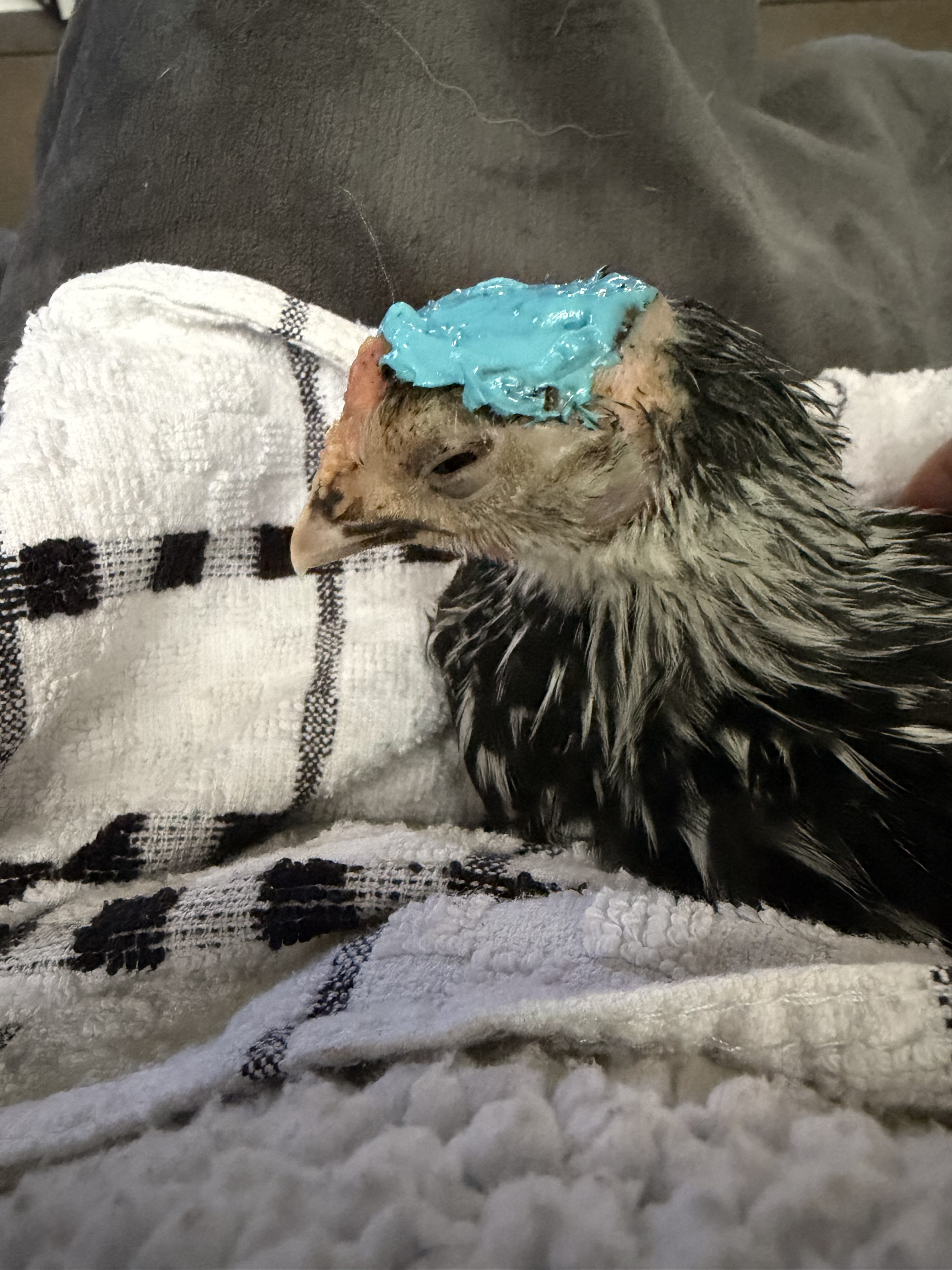
3. Hen Healer Ointment
Once a wound has been cleaned with Vetericyn, I often follow up with Hen Healer.
The thick blue ointment helps protect healing skin while discouraging flock mates from pecking at bright red wounds. Anyone who has kept chickens knows that once one bird notices blood, others often become curious.
Hen Healer creates a protective barrier while supporting healing, making it especially useful for:
- Minor wounds
- Dry combs
- Chapped skin
- Healing abrasions
- Pecking injuries
4. Triple Antibiotic Ointment
I also keep a standard triple antibiotic ointment in the kit.
For small cuts or abrasions that have already been cleaned, a thin layer can help reduce bacterial contamination and keep tissue moist while healing.
I always choose a plain ointment without added pain relievers, since products containing ingredients such as lidocaine or benzocaine are not recommended for poultry.
5. PRID Drawing Salve
PRID isn’t marketed specifically for poultry, but it has earned a permanent place in my first aid kit.
Drawing salves may be helpful for localized infections, splinters, thorn punctures, or small abscesses after they’ve been evaluated and cleaned. Some poultry keepers also use it as part of their bumblefoot treatment protocol after removing the infected core.
Because bumblefoot cases vary greatly in severity, I only use PRID as one component of treatment—not as a substitute for properly cleaning the wound.
6. Corid (Amprolium)
If you raise chicks, Corid is one product I recommend learning about before you ever need it.
Coccidiosis is one of the most common diseases affecting young chickens and turkeys. It’s caused by microscopic parasites that damage the intestinal lining.
Common warning signs include:
- Lethargy
- Drooping wings
- Loss of appetite
- Bloody or watery droppings
- Weight loss
- Fluffed feathers
Corid contains amprolium, which interrupts the parasite’s ability to reproduce.
The important thing is to start treatment as early as possible when coccidiosis is suspected. Delays can allow the disease to progress quickly, especially in young birds.
I always follow the label directions carefully and monitor affected birds closely.
7. Safe-Guard Aquasol (Fenbendazole)
Internal parasites can quietly rob birds of their health.
Safe-Guard Aquasol is one of the few dewormers specifically approved for chickens and is commonly used to treat:
- Roundworms
- Cecal worms
- Certain other intestinal parasites
Rather than deworming on a routine schedule, I prefer treating based on symptoms or fecal testing whenever possible. Overusing dewormers can contribute to resistance, so targeted treatment is the better long-term approach.
8. Poultry Cell
When a bird is recovering from illness, injury, or blood loss, nutritional support becomes incredibly important.
Poultry Cell provides concentrated vitamins, minerals, amino acids, and iron that can help support birds during recovery.
I’ve used it for:
- Recovering injured birds
- Weak birds
- Birds recovering from heavy molt
- Birds that have experienced blood loss
- Birds needing nutritional support
It’s not a cure for disease, but it can help provide valuable nutritional support while birds recover.
9. Liquid Vitamin B-12
Sometimes a bird simply needs a little extra support.
Vitamin B-12 is especially useful for birds showing weakness, poor appetite, or neurological symptoms while recovering from illness or injury.
I’ve used B-12 as supportive care for weak chicks and adult birds recovering from stressful events. Since appetite often returns before full strength does, B vitamins can be an excellent addition to supportive care.
10. VetRx
VetRx has been around for generations, and many poultry keepers continue to keep it on hand.
It’s commonly used as supportive care for birds experiencing mild respiratory irritation by applying small amounts externally around the nostrils or under the wings according to label directions.
It’s important to remember that VetRx is not an antibiotic and does not treat bacterial respiratory infections. If a bird develops significant respiratory disease, veterinary evaluation may still be necessary.
For me, it’s another supportive care item rather than a replacement for appropriate medical treatment.
11. Oil of Oregano
Oil of oregano has become popular among poultry keepers as a natural supplement.
Some people add diluted oregano products to water during periods of stress or seasonal changes because oregano contains compounds with antimicrobial properties in laboratory studies.
However, it’s important to keep expectations realistic.
Current scientific evidence does not support oil of oregano as a replacement for proven treatments like Corid for coccidiosis or approved dewormers for parasites. I view it as a supplement that may support overall flock health—not a cure for disease.
12. Premo Poultry Spray
External parasites can quickly become a major problem if they’re overlooked.
Premo Poultry Spray is designed to help control:
- Poultry mites
- Lice
- Fleas
- Ticks
When treating external parasites, I never focus only on the bird. The coop, nesting boxes, roosts, and bedding all need attention as well, since many parasites spend much of their life cycle off the bird.
Routine coop cleaning remains one of the best defenses against parasite infestations.
Medicine Doesn’t Replace Good Management
The best medicine cabinet in the world can’t replace excellent husbandry.
Clean water, quality feed, dry bedding, good ventilation, biosecurity, and regular observation prevent far more problems than any bottle on the shelf.
Every morning and evening, I spend a few minutes simply watching my flock. A bird that’s acting “just a little off” today is much easier to help than one that’s critically ill tomorrow.
I also strongly recommend developing a relationship with an experienced poultry veterinarian before an emergency arises. While many minor issues can be managed at home, having a veterinarian who knows your flock can be invaluable when more serious illnesses occur.
Final Thoughts
I hope I never need most of these products.
But after raising chickens and turkeys for years, I’ve learned that being prepared is one of the best gifts you can give your flock. Having these supplies organized in one place allows me to respond quickly, reduce stress, and provide supportive care while deciding on the next steps.
Fortunately, most of these items have a long shelf life, so they’re inexpensive insurance for your flock’s health. I check expiration dates a couple of times each year and replace anything that’s nearing the end of its usefulness.
Every homestead will eventually face an unexpected illness or injury. A well-stocked poultry first aid kit won’t prevent emergencies, but it can make all the difference when they happen. Whether you’re raising a few backyard hens or a large flock of chickens and turkeys, you’ll be glad you took the time to prepare before you need it.





Leave a Reply