
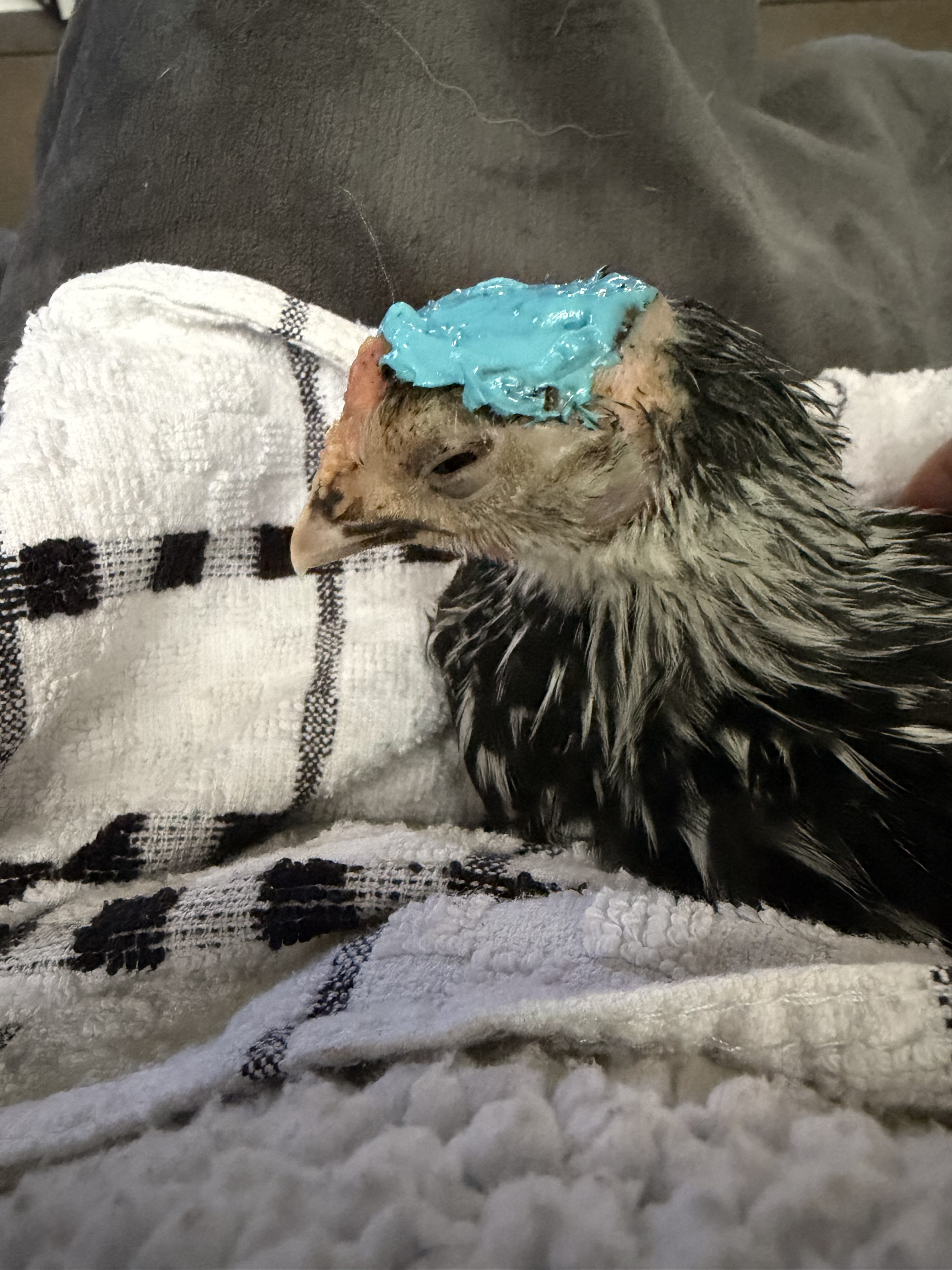
If you keep chickens long enough, eventually you may encounter one of the harder sides of flock life: a chicken being picked on or injured by the other chickens.
This year, we’ve had a couple of incidents of pecking within our different flocks here at J & J Homestead. In each case, as soon as we realized what was happening, we immediately removed the injured chicken from the flock.
And in each case, recovery took time.
That’s one of the biggest lessons these experiences have taught us: don’t underestimate a pecking injury, and don’t wait for it to get worse before intervening.
Chickens can be remarkably resilient animals. Unfortunately, that resilience can also make it difficult for us to recognize when something is wrong. Chickens instinctively try to hide weakness, illness, and injuries. By the time a chicken looks sick or injured, the problem may be more significant than it first appears.
Worse yet, the other chickens may have noticed long before you did.
Why Do Chickens Peck an Injured Chicken?
Pecking is a normal part of chicken behavior. Chickens establish and maintain a social hierarchy—the famous “pecking order”—and an occasional peck isn’t necessarily cause for concern.
Persistent pecking is different.
A chicken that appears weak, sick, injured, or behaves differently can suddenly become a target. Once other chickens begin pecking the vulnerable bird, the situation can escalate surprisingly quickly.
An exposed wound makes things even more dangerous. Chickens are attracted to unusual colors and especially to red, bloody areas. What begins as a relatively small injury can turn into a serious wound when flockmates repeatedly peck at it.
That’s why one of our rules is simple:
If a chicken is injured and the flock is pecking at her, remove the chicken immediately.
Don’t wait to see whether they stop.
Chickens Are Masters at Hiding Injuries
One of the most important things chicken keepers need to understand is that chickens are prey animals.
Showing weakness in nature can make an animal vulnerable, so chickens have evolved to conceal illness and injury remarkably well.
You may have a hen that continues eating, drinking, scratching, and walking around despite having an injury hidden beneath her feathers.
By the time she is standing alone, hunched over, reluctant to move, or visibly weak, she may have been struggling for quite some time.
This is why observing your chickens every day matters so much.
You aren’t simply checking whether everyone is alive and has food and water. You’re learning what “normal” looks like for each bird.
When something changes, you’ll notice it much sooner.
Signs a Chicken May Be Getting Picked On
Sometimes bullying is obvious—you actually see another chicken chasing or pecking the victim.
Other times, the evidence is much more subtle.
Watch for:
- Missing or broken feathers, particularly around the head, neck, back, tail, and vent
- Small bloody spots or scabs
- Raw or irritated skin
- A chicken hiding in nesting boxes or corners
- A bird spending considerably more time on the roost
- Reluctance to approach feeders or waterers
- A chicken waiting until the others have eaten before approaching food
- Repeated chasing by one or more flockmates
- Weight loss
- Reduced activity
- Drooping posture
- A chicken separating herself from the flock
- Sudden changes in personality
- Limping or unusual movement
- Swelling around an injury
- Torn combs or wattles
Also pay attention to where your chicken spends her time. A chicken constantly hiding isn’t necessarily shy. She may be avoiding another bird.
Check Under the Feathers
Feathers can conceal a surprising amount of damage.
If something doesn’t seem right, physically examine the chicken rather than relying solely on what you can see while she’s walking around.
Gently part the feathers and inspect the skin, paying particular attention to the back, shoulders, neck, tail, vent, and underneath the wings.
Look for punctures, scratches, dried blood, swelling, heat, discharge, missing skin, or damaged feathers.
We have learned not to assume that because an injury looks small from the outside, it actually is small.
Separate an Injured Chicken Immediately
Once you discover that a chicken is actively being attacked, the first priority is getting her somewhere safe.
We separate the injured bird from the flock and give her a quiet place where she can recover without worrying about being chased or pecked.
Ideally, she should have easy access to:
- Clean water
- Nutritious food
- Clean, dry bedding
- Comfortable temperatures
- A quiet environment
- Protection from flies and other insects
- Enough room to move without having to compete with other birds
For minor injuries, sometimes a protected enclosure within sight of the flock can help maintain social contact. More serious injuries may require complete separation while healing.
If a bird is bleeding, do not put her back into the flock simply because she seems energetic.
The blood itself may encourage additional pecking.
Chicken Wound Sprays and Products Worth Keeping in Your First-Aid Kit
A well-stocked chicken first-aid kit can make these situations considerably easier.
The appropriate product depends on the type and severity of the wound, and products should always be used according to their labels. A few commonly used poultry wound-care options include:
Vetericyn Plus Poultry Care Spray
Vetericyn poultry wound-care products are commonly kept by chicken owners for cleaning and caring for minor wounds, abrasions, cuts, and irritated skin.
A spray is particularly convenient because you can apply it without having to rub an already-sensitive area.
Blu-Kote
Blu-Kote has traditionally been used by poultry keepers as an antiseptic wound dressing. Its dark blue/purple coloring can also help disguise the bright red appearance of minor wounds that might otherwise attract pecking.
However, Blu-Kote stains virtually everything it touches, including your hands and clothing. Follow the product label carefully and avoid the eyes, mouth, and other sensitive areas.
Hen Healer
Products such as Hen Healer can be useful for protecting minor skin injuries and irritated areas. Some formulations also create a visual barrier over reddened skin, making the area less noticeable to curious flockmates.
Again, check the specific product label because formulations and approved uses can vary.
Plain Saline
Don’t overlook one of the simplest tools in the first-aid kit.
Sterile saline can be very useful for gently flushing dirt and debris from a wound before applying an appropriate wound-care product.
What About “Wound Bombs”?
You’ll sometimes hear poultry keepers refer to aerosol wound products as wound bombs or wound sprays. Several livestock wound products are available in aerosol form and may create a protective barrier over an injury.
The important thing is not whether the product comes in a spray bottle, aerosol can, ointment, or gel—it’s whether the specific product is labeled appropriately for the animal and intended use.
With laying hens and other food-producing animals, this becomes especially important. Always read the current label for species restrictions, egg or meat withdrawal requirements, application directions, and warnings.
Never assume that a livestock wound product is automatically appropriate for poultry simply because other chicken keepers use it.
When a Pecking Wound Needs More Than Home Care
Minor superficial wounds can sometimes heal remarkably well with separation, cleaning, protection, good nutrition, and time.
But there is a point where a chicken needs veterinary attention.
Seek veterinary help when possible if you notice deep punctures, extensive tissue damage, uncontrolled bleeding, exposed muscle or bone, injuries involving the eyes, difficulty breathing, inability to stand, severe weakness, foul odor, pus, rapidly increasing swelling, tissue turning dark or dying, or other signs of significant infection.
Fly activity around a wound also requires immediate attention because flystrike can become life-threatening very quickly.
Recovery May Take Longer Than You Expect
This has probably been the biggest surprise from our own experiences this year.
Our injured chickens recovered—but it wasn’t overnight.
Healing can take weeks depending on the severity of the injury. Feathers take even longer to completely return.
It’s tempting to see a chicken acting better and immediately return her to the flock.
We’ve learned to be patient.
The question isn’t simply:
“Does she look better?”
It’s also:
“Is she ready to defend herself again?”
A chicken can have a mostly healed wound and still be weaker than the other birds.
Reintroducing an Injured Chicken to the Flock
Reintroduction should be gradual whenever possible.
One useful method is “look but don’t touch.”
Place the recovering chicken in a secure crate, pen, or divided section where the flock can see and hear her but cannot attack her.
This allows everyone to become reacquainted without putting the recovering bird in immediate danger.
When she’s eventually released, supervise the interaction.
Some pecking is expected because the flock may need to reestablish its social order. Persistent chasing, cornering, feather pulling, or attacking is different and may require another separation.
It may also be necessary to identify the bully rather than repeatedly removing the victim.
Temporarily removing an aggressive chicken can sometimes disrupt her position in the pecking order and change the dynamics when she returns.
Why Does Chicken Bullying Start?
If pecking suddenly becomes a problem, look beyond the individual chickens.
Sometimes the flock is telling you that something about their environment isn’t working.
Overcrowding, boredom, insufficient feeder or waterer space, nutritional deficiencies, excessive heat, stress, introduction of new chickens, bright lighting, too few hiding places, and competition for resources can all contribute to aggressive behavior.
Adding enrichment can also help.
Hanging vegetables, providing scratch areas, adding perches, offering dust-bathing areas, creating visual barriers, and giving chickens things to explore can redirect some of that energy.
Most importantly, make sure subordinate chickens can reach food and water without passing an aggressive bird guarding the only available resource.
Multiple feeding and watering stations can make a significant difference.
Five Minutes in the Chicken Run Can Tell You a Lot
One of the easiest preventative measures doesn’t require purchasing anything.
Just stand there and watch.
Don’t clean. Don’t collect eggs. Don’t refill feeders.
Watch your chickens interact for five or ten minutes.
Who eats first?
Who gets pushed away?
Who is constantly chasing someone?
Is one chicken standing by herself?
Does one hen immediately leave when another approaches?
Is someone hiding behind the coop?
Those small interactions can tell you a tremendous amount about what’s happening within your flock.
Our Biggest Lesson: Act Early
After dealing with several pecking injuries this year, our biggest takeaway at J & J Homestead has been the importance of catching problems early.
Chickens are incredibly resilient.
We’ve watched injured chickens make remarkable recoveries with time, protection, good nutrition, proper wound care, and patience.
But that resilience can work against them because they are also incredibly good at pretending nothing is wrong.
By the time you notice obvious weakness, the chicken may already have been struggling—and her flockmates may have noticed before you.
Learn what normal looks like.
Pay attention to small changes.
Check underneath those feathers.
And if you discover an injured chicken being pecked, separate first and investigate second.
Sometimes that quick decision is exactly what gives a chicken the opportunity she needs to recover.



Leave a Reply