
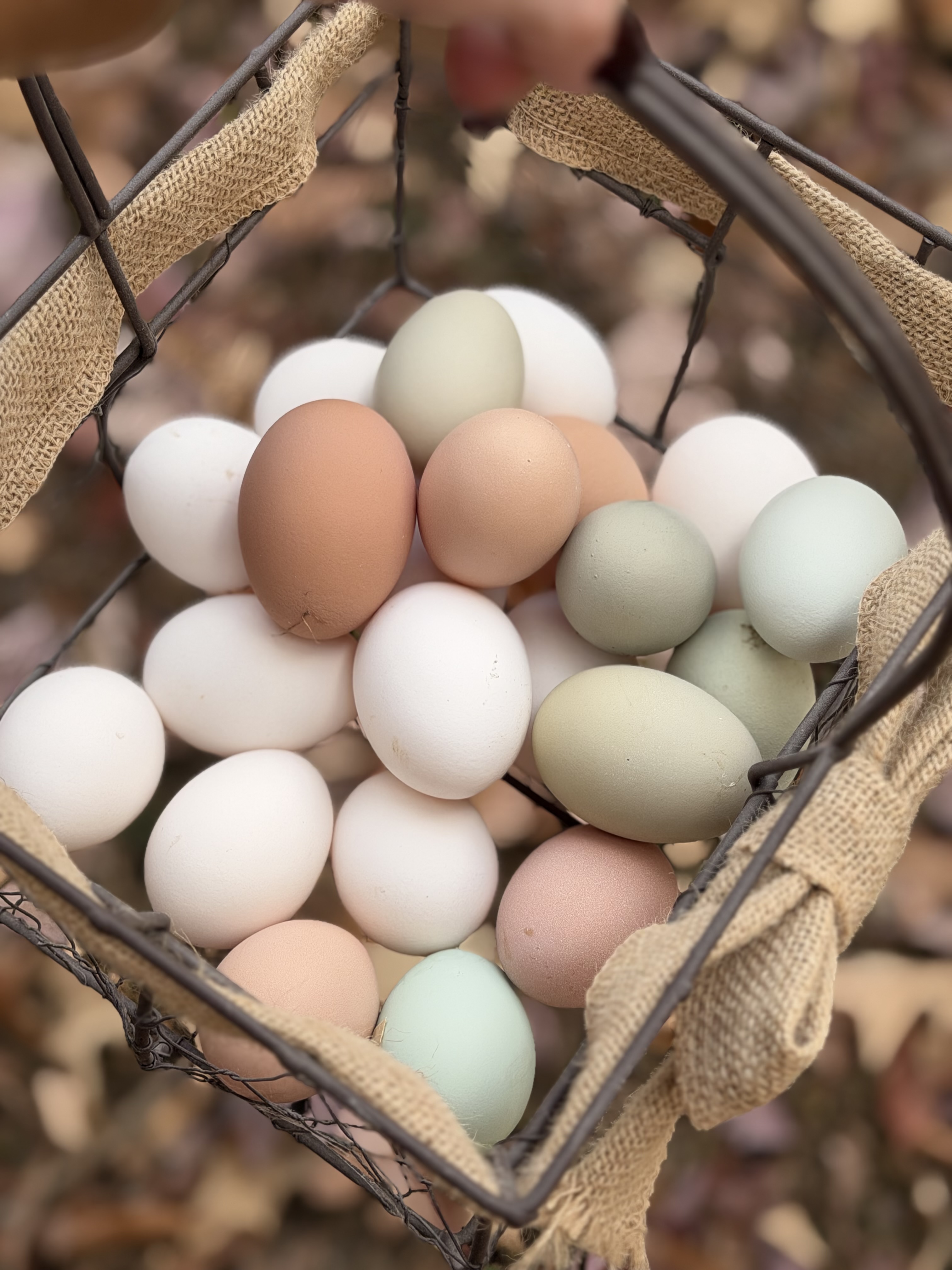
When our older hens begin slowing down for the winter, our spring chicks are just getting started! Here’s why adding new chickens to your flock each year can help keep fresh eggs coming, even during the coldest months.
There is something incredibly exciting about raising baby chicks every spring. The adorable little peeps, the fluffy feathers, the endless entertainment as they discover their surroundings, and, of course, the anticipation of those very first eggs!
Here at J & J Homestead, we look forward to welcoming new chicks to our flock every year. And while I certainly don’t need much convincing to bring home a few more adorable baby chickens (who does?), there is actually a very practical reason behind our annual additions.
Those spring chicks are our secret to keeping fresh eggs in the farmstand throughout the winter!
As November settles in and the days become shorter, our older hens are beginning to slow down their egg production. Some are molting, others are taking their much-deserved seasonal break, and our daily egg collection certainly looks different than it did during the height of summer.
But here’s where the magic happens.
While our older ladies are winding down, our youngest hens are just getting started!
And this year, our Leghorns have been absolute rock stars!
Why Do Chickens Lay Fewer Eggs During the Winter?
Before we talk about the wonderful productivity of first-year chickens, it’s important to understand why egg production naturally slows down during the fall and winter.
Contrary to what many people believe, it’s not necessarily the cold temperatures that cause chickens to stop laying eggs. It’s primarily the reduced daylight hours.
A hen’s reproductive cycle is heavily influenced by light. As daylight enters her eyes, it helps regulate the hormones responsible for egg production.
Most laying hens produce eggs most consistently when they receive approximately 14–16 hours of light each day.
During the spring and summer, nature provides plenty of daylight to keep those hormones working. But as fall arrives and the days become shorter, a hen’s body receives the signal that it’s time to slow down.
This seasonal change is perfectly natural.
In fact, it’s beneficial!
Many adult hens use this quieter period to rest, replenish their nutritional reserves, and replace their feathers during their annual molt.
And let’s be fair. After spending much of the year producing delicious eggs for us, they’ve certainly earned a vacation!
But if you’re counting on those eggs for your family or, like us, supplying customers through a small farmstand, that seasonal slowdown can present a challenge.
That’s why we love our first-year chickens!
The Magic of First-Year Hens: They’re Just Getting Started!
Here’s something that many new chicken keepers don’t realize.
Pullets (young female chickens that haven’t yet reached one year of age) often continue laying eggs throughout their first winter, even when older hens have significantly reduced production.
Why?
It’s all about timing, maturity, and their reproductive cycles.
When we hatch or purchase chicks in the spring, those little ladies spend the next several months growing, developing feathers, and preparing their bodies for egg production.
Depending on the breed, many pullets begin laying somewhere between 16 and 24 weeks of age, although some take longer.
That means chicks hatched in April or May may begin laying their first eggs between late summer and early winter.
And unlike our older hens, these young ladies generally haven’t been laying long enough to experience their first major adult molt.
Instead, they’re entering the beginning of their laying careers!
Their bodies are focused on egg production rather than replacing an entire set of feathers.
As a result, many spring-hatched pullets can continue laying surprisingly well throughout their first winter, even as daylight hours decrease.
Of course, shorter days can still affect young hens, and some pullets may delay laying until daylight increases again. But the difference between our younger and older hens can be remarkable!
Our Leghorns Have Been the Stars of the Show This Year!
I have to give a special shout-out to our Leghorns.
We welcomed our Pearl White Leghorn chicks in May, and they have been an absolutely wonderful addition to our flock.
If you’ve never raised Leghorns, let me tell you—they are egg-laying machines!
Leghorns are one of the most productive egg-laying breeds, and there’s a good reason they’re so popular in commercial egg production.
Under favorable conditions, a healthy Leghorn can produce approximately 280–320 white eggs per year, although individual results vary.
They’re also known for reaching sexual maturity relatively early.
While some chicken breeds may take six months or longer to produce their first egg, Leghorns can begin laying as early as 16–18 weeks of age.
And that’s exactly what we’ve experienced this year!
Our May chicks began producing their first little white eggs in early fall, just as our older hens were beginning to slow down.
The timing couldn’t have been better.
While our older girls are losing feathers, taking their seasonal breaks, and generally enjoying a slower pace of life, our Leghorns are busy filling those nesting boxes.
There’s something especially satisfying about opening a nesting box on a chilly November morning and finding a beautiful collection of fresh white eggs!
And the best part?
These little ladies are only at the beginning of their productive lives!
And Now Our Hamburgs Are Joining the Party!
As exciting as the Leghorns have been, they’re not the only young chickens contributing to our winter egg supply.
Over the last few weeks, I’ve started noticing eggs from our Hamburgs and some of our other younger hens as well.
And I couldn’t be happier!
Hamburg chickens are another wonderful breed, known for their active personalities, beautiful feather patterns, and respectable egg production.
While Hamburgs generally don’t match the extraordinary production numbers of Leghorns, they’re still excellent layers.
Depending on their genetics, health, and management, Hamburg hens may produce around 150–200 or more small-to-medium white eggs annually.
They’re also relatively lightweight birds with lively personalities, making them a fun addition to a diverse backyard flock.
Watching our different spring chicks begin laying at slightly different times has been incredibly rewarding.
First, the Leghorns started producing.
Then we began noticing eggs from the Hamburgs.
And now, as more of our young hens reach maturity, we’re seeing our daily egg collection become a little more dependable again.
It’s almost like having a second egg-laying season!
Why We Add New Chicks to Our Flock Every Spring
Now, I know what some of you might be thinking.
Do we really need more chickens every year?
Well, if you ask me, the answer is almost always yes!
But all joking aside, adding a new group of chicks each spring is part of our long-term flock management strategy.
Instead of having all our hens at the same stage of life, we maintain a flock with a mixture of ages.
And that comes with some wonderful benefits.
1. More consistent egg production throughout the year
When every chicken in a flock is approximately the same age, they’re more likely to experience similar production patterns.
They may all reach their productive peak around the same time, and they may also begin slowing down around the same time.
By introducing younger hens each year, we create a natural overlap.
Our older hens may slow down in the fall, but our younger hens are reaching maturity and beginning to lay.
This helps reduce the dramatic seasonal swings in egg production.
2. We don’t have to rely on artificial lighting
Some chicken keepers use supplemental lighting in their coops to encourage winter egg production.
This can be effective when managed carefully, but it’s not something we depend on to maintain egg production.
We prefer to allow our older hens to follow their natural seasonal rhythms whenever possible.
By introducing spring-hatched pullets into the flock, we can often continue collecting eggs throughout the winter without needing to push our older hens to maintain their summer production levels.
And that balance is important to us.
3. We get to enjoy different breeds and personalities
One of my favorite parts of chicken keeping is discovering the unique personalities and characteristics of different breeds.
Our Leghorns are energetic, incredibly productive, and sometimes a little bossy!
Our Hamburgs bring their own personalities and gorgeous feather patterns.
And, of course, we have our older ladies, who have been part of the homestead for years and have earned their place here regardless of how many eggs they produce.
A mixed-age, mixed-breed flock is endlessly entertaining.
4. We can plan ahead for our farmstand
Because we sell fresh eggs at our farmstand, we have to think beyond what our chickens are producing today.
We also need to consider what they’ll be producing three, six, or even nine months from now.
When we hatch chicks in the spring, we’re really planning for the following fall and winter.
It’s another example of one of the most important lessons we’ve learned through homesteading:
You always want to be thinking at least one season ahead!
Those tiny chicks we cared for in May are now helping us keep our farmstand stocked in November.
And that’s pretty amazing when you think about it.
How We Help Our Young Hens Stay Productive During the Winter
While our first-year hens are doing a wonderful job keeping the egg baskets full, we still have to provide the right environment to support their health and productivity.
Even the most productive Leghorn needs proper nutrition, fresh water, and a comfortable place to live.
Here are a few things we focus on during the colder months.
Proper nutrition: Egg production requires a tremendous amount of energy and nutrients. We provide a balanced layer feed, along with appropriate calcium supplementation, to support strong eggshells and healthy hens.
Fresh, unfrozen water: This is one of our biggest winter challenges! Chickens need access to fresh drinking water throughout the day. Even a relatively short period without water can interfere with egg production.
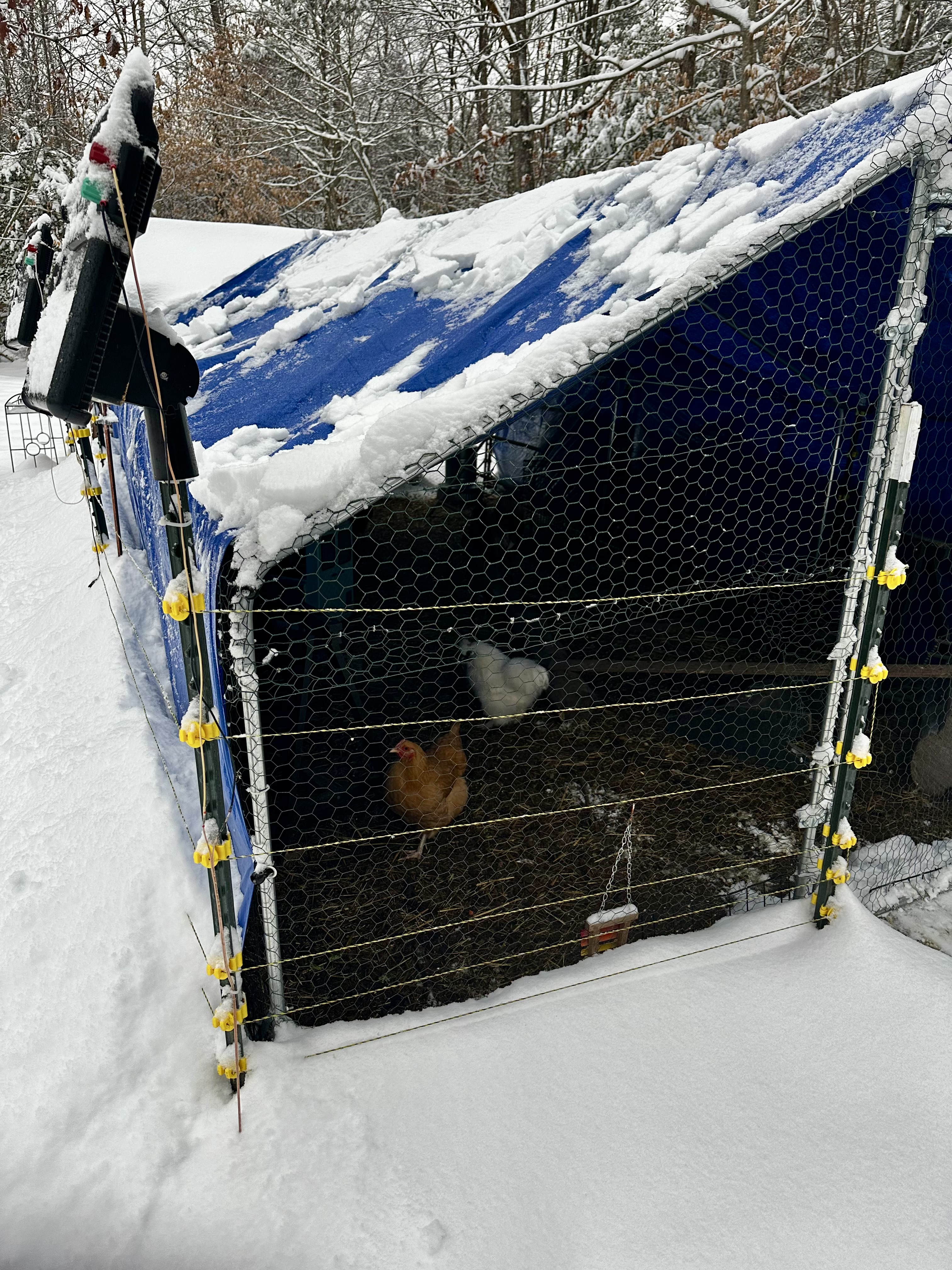
Dry, well-ventilated coops: We work hard to ensure our chickens have comfortable, dry sleeping areas with adequate ventilation. Keeping moisture under control is especially important during the winter.
Plenty of opportunities for enrichment: Our chickens don’t free-range, so we make a point of providing enrichment in their runs. Fresh vegetables, greens, and opportunities to scratch and explore help keep them active and entertained during the shorter winter days.
A little patience: Not every young hen will lay consistently throughout the winter, and that’s perfectly okay! Some will slow down, others may take longer to begin laying, and individual chickens will always have their own schedules.
The important thing is maintaining a healthy flock rather than focusing exclusively on the number of eggs in the nesting boxes.
The Secret to Having Fresh Farm Eggs Available Throughout the Winter
One of the questions we occasionally hear is whether we’ll continue offering eggs at the farmstand once winter arrives.
And I’m happy to say that our young hens are a big part of why we’re able to keep fresh eggs available throughout the colder months!
Our farmstand depends on the incredible work of our chickens, and their seasonal production cycles are something we have to plan around.
During the spring and summer, we often enjoy an abundance of eggs.
During the fall, our older hens begin molting and slowing down.
But by November, those adorable chicks we raised earlier in the year are reaching their productive stride.
This year, the Leghorns have led the charge, and now our Hamburgs and other young hens are joining in.
That doesn’t mean we’ll have the same number of eggs available every single week. Winter production can still fluctuate, and there may be times when our inventory is more limited.
But having younger hens laying alongside our older flock makes a tremendous difference.
It’s one of the reasons we believe in planning our flock additions carefully each spring.
And it’s also why our customers can continue enjoying fresh, locally produced eggs even when the garden has gone quiet and the temperatures are dropping.
There’s something particularly special about knowing that those eggs came from chickens we’ve raised from tiny chicks, cared for through the summer, and watched grow into healthy, productive hens.
Every carton tells a little piece of our homesteading story.
Should You Get New Chicks Every Spring?
If you’re raising backyard chickens primarily for fresh eggs, adding a few new pullets each spring is certainly something worth considering.
But it isn’t necessary for everyone.
Every new chicken means additional feed, housing space, cleaning, and long-term responsibility. And remember, your older hens don’t stop being valuable simply because their egg production slows down.
Here at J & J Homestead, our older ladies remain an important part of our flock. Some of our chickens are beloved pets, and their personalities bring us just as much joy as the eggs they produce.
The goal isn’t to constantly replace our older hens.
It’s to create a healthy, sustainable flock with chickens of different ages that complement one another throughout the year.
And because we operate a farmstand, that approach works particularly well for us.
If you’re considering adding chicks to your flock next spring, think about when those birds will begin laying. Choose breeds that align with your goals, ensure you have the space to accommodate them, and remember that egg production is just one part of responsible chicken keeping.
For us, the combination of productive Leghorns, beautiful Hamburgs, and our wonderful older ladies has been a fantastic fit.
A Little Planning in the Spring Makes a Big Difference in the Winter
Every morning when I head out to care for our chickens, I’m reminded of just how much there is to love about homesteading.
There’s always something changing.
One season ends, another begins, and just when you think everything is slowing down, something new starts happening.
Right now, our older hens are taking a well-earned break, the garden is winding down, and we’re busy preparing the homestead for the colder months ahead.
But inside those nesting boxes?
Our youngest hens are hard at work!
The same little chicks that were running around the brooder in May are now helping us provide fresh eggs to our community in November.
And I think that’s pretty wonderful.
So, the next time someone asks why we get new chicks every spring, I’ll certainly mention how much we love raising them.
But I’ll also tell them about the November mornings, the beautiful little white Leghorn eggs, and the excitement of discovering that yet another young Hamburg has started laying.
Because sometimes the best part of planning ahead is getting to enjoy the rewards when you least expect them.
And thanks to our wonderful first-year hens, winter at J & J Homestead still comes with plenty of fresh eggs!
Happy homesteading!

Leave a Reply